
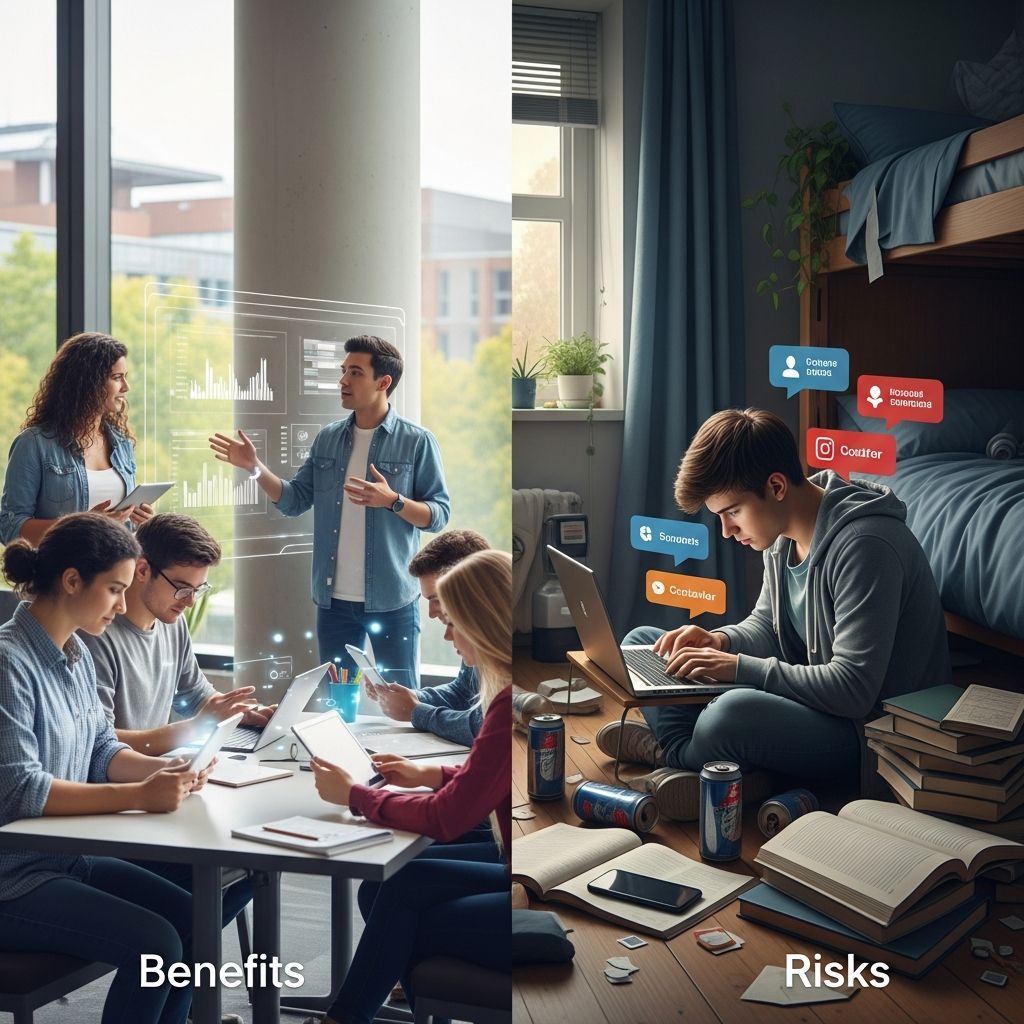
In contemporary educational environments, social media platforms have become integral to how students communicate, learn, and develop their identities. With teenagers spending an average of 4.8 hours daily on platforms like YouTube, TikTok, and Instagram, understanding the multifaceted effects of these technologies on student development has become essential for educators, parents, and policymakers alike. The relationship between digital connectivity and student outcomes presents a complex landscape where benefits and challenges coexist, requiring careful examination and balanced perspective.
The Dual Nature of Digital Connectivity in Education
Social media platforms offer genuine advantages for student engagement and learning. Research indicates that a substantial majority of adolescents—58 percent—report feeling more accepted through social media connections, while 67 percent feel supported by their online communities during difficult times. These platforms facilitate communication opportunities that transcend geographical boundaries, allowing students to build networks, share knowledge, and collaborate on projects in ways previously impossible. For many learners, particularly those who may feel isolated in traditional school settings, digital communities provide validation and belonging.
However, these same platforms present significant challenges that can undermine academic achievement and psychological well-being. The architecture of social media—designed to maximize engagement through infinite scrolling and algorithmic content delivery—creates conditions where excessive use becomes likely rather than exceptional. Understanding this paradox is crucial for developing informed approaches to digital literacy and technology management in educational contexts.
Time Management and Engagement Patterns
One of the most pressing concerns regarding student social media use involves the difficulty of managing time effectively. The addictive nature of social media platforms stems from their deliberate design features that encourage prolonged engagement. Students frequently report losing track of time while scrolling through feeds or watching videos, with hours passing unnoticed. This engagement pattern disrupts the allocation of time needed for academic pursuits, physical activity, and offline social development.
The consequences extend beyond simple distraction. When students redirect hours that could be devoted to homework, reading, or skill development toward social media consumption, the cumulative effect impacts learning outcomes. Studies demonstrate that even moderate social media use—as little as one hour daily—correlates with measurable declines in academic performance. Students who spend up to three hours daily on these platforms score approximately four points lower on reading and memory assessments compared to their peers who rarely use social media.
This time displacement affects not only academic work but also essential activities including physical exercise, meal patterns, and sleep schedules. The disruption of normal daily routines creates a cascading effect where poor sleep quality leads to reduced cognitive function, which further impairs academic performance and emotional regulation.
Academic Performance and Cognitive Development
Research published in peer-reviewed journals reveals concerning patterns regarding how intensive social media use affects academic capabilities. Young students, particularly those between ages 9 and 13, demonstrate particular vulnerability to negative cognitive impacts. Students exposed to extensive social media consumption show measurable deficits in reading comprehension, memory retention, and language development skills that are foundational to all academic learning.
The mechanism behind these declines involves several interconnected factors. The shortened attention spans cultivated by rapid-fire social media content—particularly platforms emphasizing brief videos—create difficulty when students must engage with longer-form academic materials requiring sustained concentration. This phenomenon, sometimes referred to as developing a diminished capacity for deep focus, manifests in reduced ability to complete complex assignments, analyze challenging texts, or maintain concentration during lectures.
Additionally, false or misleading information circulating on social media can contribute to academic challenges by promoting misinformation that students may incorporate into their understanding of subjects. This digital literacy gap means students lack adequate skills to critically evaluate source credibility or distinguish between reliable and unreliable information sources.
Mental Health Consequences and Psychological Well-being
The mental health impacts of social media use among students represent among the most significant concerns identified by researchers and mental health professionals. The constant exposure to curated, idealized representations of others’ lives creates psychological strain as students engage in social comparison. The selective nature of social media content, where individuals share highlight reels rather than authentic daily experiences, generates unrealistic expectations and feelings of inadequacy when students’ own lives inevitably fall short of these artificial standards.
Fear of missing out—commonly abbreviated as FOMO—represents a psychological phenomenon where students experience anxiety about not participating in online activities or social events documented through social media. This fear manifests in compulsive checking behaviors, anxiety when separated from devices, and emotional distress when unable to participate in trending activities or conversations. The stress induced by FOMO can significantly impair mental health and emotional stability.
Furthermore, the validation-seeking cycle created by social media engagement—where self-worth becomes intertwined with metrics like likes, shares, and followers—establishes unhealthy psychological patterns. When students derive self-esteem from digital metrics, temporary fluctuations in engagement create disproportionate emotional responses, amplifying anxiety and depression. Natural mood fluctuations become exacerbated by this external dependency.
Cyberbullying and Online Harassment Dynamics
The permanence and reach of digital communication create an environment where bullying takes on particularly harmful dimensions. Cyberbullying—harassment conducted through digital channels—presents challenges distinct from traditional bullying because it follows victims beyond school walls and can reach broader audiences more rapidly. Hurtful comments, rumors, and deliberate provocations can be screenshot, shared, and amplified across platforms, creating repeated harm.
The consequences of cyberbullying extend far beyond momentary emotional distress. Students subjected to online harassment experience measurable reductions in confidence and self-esteem that directly impact academic engagement and personal development. Research demonstrates significant correlations between cyberbullying experiences and depression, anxiety, and in severe cases, self-harm. The relative anonymity of online interactions can embolden perpetrators, leading to harsher language and more aggressive behavior than typically occurs in face-to-face contexts.
The accessibility of student information through social media also exposes young people to online predators who may attempt exploitation or extortion, creating safety risks that extend beyond peer-to-peer bullying to include criminal behavior and victimization by adults.
Sleep Disruption and Physical Health Effects
Excessive social media use, particularly during evening hours, significantly disrupts sleep patterns among students. The blue light emitted by screens suppresses melatonin production, making falling asleep more difficult when devices are used close to bedtime. Beyond physiological factors, the psychological stimulation provided by engaging social media content creates mental activation that conflicts with the relaxation necessary for quality sleep.
The consequences of inadequate sleep extend throughout student functioning. Reduced sleep quality impairs cognitive processing, memory consolidation, and emotional regulation—all essential for academic success. Students experiencing sleep deprivation demonstrate increased irritability, emotional volatility, and difficulty managing stress. The physical health effects compound over time, with chronic sleep disruption linked to increased risk of obesity, weakened immune function, and long-term metabolic disorders.
Comparative Analysis: Key Challenges
| Challenge Area | Primary Impact | Affected Population | Severity Level |
|---|---|---|---|
| Addiction and Time Management | Displaced academic and recreational time | All ages | High |
| Cyberbullying | Psychological harm and reduced self-esteem | Middle and high school | Critical |
| Mental Health Deterioration | Anxiety, depression, FOMO | Adolescents 13-18 | Critical |
| Academic Decline | Lower test scores, reduced comprehension | All ages | High |
| Sleep Disruption | Physical and cognitive impairment | All ages | Moderate-High |
| Shortened Attention Span | Difficulty with sustained focus | Young students | Moderate |
Neurological Development Considerations
Adolescent brains undergo significant developmental changes, with particular sensitivity to environmental influences during this period. Research suggests that young students’ developing brains may be uniquely vulnerable to social media’s effects, making early intervention and healthy habit formation particularly critical. The prefrontal cortex—responsible for impulse control, decision-making, and long-term planning—continues developing into the mid-twenties, meaning younger students have less biological capacity to self-regulate social media use.
The repetitive stimulation provided by social media may literally rewire neural pathways responsible for attention and sustained focus. This neuroplasticity, while normally adaptive, can create problematic patterns when shaped by platforms designed to maximize engagement rather than support healthy development. Understanding these neurological factors underscores why addressing social media use requires intervention grounded in developmental science rather than assumptions about willpower or self-discipline.
Practical Strategies for Balanced Digital Engagement
Addressing social media’s negative impacts requires comprehensive approaches involving multiple stakeholders. Parents can establish screen-time boundaries, model healthy device use, and create technology-free spaces and times within homes. Educators can integrate digital literacy instruction that teaches critical evaluation of online information, recognition of manipulative design features, and development of healthy online habits.
Schools can implement policies that minimize social media access during instructional time and create environments where offline activities receive priority. Mental health professionals can work with students to develop awareness of their own technology use patterns and implement strategies for managing compulsive engagement. Importantly, these interventions work best when they combine restriction with education, teaching students to understand why balance matters rather than simply prohibiting access.
Creating awareness about design features that encourage addiction—infinite scrolling, algorithmic content delivery, gamified reward systems—helps students recognize when platforms are manipulating their behavior. This metacognitive awareness provides tools for more intentional technology use.
Frequently Asked Questions
How much social media use is considered excessive for students?
Research suggests that even one hour of daily social media use correlates with measurable academic impacts, while three hours or more daily shows pronounced negative effects. However, individual vulnerability varies, making it important to monitor personal effects rather than relying solely on time thresholds.
Can social media ever be beneficial for student development?
Yes, social media can facilitate genuine connections, provide support communities, and offer learning opportunities when used intentionally. The key lies in purposeful engagement rather than passive consumption, combined with awareness of addiction risks.
At what age should parents begin monitoring social media use?
Experts recommend beginning conversations about digital technology early, with structured monitoring increasing as children gain independent device access. Approximately 35 percent of children access social media before age 7, indicating that early intervention is necessary.
What role should schools play in addressing social media’s negative effects?
Schools can provide digital literacy education, implement healthy technology policies, teach recognition of cyberbullying and online manipulation, and connect students with mental health resources. However, family engagement remains essential for sustained behavior change.
How can students recognize problematic social media use in themselves?
Warning signs include difficulty completing homework, sleep disruption, anxiety when away from devices, declining academic performance, withdrawal from offline activities, and mood changes connected to social media metrics.
References
- Impact of Social Media on Students: Positive and Negative Effects — 21K School. https://www.21kschool.com/us/blog/impact-of-social-media-on-students/
- Impacts of Social Media on Students — Tulane University School of Public Health and Tropical Medicine. https://masterofed-sopa.tulane.edu/articles/impact-of-social-media-on-students/
- Is Social Media Impacting Students’ Academic Performance? What New Research Reveals — The Social Institute. https://thesocialinstitute.com/blog/is-social-media-impacting-students-academic-performance-what-new-research-reveals/
- Social Media Has Both Positive and Negative Impacts on Children and Adolescents — National Center for Biotechnology Information, National Library of Medicine. https://www.ncbi.nlm.nih.gov/books/NBK594763/
- Teens and Social Media Use: What’s the Impact? — Mayo Clinic. https://www.mayoclinic.org/healthy-lifestyle/tween-and-teen-health/in-depth/teens-and-social-media-use/art-20474437
- The Impact of Social Media on K-12 Students — Veracross. https://www.veracross.com/resources/the-impact-of-social-media/
- The Impact of Social Media on Mental Health in Students — Capital University. https://www.capital.edu/admission-aid/college-readiness-resource-hub/mental-health-hub/the-impact-of-social-media-on-mental-health-in-students/

- Integrated M.A. in Applied Linguistics, University of Hyderabad
- 5+ years in editorial, instructional, SEO, and research-based writing
Sneha is a relationships and lifestyle writer with a strong foundation in applied linguistics and certified training in relationship coaching. She brings over five years of writing experience to theskillvault, crafting thoughtful, research-driven content that empowers readers to build healthier relationships, boost emotional well-being, and embrace holistic living. Her writing and insights reflect the belief that beauty, happiness, and wellness…