
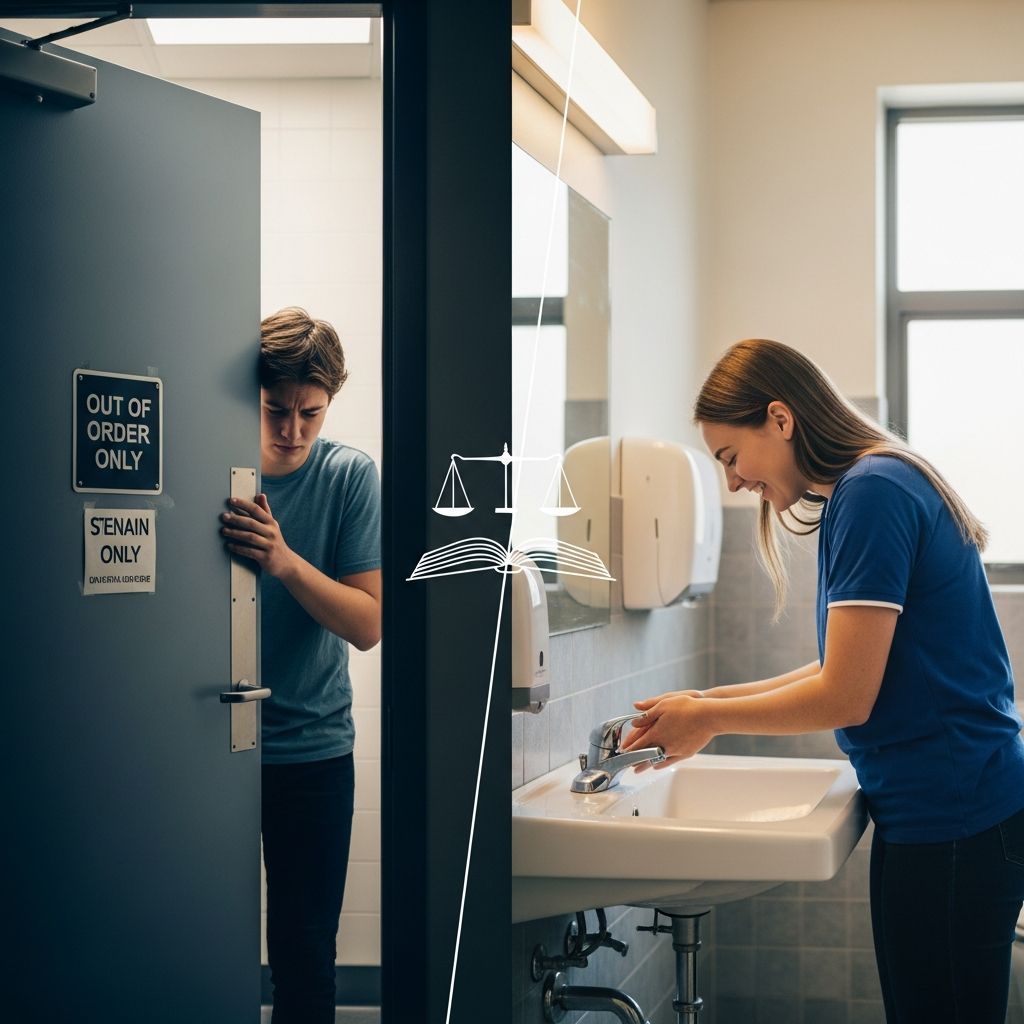
Schools implement bathroom policies to maintain order and safety, but denying students timely access can violate legal protections and harm health. Understanding these rights helps students, parents, and educators navigate tensions between discipline and basic needs.
Why Schools Restrict Bathroom Use
Educational institutions often limit restroom visits to prevent disruptions, ensure accountability, and address safety concerns. Administrators argue that unrestricted access leads to students lingering in hallways, congregating in bathrooms, or skipping class entirely. A survey of school nurses revealed that 84% believe students sometimes have ulterior motives for requests, such as socializing or avoiding lessons.
Policies vary widely: some allow only one student out at a time, others prohibit breaks in the first or last 10 minutes of class, or cap visits per term. These rules aim to track student locations amid broader safety obligations, like preventing incidents in unsupervised areas.
- Safety priorities: Tracking whereabouts reduces risks during class time.
- Behavior management: Limits curb misuse, such as extended absences.
- Time efficiency: Minimizes classroom interruptions and hallway congestion.
However, rigid enforcement overlooks physiological needs, creating conflicts between administrative control and student well-being.
Federal Legal Framework for Student Rights
No single federal law mandates unlimited bathroom access, but several protections apply. Denials become problematic when they infringe on health, disability accommodations, or equal treatment. The U.S. Department of Education’s guidance under Title IX and Section 504 of the Rehabilitation Act emphasizes reasonable accommodations for bodily functions.
Extreme denials may constitute cruel and unusual punishment under the Eighth Amendment if they cause severe distress or injury, though courts rarely invoke this for schools. More commonly, violations arise under the Fourteenth Amendment’s due process clause when policies are arbitrary and harmful.
| Federal Law | Key Protection | Application to Bathrooms |
|---|---|---|
| Title IX | Prohibits sex discrimination | Ensures access for menstruating students or transgender youth |
| Section 504/ADA | Protects disabilities | Requires accommodations for medical conditions like IBS |
| Fourteenth Amendment | Substantive due process | Bans policies causing serious health harm |
Courts evaluate on a case-by-case basis, weighing school interests against student harm.
State-Specific Variations in Bathroom Regulations
Legality hinges on state laws, which differ significantly. As of 2026, some states like South Carolina advance bills mandating bathroom use by birth certificate sex, indirectly affecting access policies. Others explicitly protect student rights to timely restroom visits.
For instance, California Education Code Section 32270 requires schools to allow breaks as needed for health. In contrast, states without specific statutes defer to federal baselines, leaving room for local discretion.
- Protective states: Mandate reasonable access (e.g., California, New Jersey).
- Restrictive trends: Focus on sex-segregated facilities (e.g., recent South Carolina proposals).
- Unregulated: Rely on district policies, prone to challenges.
Parents should check state education codes and department guidelines for local rules.
Health Risks of Unreasonable Bathroom Denials
Prolonged denial fosters unhealthy habits like urine holding, linked to urinary tract infections, bladder dysfunction, and kidney issues. Rebecca Nebel of the Society for Women’s Health Research notes that such restrictions create lifelong problems, reducing quality of life.
Menstruating students face heightened risks of leaks and discomfort, exacerbating embarrassment. Those with conditions like diabetes, IBS, or pregnancy require immediate access, where denials can trigger medical emergencies.
Mentally, restrictions distract from learning: students fixate on discomfort, impairing focus and performance. This punitive approach undermines agency, fostering resentment toward education.
Special Considerations for Vulnerable Groups
Students with disabilities under Section 504/ADA deserve individualized plans, such as unlimited passes for incontinence or frequent needs. Transgender and nonbinary youth navigate added hurdles amid sex-based policies, as seen in South Carolina’s 2026 bill requiring birth certificate alignment.
Pregnant teens and those managing chronic illnesses also merit protections. Schools must balance these without blanket denials, using tools like doctor’s notes for verification.
Effective Strategies to Challenge Denials
When facing unfair restrictions, students and families can advocate constructively. Start by documenting incidents: note dates, times, reasons given, and effects.
- Discuss with teacher: Request a private meeting to explain needs calmly.
- Escalate to administration: Submit a formal written complaint citing relevant laws.
- Consult school nurse or counselor: They often support health-based requests.
- File with district: Use grievance procedures under federal/state regs.
Legal aid from organizations like the ACLU or state education departments can help. Proactive policy changes, like digital pass systems, improve fairness without chaos.
Best Practices for Fair School Policies
Progressive districts adopt balanced approaches: digital tools like SmartPass track usage while allowing flexibility. Staggered breaks and hall monitors enhance safety without total bans.
- Digital passes: Real-time monitoring prevents abuse.
- Coordinated timing: Reduces overcrowding.
- Staff training: Ensures equitable enforcement.
- Student input: Builds trust via committees.
These foster responsibility, prioritizing education over micromanagement.
Frequently Asked Questions (FAQs)
What if a teacher refuses my bathroom request?
Politely remind them of your right to reasonable access; document and report if denied unreasonably.
Can schools limit bathroom visits per day?
Yes, if reasonable and non-discriminatory, but medical needs override limits.
Is it illegal for schools to deny transgender students access?
Potentially, under Title IX; state laws vary, as in South Carolina’s recent bill.
What health issues arise from holding urine?
UTIs, bladder damage, and long-term dysfunction per health experts.
How do I get a bathroom accommodation for a disability?
Request a 504 plan with medical documentation via school administration.
Empowering Change Through Awareness
Awareness of rights transforms bathroom policies from battlegrounds to non-issues. Schools succeed by integrating safety, health, and equity, benefiting all stakeholders. Students gain confidence, educators focus on teaching, and communities build supportive environments.
References
- SC Senate advances bill requiring students to use bathrooms based on birth certificates — WIS News 10. 2026-03-28. https://www.wistv.com/
- The Real Story Behind School Bathroom Policies — SmartPass Blog. 2024-10-28. https://www.smartpass.app/blog/should-students-need-bathroom-passes
- The Consequences of Restroom Restrictions — Teens in Print. N/A. https://teensinprint.com/the-consequences-of-restroom-restrictions/
- 2026 Student Bathroom Rights: Is Denial Illegal in Your State — Legal Overview. 2026. https://legaloverview.com/2026-student-bathroom-rights-is-denial-illegal-in-your-state/
- Developing Healthy Toilet Habits in Children — U.S. Department of Health and Human Services. 2023. https://www.healthychildren.org/English/health-issues/conditions/genitourinary-tract/Pages/Developing-Healthy-Toilet-Habits-in-Children.aspx
- Guidance on Constitutionally Protected Prayer in Public Elementary and Secondary Schools — U.S. Department of Education. 2021-02-05. https://www.ed.gov/about/offices/list/ogc/religion.html

- Integrated M.A. in Applied Linguistics, University of Hyderabad
- 5+ years in editorial, instructional, SEO, and research-based writing
Sneha is a relationships and lifestyle writer with a strong foundation in applied linguistics and certified training in relationship coaching. She brings over five years of writing experience to theskillvault, crafting thoughtful, research-driven content that empowers readers to build healthier relationships, boost emotional well-being, and embrace holistic living. Her writing and insights reflect the belief that beauty, happiness, and wellness…