
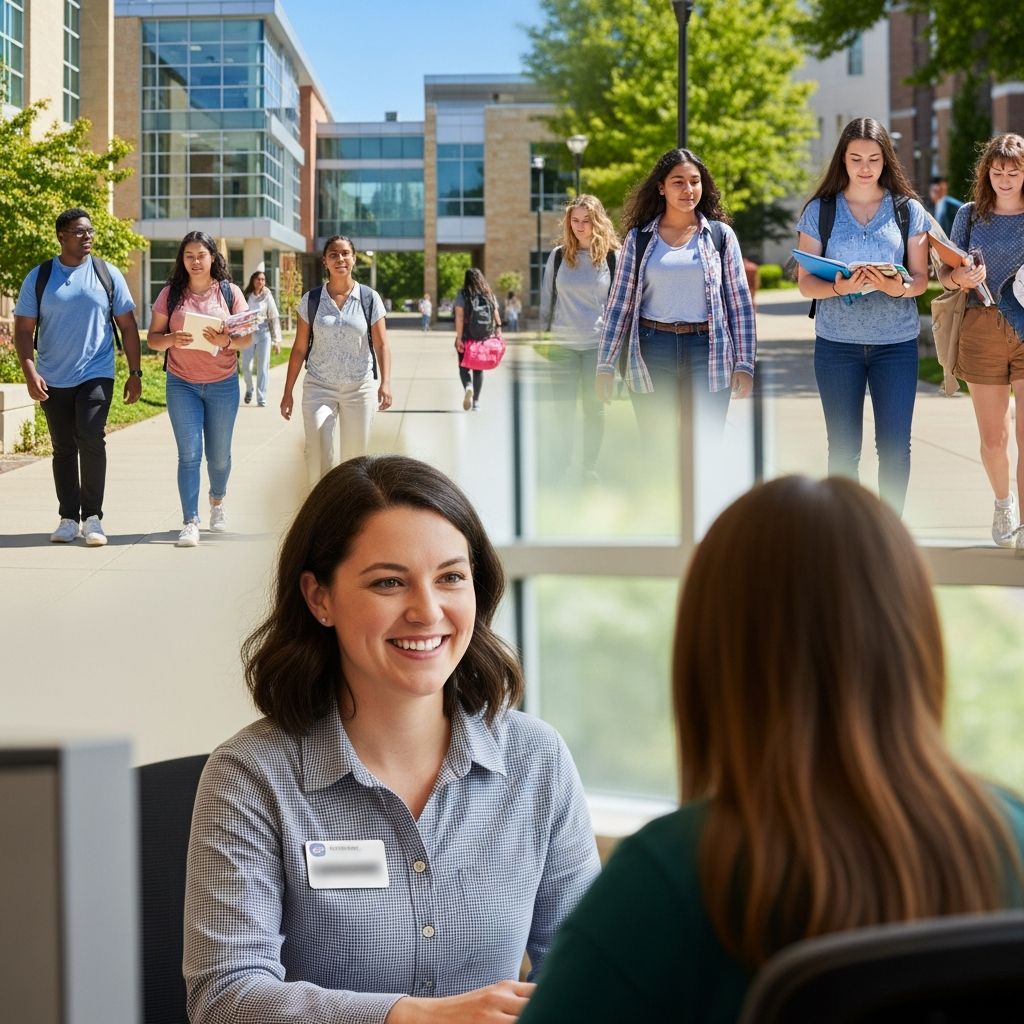
A student services specialist plays a central role in helping college and university students navigate admissions, enrollment, financial aid, and academic life. This position combines administrative work with direct student support, making it ideal for people who enjoy both organization and day-to-day human interaction.
This guide explains what the job involves, what skills and qualifications you need, and how to decide whether this career fits your strengths and goals.
What Does a Student Services Specialist Do?
In most colleges and universities, student services specialists support students from the moment they inquire about the school until graduation. They connect students with the right offices, process important paperwork, and make sure policies are followed accurately.
| Focus Area | Typical Contribution |
|---|---|
| Admissions & Enrollment | Guide applicants, answer questions, and help complete forms. |
| Records & Registration | Maintain student records, support course registration, and manage changes. |
| Financial Aid & Scholarships | Explain aid options and help students understand requirements and deadlines. |
| Student Events & Programs | Assist in planning orientations, info sessions, and student success initiatives. |
| Referrals & Support | Connect students with advisors, counselors, and specialized services. |
Core Responsibilities and Daily Tasks
Although duties vary by institution and office, several responsibilities appear in most job descriptions for student services specialists in community colleges and universities.
1. Supporting Admissions and Onboarding
At many institutions, student services specialists are a first point of contact for prospective and newly admitted students.
- Respond to questions about admission requirements, deadlines, and procedures.
- Assist students in completing application forms and uploading documents.
- Help coordinate campus tours, open houses, and orientation sessions.
- Explain placement testing, evaluation processes, and next steps after admission.
2. Managing Student Records and Registration
Accurate records are critical for accreditation, funding, and student success. Student services specialists often handle sensitive student information.
- Enter, update, and verify student data in institutional systems.
- Assist students with course registration, waitlists, adds/drops, and withdrawals.
- Maintain permanent academic records and ensure they comply with confidentiality laws (such as FERPA in the United States).
- Help prepare documentation related to graduation, program completion, or transfer.
3. Providing Frontline Student Support
The role involves frequent interaction with students who may be confused, stressed, or simply unsure where to go next.
- Answer questions in person, by phone, email, or online chat about a wide range of topics (from enrollment steps to campus resources).
- Listen to student concerns and identify what kind of help they need.
- Refer students to academic advisors, financial aid staff, counseling services, disability support, or other specialists.
- Provide basic guidance on policies such as academic standing, residency, or fee deadlines (within defined authority).
4. Coordinating Student Programs and Services
Many student services specialists help design, promote, or evaluate programs that support student success, recruitment, or retention.
- Assist in planning workshops, information sessions, and outreach events.
- Promote services through emails, flyers, websites, and social media.
- Collect feedback from attendees and track participation to measure impact.
- Collaborate with faculty, advisors, and community partners to align efforts.
5. Handling Financial Aid and Funding Questions
In some institutions, student services specialists work closely with financial aid teams.
- Provide general information about grants, loans, and scholarships.
- Help students understand application processes, required documents, and timelines.
- Explain how enrollment status, academic performance, or program choice can affect eligibility.
- Direct complex or case-specific questions to financial aid counselors.
Key Skills and Competencies
The job blends administrative precision with strong people skills. Many skills can be developed on the job, but some are particularly valuable to highlight when applying.
Communication and Interpersonal Skills
- Ability to explain complex policies in clear, simple language.
- Comfort engaging with people from diverse cultural, educational, and economic backgrounds.
- Professional writing skills for email, forms, and official correspondence.
- Active listening and empathy when students are facing difficulties.
Organizational and Administrative Skills
- Managing multiple tasks, deadlines, and student requests at once.
- Accurate data entry and careful handling of confidential records.
- Ability to prioritize urgent cases while still completing routine work.
- Comfort using student information systems and office software.
Problem-Solving and Judgment
- Interpreting institutional rules and deciding when to escalate an issue.
- Identifying the root cause of a student’s problem instead of only addressing symptoms.
- Applying standard procedures consistently and fairly.
- Maintaining calm and professionalism under pressure.
Commitment to Equity and Inclusion
Many colleges emphasize inclusive student support, especially for first-generation students, underrepresented groups, and students with disabilities.
- Sensitivity to different backgrounds and experiences.
- Willingness to participate in training about diversity, equity, and inclusion.
- Ability to create a welcoming environment in person and online.
Education, Training, and Experience
Requirements differ by institution, but job descriptions from community colleges and public universities show some common expectations.
Typical Educational Requirements
- Minimum: Some college coursework or an associate degree in a related field (such as education, counseling, business, or social sciences) is often required.
- Preferred: Many institutions prefer a bachelor’s degree, especially for positions that include program development or supervision.
- Relevant majors: Higher education, student affairs, psychology, communications, or public administration can all be helpful.
Relevant Experience
- Customer service roles in education, retail, or hospitality.
- Work in college offices such as admissions, advising, or financial aid (including student worker positions).
- Experience with data entry, office software, or student information systems.
- Volunteer or paid work in tutoring, mentoring, or community outreach.
On-the-Job Training and Development
New hires typically receive training on institutional systems, local policies, and legal requirements, such as privacy regulations or financial aid rules. Many colleges encourage continued professional development through workshops and conferences focused on student success and program evaluation.
Work Environment and Collaboration
Student services specialists usually work in an office setting on campus, with regular interaction across departments.
- Schedule: Often full-time, Monday through Friday, with occasional evenings or weekends for events or peak enrollment periods.
- Teamwork: Frequent collaboration with advisors, counselors, faculty, IT staff, and administrators.
- Interaction: High contact with students in person and through digital channels.
- Supervision: In some cases, may provide direction to front-desk staff, student workers, or interns.
Career Growth and Advancement
A student services specialist role can be a long-term career or a stepping stone into broader positions in higher education.
Possible Career Paths
- Senior student services specialist or lead specialist.
- Academic advisor or student success coach.
- Financial aid counselor or admissions counselor.
- Coordinator or manager of a specific program (e.g., transfer center, disability services, or orientation).
- Student affairs or enrollment management roles at the supervisory or director level.
Ways to Strengthen Your Profile
- Seek cross-training in related offices (advising, financial aid, registrar).
- Volunteer to help with new initiatives, committees, or assessment projects.
- Develop advanced skills in data analysis, reporting, and program evaluation.
- Consider graduate study in higher education, counseling, or public administration if you aim for leadership roles.
Is This Role Right for You?
Before pursuing this career, reflect on whether the nature of the work and environment fits your preferences.
Signs the Role May Be a Good Match
- You enjoy helping others solve practical problems.
- You are patient and comfortable explaining the same process many times.
- You value accuracy and are careful with details and deadlines.
- You are motivated by contributing to student success and educational access.
Potential Challenges to Consider
- Peak periods (start of term, financial aid deadlines) can be very busy.
- Policies and systems change regularly, requiring ongoing learning.
- Some interactions may involve upset or anxious students, which can be emotionally demanding.
- The role may involve repetitive tasks, such as data entry or document checks.
Tips for Applying and Standing Out
When applying for student services specialist positions, tailor your materials to highlight both service orientation and administrative strengths.
- Customize your resume: Emphasize customer service, data accuracy, and experience with student or customer databases.
- Show results: Include brief examples of how you improved a process, handled high volumes of inquiries, or helped resolve complex issues.
- Highlight communication: Mention public speaking, workshop facilitation, or experience writing clear instructions for others.
- Demonstrate cultural competence: If you have experience working with diverse populations, be specific about what you did and what you learned.
Frequently Asked Questions (FAQs)
Q: Is a student services specialist the same as an academic advisor?
A: No. A student services specialist usually focuses on processes and services (such as admissions, records, and referrals), while an academic advisor primarily helps students choose courses and plan their academic pathway. In some smaller institutions, one person may perform both functions, but they are distinct roles in many colleges.
Q: Do I need a master’s degree to work as a student services specialist?
A: Most entry-level student services specialist positions do not require a master’s degree. Many community colleges and universities hire candidates with an associate or bachelor’s degree plus relevant experience. A graduate degree becomes more important for advanced roles in student affairs or administration.
Q: What technical tools do student services specialists typically use?
A: Common tools include student information systems (for records and registration), financial aid or customer relationship management platforms, and standard office software for documents, spreadsheets, and presentations. Many institutions also use online ticketing or chat systems to manage student inquiries.
Q: Can this role be done remotely?
A: Some tasks, such as answering emails, processing documents, and updating records, can be handled remotely. However, many colleges still expect a campus presence for front-desk coverage, in-person events, and direct student interaction. The balance between remote and on-site work depends on institutional policy.
Q: How does this job contribute to student success?
A: Student services specialists make it easier for students to enroll, access financial help, understand requirements, and connect with support resources. Research on student retention shows that clear communication, effective support services, and proactive outreach are key factors in helping students persist to graduation.
References
- Student Services Specialist – Job Description — North Orange County Community College District. 2003-04-08. https://www.nocccd.edu/documents/student-service-specialist
- Student Services Specialist (All There Is to Know About the Job) — Novorésumé Career Blog. 2023-07-10 (approx.). https://novoresume.com/career-blog/student-services-specialist
- Job Title: Student Services Specialist — El Camino College. 2019-01-01 (approx.). https://elcamino.oudeve.com/departments/human-resources/docs/docs/Student%20Services%20Specialist.pdf
- Student Services Specialist — Los Angeles Community College District (Job Bulletin 5044). 2017-01-01 (approx.). https://jobapscloud.com/LACCD/sup/bulpreview.asp?R1=17&R2=5044&R3=001
- Student Services Specialist Job Description — East Central College. 2021-01-01 (approx.). https://www.eastcentral.edu/hr/wp-content/uploads/sites/19/2022/05/Student-Services-Specialist-Job-Description-2021-Revision.pdf
- Student Service Center Specialist — California State University, Chico (CSU Careers). 2023-09-01 (approx.). https://csucareers.calstate.edu/en-us/job/551698/student-service-center-specialist
- Student Support Specialist Job Description — Washington State Community College. 2023-01-01. https://www.wsco.edu/wp-content/uploads/2023/09/HR-Position-Description-Student-Support-Specialist-1-2.pdf

- Integrated M.A. in Applied Linguistics, University of Hyderabad
- 5+ years in editorial, instructional, SEO, and research-based writing
Sneha is a relationships and lifestyle writer with a strong foundation in applied linguistics and certified training in relationship coaching. She brings over five years of writing experience to theskillvault, crafting thoughtful, research-driven content that empowers readers to build healthier relationships, boost emotional well-being, and embrace holistic living. Her writing and insights reflect the belief that beauty, happiness, and wellness…