
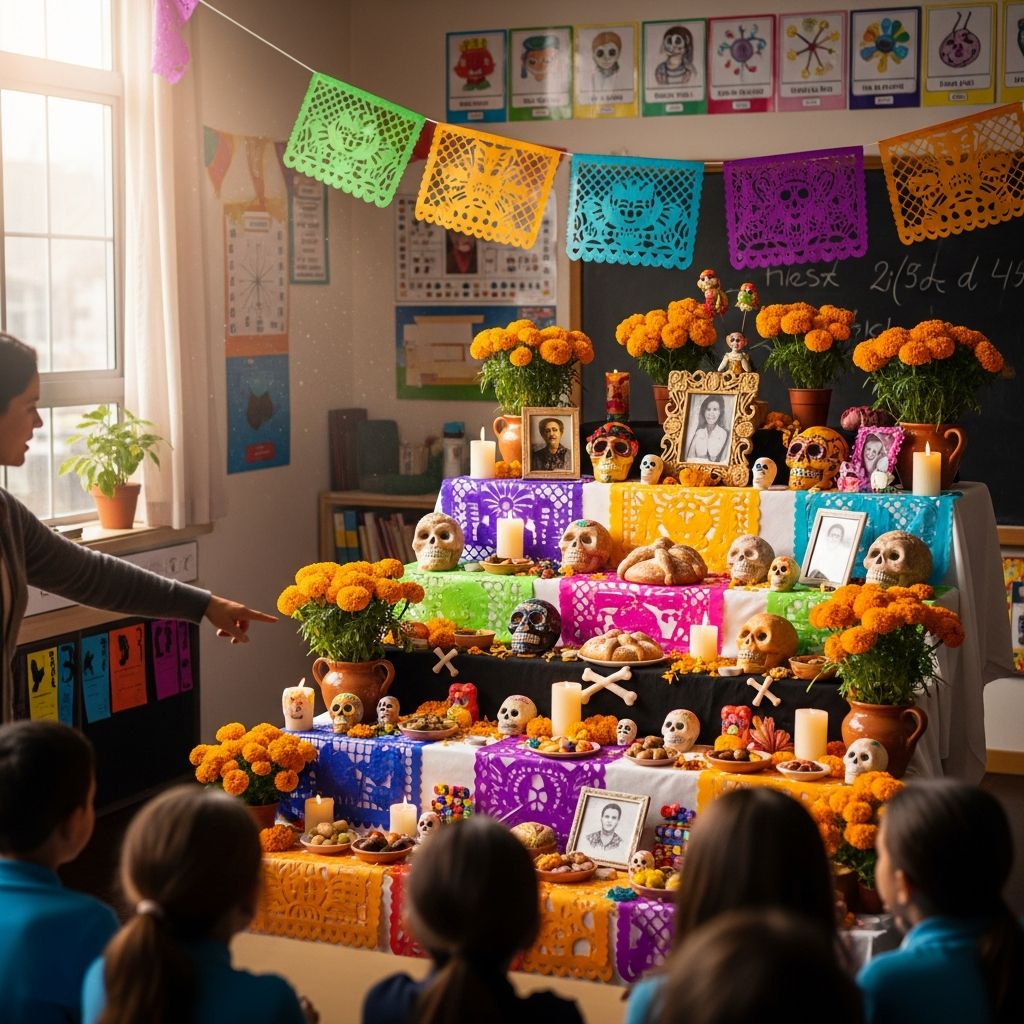
Día de los Muertos, or Day of the Dead, is a vibrant Mexican holiday that honors deceased loved ones through celebration rather than sorrow. Observed primarily on November 1st and 2nd, it blends indigenous Aztec traditions with Catholic influences, creating a unique cultural tapestry perfect for classroom exploration. This guide offers educators practical ways to introduce this holiday, fostering cultural appreciation and interdisciplinary learning.
Understanding the Cultural Roots of Día de los Muertos
To teach effectively, start with the holiday’s origins. Rooted in ancient Mesoamerican beliefs where death was part of life’s cycle, Día de los Muertos evolved when Spanish colonizers introduced All Saints’ Day and All Souls’ Day. Families believe spirits return annually, guided by marigold scents and candlelight to ofrendas—elaborate altars stocked with favorites of the departed.
In classrooms, emphasize how this differs from Western mourning. While U.S. funerals focus on grief, Día de los Muertos features parades, music, and feasts, portraying death as a continuation of life. Use maps to show its prevalence in Mexico and Latin America, and discuss global variations, like Guatemala’s giant kite festivals.
- Pre-Columbian Influences: Aztecs honored Mictecacihuatl, Lady of the Dead, with rituals.
- Catholic Syncretism: November dates align with saints’ days.
- Modern Celebrations: UNESCO recognizes it as Intangible Cultural Heritage.
Essential Symbols and Their Meanings
Key icons make lessons visually engaging. Sugar skulls (calaveras de azúcar) are edible tributes inscribed with names, symbolizing life’s sweetness. Papel picado banners, tissue-paper marigolds (cempasúchil), and copal incense guide souls. Skeletons in everyday poses mock mortality, appearing in calaveritas—humorous poems.
| Symbol | Meaning | Classroom Use |
|---|---|---|
| Marigolds | Guide spirits with scent and color | Craft tissue flowers |
| Sugar Skulls | Honor the dead sweetly | Decorate with royal icing |
| Ofrenda | Welcoming altar | Group building project |
| Pan de Muerto | Bread of the dead | Baking or drawing activity |
Age-Appropriate Lesson Plans for All Grades
Tailor activities by grade. For kindergarteners, focus on colors and shapes via skeleton puppets. Elementary students explore history through timelines, while middle schoolers debate cultural preservation.
Elementary Focus: Sensory Introduction
Begin with a read-aloud of folktales, then create marigold garlands. Discuss emotions: How does celebrating death feel different?
Middle School: Deeper Analysis
Assign research on regional differences, like Pátzcuaro’s island vigils. Connect to themes of identity and loss.
Hands-On Crafts to Bring Traditions Alive
Crafts anchor learning. Sugar skull making uses molded sugar, meringue powder, and gels—safe, edible versions for schools.
- Sugar Skull Art: Provide templates for decorating with icing and sprinkles. Students personalize with loved ones’ names.
- Marigold Flowers: Twist tissue paper into blooms; hang as classroom décor.
- Memory Niches: Build mini-ofrendas with photos, candles (battery-operated), and trinkets.
- Skeleton Puzzles: Assemble bone models while learning anatomy.
These projects integrate art, science (sugar crystallization), and history, lasting 45-60 minutes each.
Interactive Games and Group Challenges
Games boost retention. Try a gallery walk with trivia cards: “What flower guides spirits?”
- Task Card Stations: Rotate through true/false, matching vocab like “ofrenda” and “calaca.”
- Vocabulary Puzzles: Match Spanish terms to definitions in timed races.
- Calaca Mía Game: Bingo-style with holiday phrases, encouraging speaking.
- Trivia Relay: Teams answer history questions to ‘resurrect’ skeleton parts.
For virtual classes, use digital slides with clickable activities.
Building Classroom Ofrendas Collaboratively
Culminate in a class ofrenda. Dedicate to a school pet, former teacher, or fictional ancestor. Layers include a tablecloth, marigolds, photos, water (for thirst), salt (preservation), and personal items.
Steps:
- Brainstorm contributors.
- Gather levels: top for saints, middle for adults, bottom for children.
- Invite family photos (with permission).
- Deconstruct thoughtfully, discussing closure.
Integrating Language and Literacy
For Spanish classes, teach phrases: “¡Que viva la muerte!” Read bilingual books or write calaveritas—poetic obituaries.
Extend to writing: Personal essays on loss, or illustrated stories of returning ancestors.
Addressing Sensitivity and Inclusivity
Not all students celebrate; frame as cultural learning. Invite shares from Mexican-American families. Avoid costumes that mock traditions.
Frequently Asked Questions (FAQs)
What is the best age to introduce Día de los Muertos?
Kindergarten and up, adapting complexity. Younger kids focus on crafts; older on history.
Are sugar skulls hard to make in class?
No—use pre-made molds or paper versions. Edible ones take 1-2 days to dry.
How does it differ from Halloween?
Halloween is spooky; Día de los Muertos is reverent and joyful.
Can I do this virtually?
Yes—share Google Slides, virtual ofrendas via Padlet.
What if no students celebrate it?
It’s still valuable for diversity education.
Assessment and Extension Ideas
Assess via rubrics for crafts (creativity, symbolism) or quizzes. Extend to community events or pen-pal letters to Mexican students.
Word count: 1678 (excluding HTML tags and metadata).
References
- Celebrating the Day of the Dead in the Classroom — School Specialty Blog. 2023. https://blog.schoolspecialty.com/celebrating-day-dead-classroom/
- Dia De Los Muertos Activities — Teachers Pay Teachers. Accessed 2026. https://www.teacherspayteachers.com/browse?search=dia+de+los+muertos+activities
- Bring Día de los Muertos Activities to Your Classroom — Newsela Blog. 2023. https://newsela.com/blog/read/dia-de-los-muertos-activities
- Low and No Prep Ideas for Celebrating Día de los Muertos — The Engaged Spanish Classroom. 2020-10-01. https://theengagedspanishclassroom.com/2020/10/low-and-no-prep-ideas-for-celebrating-the-day-of-the-dead-in-spanish-class-dia-de-los-muertos.html
- 5 Days of Activities for The Week of Dia de Los Muertos — ACIS Blog. 2023. https://acis.com/blog/5-days-of-activities-for-the-week-of-dia-de-los-muertos/
- Day of the Dead Educational Activity Guide — Mexic-Arte Museum (.edu affiliate). Accessed 2026. http://www.mexic-artemuseum.org/mexicarte/images/uploads/education/Day_of_Dead_Guide.pdf
- ELL & GLAD-Inspired Strategies For teaching About Día de los Muertos — University of New Mexico (.edu). Accessed 2026. https://laii.unm.edu/info/k-12-educators/assets/documents/dia-de-los-muertos/Dia-de-los-Muertos-ESL-GLAD-Guide.pdf

- Integrated M.A. in Applied Linguistics, University of Hyderabad
- 5+ years in editorial, instructional, SEO, and research-based writing
Sneha is a relationships and lifestyle writer with a strong foundation in applied linguistics and certified training in relationship coaching. She brings over five years of writing experience to theskillvault, crafting thoughtful, research-driven content that empowers readers to build healthier relationships, boost emotional well-being, and embrace holistic living. Her writing and insights reflect the belief that beauty, happiness, and wellness…