
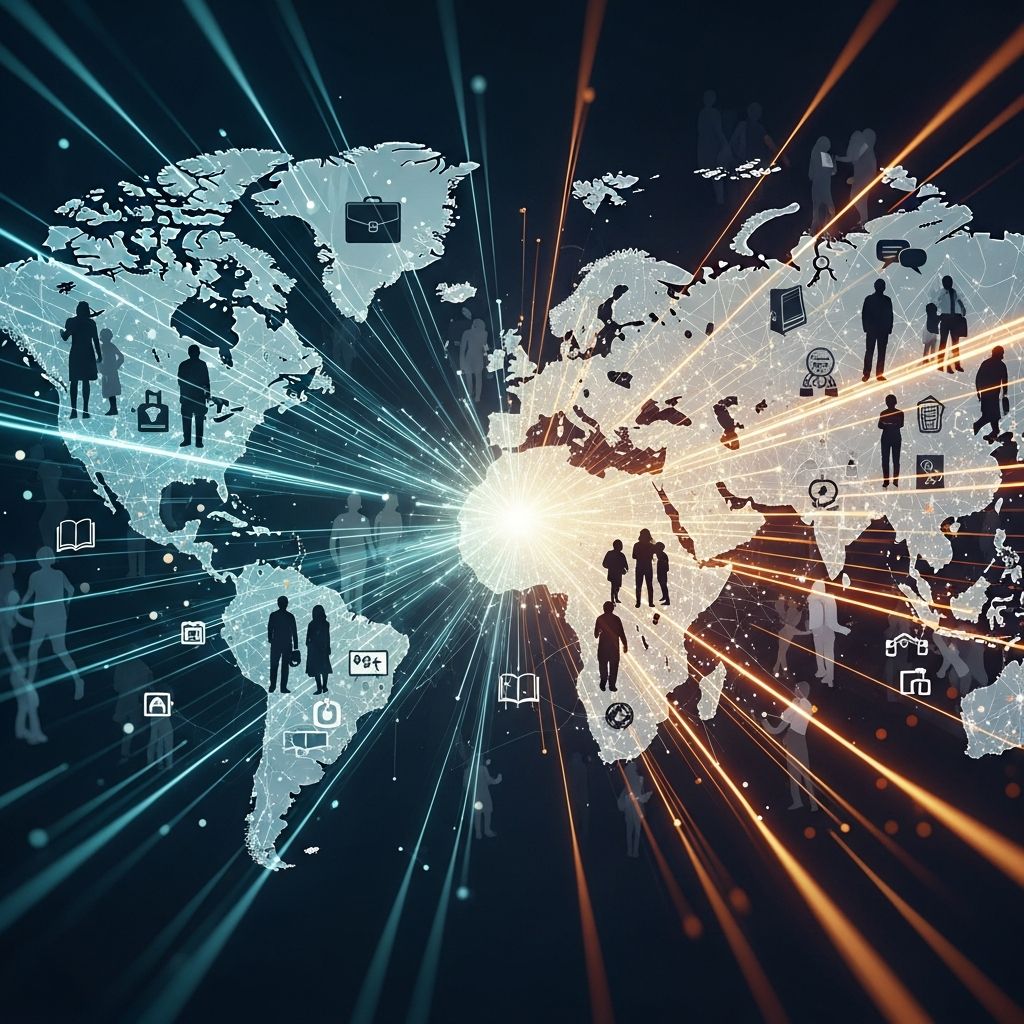
Transnationalism describes the multifaceted processes where individuals, communities, and institutions maintain enduring relationships and activities spanning multiple national boundaries, fundamentally altering traditional notions of belonging and sovereignty.
Understanding the Essence of Transnationalism
At its heart, transnationalism captures the fluid movement of people, resources, ideas, and cultural elements beyond the confines of single nation-states. Unlike mere international interactions, it emphasizes sustained, multi-directional engagements that create hybrid spaces of identity and practice. This phenomenon gained prominence in the 20th century, notably through thinkers like Randolph Bourne, who envisioned cultures intermingling without one dominating the other.
Key characteristics include:
- Persistent ties between origin and host countries, such as remittances sent home by migrants.
- Formation of networks that operate simultaneously in multiple locales, like diaspora businesses sourcing materials globally.
- Challenges to fixed national identities, fostering senses of belonging that transcend borders.
Transnationalism differs from globalization by focusing specifically on social and cultural dimensions rather than broad economic or technological integration. While globalization sets the stage with worldwide connectivity, transnationalism zooms in on how people navigate and reshape these connections personally and collectively.
Historical Evolution and Key Milestones
The roots of transnationalism trace back to colonial eras, where trade routes, labor migrations, and imperial networks laid groundwork for cross-border exchanges. Post-World War II decolonization and technological advances in communication and transport accelerated this trend. The late 20th century saw a surge with mass migration waves, the rise of multinational enterprises, and supranational bodies like the United Nations.
By the 1990s, scholars formalized the concept amid debates on immigration, recognizing that migrants often sustain ‘multi-stranded’ relations rather than fully assimilating into host societies. Today, digital tools amplify these dynamics, enabling real-time interactions via social media and virtual communities that blur physical borders even further.
Positive Forces Driving Transnationalism
Transnationalism yields numerous advantages, enriching societies through diversity and innovation. One primary benefit is enhanced cultural exchange, where traditions, languages, and arts intermingle, breeding creativity and tolerance. Festivals blending Latin American rhythms with European folk in U.S. cities exemplify this fusion, promoting mutual respect among diverse groups.
Economically, it fuels growth via remittances—migrants’ funds transferred home—which exceed foreign aid in many developing nations. In 2023, global remittances hit $860 billion, bolstering local economies and reducing poverty. Multinational collaborations also spur job creation and technology transfer, as seen in Silicon Valley’s immigrant-founded startups.
Politically, it empowers diasporas to influence policies in both home and host countries. Dual citizenship laws in places like the Dominican Republic allow expatriates to vote and invest, strengthening democratic ties across borders.
| Benefit | Examples | Impacts |
|---|---|---|
| Cultural Enrichment | Hybrid cuisines, music fusions | Increased tolerance, innovation |
| Economic Boost | Remittances, global supply chains | Poverty reduction, job growth |
| Political Engagement | Dual nationality, diaspora lobbying | Enhanced global governance |
Challenges and Drawbacks of Borderless Connections
Despite its upsides, transnationalism poses risks, particularly to national cohesion. Critics argue it dilutes distinct cultural identities, leading to homogenization where global brands overshadow local traditions. This ‘cultural flattening’ can erode historical narratives and communal bonds, fostering alienation.
Socially, rapid movements contribute to tensions, including increased urban crime and youth disorientation in transmigrant communities. In both sending and receiving areas, traditional hierarchies weaken, sometimes sparking backlash like nativist movements. Economically, it may exploit vulnerable regions, with powerful corporations extracting resources without equitable returns.
Moreover, not all participate equally; elites benefit more, widening inequalities. Migrants straddling cultures often face identity conflicts, feeling unaccepted in both worlds.
- Identity Erosion: Shift from singular national loyalty to fragmented allegiances.
- Social Strain: Rise in gangs, family disruptions from prolonged separations.
- Inequity: Benefits skewed toward the wealthy and connected.
Real-World Manifestations Across Sectors
Migration and Diaspora Networks
Migrants embody transnationalism through ongoing homeland engagements. Filipino nurses in the U.S. remit earnings while joining online groups to advocate for Philippine policies. These ‘transnational social fields’ sustain family ties and cultural practices, redefining ‘home’ as plural.
Corporate Globalization
Multinational firms like those in tech exemplify economic transnationalism, with headquarters in one nation, factories in another, and markets worldwide. This optimizes efficiency but raises sovereignty concerns, as local regulations struggle against global capital flows.
Political and Activist Spheres
Supranational organizations and NGOs operate transnationally, addressing climate change or human rights beyond state lines. Diaspora voting blocs influence elections, as Irish-Americans have done for Ireland’s policies.
Transnationalism in the Digital Era
Internet and mobile tech have supercharged transnational links. Social platforms enable instant diaspora communication, virtual remittances, and global campaigns. During the Arab Spring, expatriates coordinated support from afar, blending local protests with international solidarity.
However, digital divides exclude many, and cyber threats complicate secure exchanges. AI-driven analytics now map these networks, aiding policymakers in harnessing positives while mitigating risks.
Future Trajectories and Policy Responses
Looking ahead, transnationalism will intensify with climate migration and AI connectivity. Policymakers must balance openness with protections: fostering dual citizenship, regulating corporate power, and supporting integration programs that honor hybrid identities.
Progressive strategies include empowering migrant organizations for advocacy and promoting glocalization—global ideas adapted locally—to preserve diversity. Ultimately, embracing transnationalism requires reimagining citizenship as flexible and inclusive.
Frequently Asked Questions (FAQs)
What distinguishes transnationalism from globalization?
Transnationalism focuses on personal and cultural cross-border ties, while globalization encompasses wider economic and technological integration.
Does transnationalism weaken national borders?
It challenges rigid borders by promoting fluid identities but doesn’t eliminate them; states adapt through policies like dual nationality.
Are remittances a key feature of transnationalism?
Yes, they exemplify economic ties, often surpassing aid in impact for developing economies.
Can transnationalism lead to cultural loss?
Potentially, through homogenization, but it also sparks hybrid cultures that enrich societies.
How does technology influence transnationalism?
It enables real-time connections, amplifying networks but highlighting digital access gaps.
References
- Transnationalism: Definition and Examples (2026) — Helpful Professor. 2026-01-01. https://helpfulprofessor.com/transnationalism/
- Advantages And Disadvantages Of Transnationalism — ipl.org. 2023-05-15. https://www.ipl.org/essay/Cultural-Theory-Of-Transnationalism-PJ5JXPANNSG
- Transnationalism — Blackwell Publishing. 2007-01-01. https://www.blackwellpublishing.com/content/bpl_images/Content_Store/ThumbNail/LONGHURST9781405126458/9781405175654_032.PDF
- Transnationalism not Assimilation — Planners Network. 1999-07-01. https://www.plannersnetwork.org/1999/07/transnationalism-not-assimilation/
- Transnational Migrants: When “Home” Means More Than One Country — Migration Policy Institute. 2023-01-01. https://www.migrationpolicy.org/article/transnational-migrants-when-home-means-more-one-country
- Transnationalism: A Framework for Advancing Nursing Research — PMC (NCBI). 2016-09-01. https://pmc.ncbi.nlm.nih.gov/articles/PMC5044863/

- Integrated M.A. in Applied Linguistics, University of Hyderabad
- 5+ years in editorial, instructional, SEO, and research-based writing
Sneha is a relationships and lifestyle writer with a strong foundation in applied linguistics and certified training in relationship coaching. She brings over five years of writing experience to theskillvault, crafting thoughtful, research-driven content that empowers readers to build healthier relationships, boost emotional well-being, and embrace holistic living. Her writing and insights reflect the belief that beauty, happiness, and wellness…