
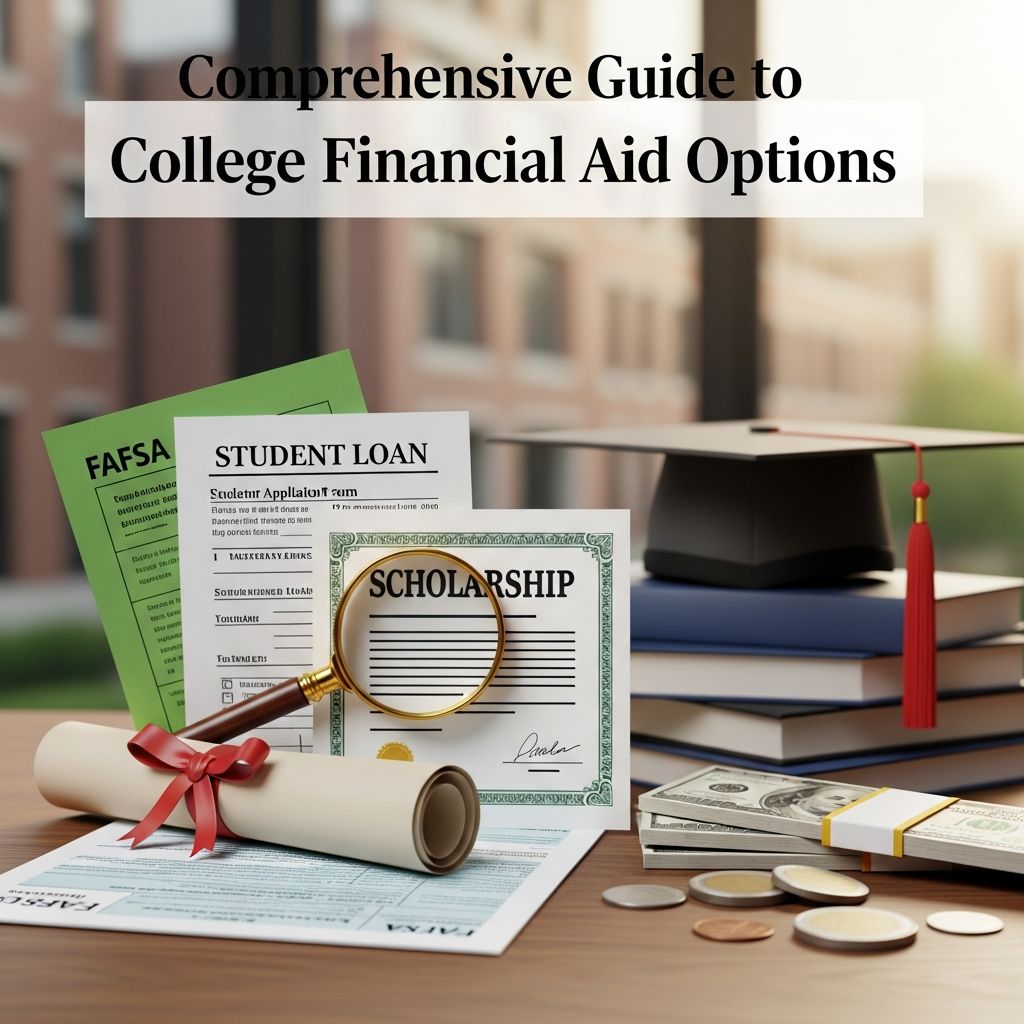
Paying for college represents one of the most significant financial decisions families face today. With tuition costs continuing to rise, understanding the landscape of available financial aid has become essential for students and parents alike. Financial aid encompasses multiple funding mechanisms designed to reduce the burden of education costs, and each option carries distinct characteristics, eligibility requirements, and repayment obligations. This guide explores the full spectrum of financial assistance available to help you navigate the path toward affordable higher education.
Understanding the Financial Aid Ecosystem
The financial aid system comprises multiple layers of support originating from different sources. The federal government serves as the largest provider of educational funding, distributing aid through various programs and mechanisms. Beyond federal support, state governments, individual colleges and universities, and private organizations all contribute to the financial aid landscape. Each source operates under different rules and requirements, making it crucial for students to understand where aid originates and what qualifications they must meet to access it.
The foundation for accessing most federal and institutional aid begins with the Free Application for Federal Student Aid (FAFSA). This standardized form collects financial information used to determine eligibility for need-based assistance and to calculate an Expected Family Contribution (EFC). Completing the FAFSA accurately and on time remains one of the most important steps in securing financial aid, as many institutions require this form before distributing any assistance.
Gift Aid: Non-Repayable Funding Sources
Gift aid represents the most desirable form of financial assistance because it does not require repayment. This category encompasses grants and scholarships, both of which can substantially reduce the actual cost of attendance. Understanding the distinctions between these two funding sources helps students identify opportunities that match their qualifications and circumstances.
Grants: Need-Based Free Money
Grants function as need-based financial aid that does not require repayment under normal circumstances. These funds are distributed primarily through the federal government, state governments, and educational institutions themselves. The primary determining factor for grant eligibility remains the student’s demonstrated financial need, calculated by subtracting the Expected Family Contribution from the total cost of attendance.
Federal grants represent the most accessible form of need-based assistance for undergraduate students. The Pell Grant stands as the most recognizable federal grant program, providing funds to low-income undergraduate students who have not yet earned a bachelor’s degree. The maximum Pell Grant amount adjusts annually, and eligibility depends on FAFSA information and enrollment status.
Beyond federal programs, states offer grant opportunities tailored to residents attending colleges within their borders. These state-sponsored grants often feature varying eligibility criteria and award amounts, with some states offering particularly generous programs. Students should investigate their home state’s financial aid office website to identify available state grant opportunities.
Colleges and universities also distribute institutional grants sourced from their own endowments and operating budgets. These grants may be awarded based on financial need, academic achievement, or a combination of both factors. Some institutions use the CSS Profile in addition to the FAFSA to determine eligibility for institutional aid, requiring students to complete additional applications.
Scholarships: Diverse Merit and Need-Based Awards
Scholarships represent another category of gift aid that does not require repayment. Unlike grants, which focus primarily on financial need, scholarships recognize various student qualities and accomplishments, including academic excellence, artistic talent, athletic ability, or specific characteristics such as military service or field of study.
Merit-Based Scholarships reward students for demonstrated achievement in academics, athletics, performing arts, or other talents. These competitive awards encourage high performance and can substantially offset education costs. Merit scholarships often require students to maintain specified grade point averages or performance levels throughout their college careers to retain funding eligibility.
Athletic Scholarships represent a specialized merit-based award type designed to attract talented athletes to college sports programs. These scholarships can cover significant portions of education expenses, allowing student-athletes to pursue both athletic and academic goals simultaneously.
Need-Based Scholarships function similarly to grants but come from scholarship-specific sources rather than government programs. Private organizations, corporations, and foundations offer need-based scholarships to students demonstrating financial need combined with other qualifying criteria.
Beyond institutionally-funded scholarships, students can access numerous external scholarship opportunities through private organizations, nonprofits, and corporations. These external awards may target specific student populations, field of study interests, or personal circumstances, creating diverse pathways to scholarship funding.
Loans: Borrowed Funds Requiring Repayment
Student loans enable students to borrow money for education costs with the obligation to repay borrowed amounts plus interest over time. Understanding the distinctions between federal and private loans proves essential, as these options carry significantly different terms, interest rates, and borrower protections.
Federal Student Loans
The federal government offers multiple loan programs specifically designed for students, all of which require FAFSA completion for eligibility determination. Federal loans typically feature lower interest rates than private alternatives and include various borrower protections and flexible repayment options.
Direct Subsidized Loans represent federal loans where the government pays interest that accrues while students remain enrolled in college. This subsidy means that borrowers avoid accumulating additional debt during their academic years. Eligibility for subsidized loans depends on demonstrated financial need calculated through the FAFSA process.
Direct Unsubsidized Loans differ from subsidized loans in that borrowers bear responsibility for all interest accrued while in college. Interest begins accumulating immediately upon loan disbursement, and students can choose to pay interest while in school or allow it to accrue and capitalize (be added to the principal balance) after graduation.
PLUS Loans (Parent Loan for Undergraduate Students) serve parents of dependent students who need additional funding beyond what federal student loans provide. These loans require a credit check and carry slightly higher interest rates than undergraduate federal loans. Graduate students can access Grad PLUS Loans, similar programs designed specifically for graduate education financing.
Direct Consolidation Loans allow borrowers to combine multiple federal student loans into a single loan with a single monthly payment. Consolidation can simplify repayment but typically extends the repayment timeline, potentially increasing total interest paid.
Private Student Loans
When federal aid options prove insufficient, private student loans from banks, credit unions, and specialized lenders offer supplementary funding. Private loans typically carry higher interest rates than federal alternatives and offer fewer borrower protections and repayment flexibility options.
Private loans function as traditional credit products, requiring a credit check and potentially a cosigner. Interest rates may be fixed or variable, and repayment terms vary by lender. Students should exhaust federal loan options before pursuing private loans due to less favorable terms and higher costs over the life of the loan.
Work-Study Programs: Earning While Learning
Work-study programs provide students with part-time employment opportunities designed to help pay for education expenses. These federal work-study positions typically employ students on campus or at approved off-campus locations, with wages directly supporting education costs.
Work-study positions offer several advantages beyond income generation. These jobs provide valuable work experience, develop professional skills, and typically feature flexible schedules accommodating academic responsibilities. The federal government subsidizes a portion of work-study wages, allowing institutions to employ more students than they might otherwise afford.
Eligibility for work-study depends on FAFSA completion and demonstrated financial need. Students interested in work-study opportunities should contact their institution’s financial aid office to inquire about available positions and application procedures.
Specialized Financial Aid for Specific Populations
Certain student populations access specialized financial aid programs beyond the standard grant, scholarship, and loan options. These targeted programs recognize unique circumstances and provide tailored support.
Military-Connected Aid
Students with military connections access several specialized funding sources. ROTC (Reserve Officers’ Training Corps) scholarships offered by the Army, Air Force, and Navy provide merit-based funding to students pursuing high-need degree programs and considering military careers. Veterans, surviving spouses, and family members may qualify for Department of Veterans Affairs (VA) education benefits. Additionally, students whose parents died during military service in Iraq or Afghanistan may access service grants providing education funding.
Graduate Student Funding
Graduate students access somewhat different financial aid landscapes compared to undergraduates. While federal grants remain limited at the graduate level, students can pursue federal Direct Unsubsidized Loans and Grad PLUS Loans. Many institutions offer graduate assistantships, scholarships, and tuition benefits. Professional organizations and field-specific fellowships provide additional funding pathways for graduate-level study.
Aid Package Assembly and Distribution
After submitting the FAFSA and any required institutional forms, a student’s financial aid office constructs a customized aid package. This package combines various aid types based on the student’s enrollment status, total cost of attendance, and demonstrated financial need. Typical aid packages may include federal grants, institutional scholarships, federal loans, and work-study opportunities in combinations tailored to individual circumstances.
Students review their aid packages carefully, understanding what components constitute gift aid (non-repayable) versus loans (requiring repayment). Some aid package components may be accepted or declined, allowing students to control their borrowing levels. Additional steps such as loan counseling sessions and promissory note signing must be completed before funds are disbursed to student accounts.
Maximizing Your Financial Aid Potential
Several strategies help students maximize their financial aid opportunities. First, complete the FAFSA as early as possible following the release date, as some aid distributes on a first-come, first-served basis. Second, research both federal and state aid programs available to you, as many eligible students never apply for available funding. Third, investigate external scholarships from organizations related to your interests, background, or field of study. Fourth, maintain strong academic performance to qualify for merit-based aid opportunities. Finally, maintain regular contact with your institution’s financial aid office, as circumstances change and additional aid opportunities may become available throughout your academic career.
Understanding Your Obligations
While grants, scholarships, and work-study income do not require repayment, student loans create financial obligations lasting years or decades after graduation. Before borrowing, students should carefully consider how much debt they can reasonably repay based on projected career earnings. Federal loan repayment options include standard 10-year plans, extended timelines, and income-driven repayment plans that tie monthly payments to income levels. Understanding these options before borrowing enables more informed decision-making about loan amounts and types.
References
- What Are the Different Types of Financial Aid? — College Board BigFuture. https://bigfuture.collegeboard.org/pay-for-college/get-help-paying-for-college/different-types-financial-aid
- All Forms of Financial Aid for College — Ascent Funding. https://www.ascentfunding.com/blog/types-of-financial-aid/
- Financial Aid FAQs: Understanding Your Options for Paying for College — Champlain College Online. https://online.champlain.edu/blog/types-of-financial-aid
- Types of Student Financial Aid — USA.gov. https://www.usa.gov/student-aid
- Federal Student Loans — Federal Student Aid (U.S. Department of Education). https://studentaid.gov/understand-aid/types/loans
- Types of Aid and Eligibility — Federal Student Aid Toolkit (U.S. Department of Education). https://financialaidtoolkit.ed.gov/tk/learn/types.jsp

- Integrated M.A. in Applied Linguistics, University of Hyderabad
- 5+ years in editorial, instructional, SEO, and research-based writing
Sneha is a relationships and lifestyle writer with a strong foundation in applied linguistics and certified training in relationship coaching. She brings over five years of writing experience to theskillvault, crafting thoughtful, research-driven content that empowers readers to build healthier relationships, boost emotional well-being, and embrace holistic living. Her writing and insights reflect the belief that beauty, happiness, and wellness…