
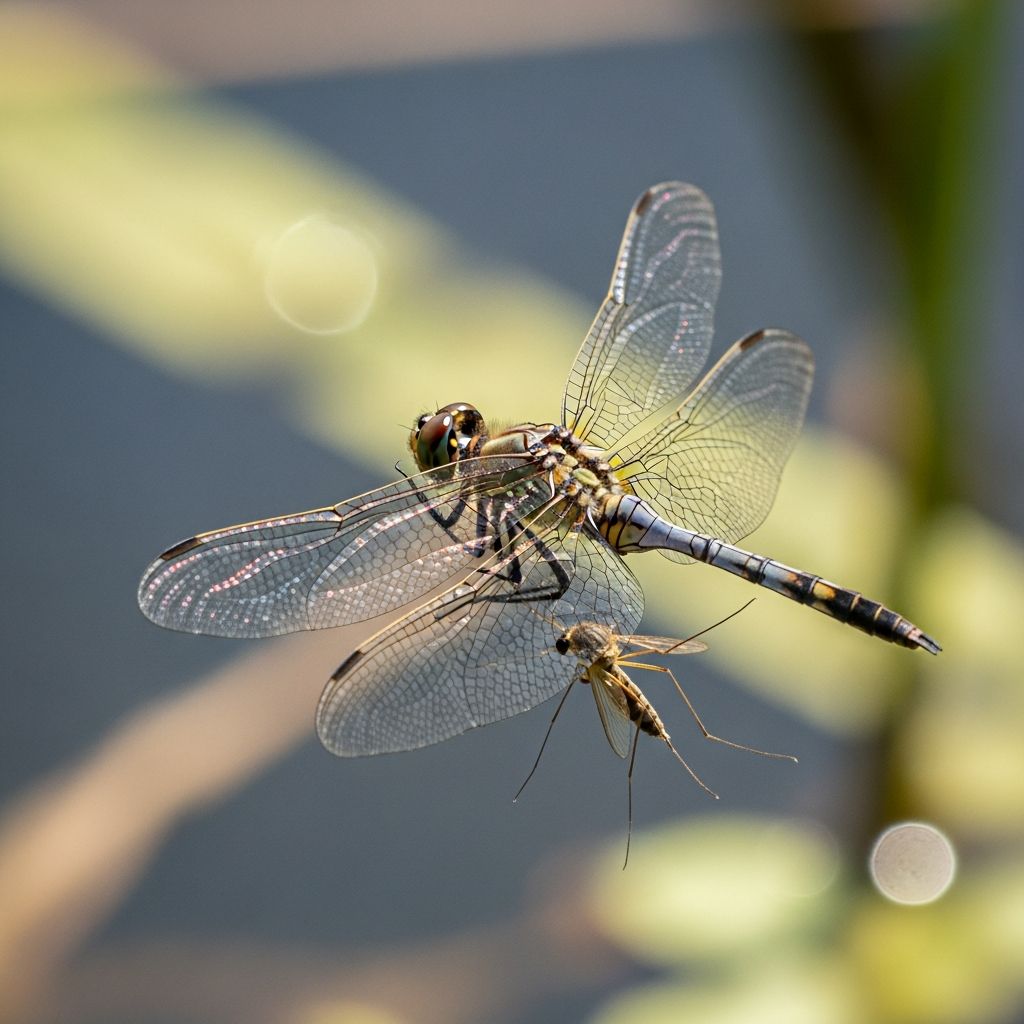
Dragonflies represent some of nature’s most fascinating and effective predators, commanding respect in both terrestrial and aquatic ecosystems. These ancient insects have maintained their predatory dominance for millions of years, evolving sophisticated hunting techniques and sensory capabilities that allow them to thrive across diverse habitats. Understanding what dragonflies consume reveals not only the diversity of their diet but also the remarkable biological adaptations that make them extraordinarily successful hunters.
The Carnivorous Nature of Dragonflies
Dragonflies are obligate carnivores, meaning their survival depends entirely on consuming animal matter. These insects have developed into specialized predators through millions of years of evolution, and their feeding behavior reflects this specialized adaptation. Unlike many insects that consume plants or a mixed diet, dragonflies maintain an exclusively meat-based nutritional strategy that fuels their high-energy aerial lifestyle.
The carnivorous commitment of dragonflies extends throughout their entire life cycle. Whether in their larval aquatic stage or as winged adults, dragonflies allocate significant time and energy to hunting and consuming prey. This dietary focus demonstrates the importance of predation to their survival and reproductive success.
Adult Dragonfly Prey: A Diverse Menu
Adult dragonflies exhibit remarkable dietary flexibility, consuming a wide variety of flying insects. Their primary prey items include:
- Small flies and midges, which constitute a significant portion of their diet
- Mosquitoes, though not exclusively as a primary food source despite popular belief
- Butterflies and moths, which provide larger meals
- Beetles and other hard-bodied insects
- Wasps and bees, captured during aerial encounters
- Other dragonflies, demonstrating opportunistic cannibalistic behavior
An individual adult dragonfly can consume hundreds of insects daily, depending on species size, environmental conditions, and prey availability. This impressive feeding rate reflects their metabolic demands and represents a significant ecological service in controlling insect populations. The diversity of their prey base ensures that dragonflies can adapt to varying environmental conditions and seasonal changes in insect availability.
Research has documented exceptional cases where adult dragonflies have captured and consumed surprisingly large prey, including small birds. While such incidents remain rare, they demonstrate the opportunistic nature of these predators and their willingness to attempt capture of prey beyond their typical size range.
Aquatic Nymphs: Underwater Predators with Unique Weapons
The larval stage of dragonflies, known as nymphs, presents an entirely different ecological role and dietary strategy. These aquatic juveniles spend months to years in freshwater environments, developing as fierce underwater predators before eventually transforming into winged adults. During this extended aquatic phase, nymphs occupy a crucial position in freshwater food webs.
Dragonfly nymphs consume a specialized array of aquatic prey items suited to their underwater habitat:
- Aquatic insect larvae, including chironomid and other dipteran larvae
- Mosquito larvae, intercepting this pest species before it reaches adulthood
- Small crustaceans such as water fleas and ostracods
- Insect pupae and other developmental stages
- Tadpoles of amphibians, when available and appropriate to nymph size
- Small fish and fish fry in some cases
The predatory efficiency of nymphs manifests through a specialized appendage: a retractable lower jaw armed with pincers that can be projected rapidly to snatch unsuspecting prey. This adaptation represents millions of years of evolutionary refinement specifically suited to aquatic hunting. The mechanical design of this weapon allows nymphs to capture prey with remarkable speed and precision, often in murky water where visibility remains limited.
Comparative Hunting Success: Why Dragonflies Excel
One of the most striking aspects of dragonfly predation involves their hunting success rate, which substantially exceeds that of larger, more celebrated predators. Adult dragonflies successfully capture between 95 and 97 percent of their intended prey. This efficiency dwarfs the capture rates of iconic predators: sharks achieve approximately 50 percent success, while lions manage only about 25 percent. This dramatic difference underscores the specialized evolutionary refinements that dragonflies have undergone.
The superiority of dragonfly hunting efficiency stems from multiple complementary factors working in coordination. Their exceptional vision, precise neurological calculations, and remarkable maneuverability combine to create a predatory system that remains unmatched in the natural world. This hunting prowess has allowed dragonflies to maintain ecological success across multiple continents and diverse environmental conditions.
Advanced Sensory Systems Driving Predatory Success
Dragonflies possess visual capabilities that fundamentally enable their hunting superiority. These insects can perceive their surroundings across nearly 360 degrees, providing exceptional spatial awareness and early detection of potential prey. Such comprehensive vision permits rapid identification of movement patterns and recognition of prey silhouettes even at considerable distances.
During active pursuit, dragonflies employ sophisticated neurological processing to predict prey trajectories. Within milliseconds, their nervous systems calculate the distance separating them from their target, determine the direction of prey movement, and assess the velocity at which their quarry travels. Using this information, the dragonfly instantaneously computes the optimal approach angle and acceleration required to intercept the prey’s anticipated position. This represents a level of aerial computation that rivals contemporary aircraft guidance systems.
Dragonflies additionally exploit prey vulnerability by approaching from behind and below, angles where many flying insects possess blind spots or reduced sensory acuity. This tactical awareness reveals sophisticated predatory psychology alongside their physical capabilities.
Anatomical Specializations for Predation
The physical structure of dragonflies has evolved specifically to support their predatory lifestyle. Their wing design permits unprecedented maneuverability, enabling flight in any direction with instantaneous directional changes. This aeronautical capability allows dragonflies to respond immediately to prey evasion attempts and position themselves advantageously for capture.
The front legs of dragonflies function as sophisticated grasping apparatus designed to trap and secure prey during capture. Once ensnared by these spiny, articulated limbs, prey items face capture by powerful mandibles—serrated jaw structures capable of opening as wide as the dragonfly’s entire head. These formidable jaws shred the wings of larger prey, immobilizing them before consumption. Smaller insects like mosquitoes may be consumed whole immediately following capture.
Hunting Strategies: Behavioral Diversity Among Species
Not all dragonfly species employ identical hunting strategies. Researchers have identified two primary behavioral categories reflecting different ecological approaches to predation.
| Hunting Strategy | Behavioral Characteristics | Typical Species Size |
|---|---|---|
| Perchers | Remain stationary on vegetation or structures, launching rapid strikes when prey approaches nearby | Generally smaller species |
| Hawkers | Actively patrol territories in sustained flight, seeking and pursuing prey across open areas | Generally larger species |
Perching dragonflies conserve energy by remaining alert from stationary positions, exploiting the element of surprise when unsuspecting prey ventures within striking range. Hawker species, conversely, invest greater energy in active foraging but gain the advantage of covering larger territories and accessing prey that avoids vegetation. Some dragonflies have evolved specialized ambush behaviors, including waiting motionless on flowers where they intercept insects during pollination visits.
The Feeding Cycle and Energy Balance
The feeding intensity of dragonflies reflects their energetic requirements for maintaining their active lifestyle. The combination of sustained flight, rapid aerial maneuvers, and thermoregulation demands substantial caloric intake. By consuming hundreds of insects daily, individual dragonflies accumulate the energy reserves necessary to support reproduction, territorial defense, and survival.
The timing and intensity of feeding varies seasonally. During breeding season, dragonflies may increase feeding frequency to accumulate energy for reproductive activities and competition with rivals. Conversely, during cooler periods when insect abundance declines, dragonflies adjust their behavior, sometimes entering periods of reduced activity or engaging in more opportunistic feeding when conditions permit.
Ecological Significance of Dragonfly Predation
Beyond their individual feeding requirements, dragonflies provide substantial ecological services through their predatory activities. Larval dragonflies in aquatic environments consume mosquito larvae before they can develop into biting adults, providing natural population control without requiring human intervention. While adult dragonflies consume mosquitoes, their larvae represent a more significant component of mosquito population regulation. Ducks and other waterfowl also participate in consuming mosquito larvae, working in concert with dragonfly nymphs to suppress these disease vectors.
The presence of healthy dragonfly populations indicates ecosystem quality and functional aquatic food webs. Their predatory dominance helps regulate insect populations that might otherwise proliferate to problematic levels, maintaining ecological balance across terrestrial and freshwater environments.
Frequently Asked Questions
Q: How many insects can a dragonfly consume in a single day?
A: Adult dragonflies can consume hundreds of insects daily, depending on species, size, and environmental conditions. A single dragonfly may capture upward of 100 mosquitoes in one day.
Q: Are dragonflies effective at mosquito control?
A: While adult dragonflies do consume mosquitoes, their larvae (nymphs) are more significant in mosquito population control, feeding on mosquito larvae in aquatic environments before they can mature into biting adults.
Q: What adaptations make dragonflies such successful hunters?
A: Dragonflies possess nearly 360-degree vision, the ability to calculate prey trajectories within milliseconds, wings that permit flight in any direction, and powerful jaws capable of capturing and consuming diverse prey.
Q: Do dragonfly nymphs hunt the same prey as adults?
A: No. Nymphs occupy aquatic environments and consume aquatic insects, larvae, crustaceans, tadpoles, and small fish, while adults hunt flying insects.
Q: How do dragonflies compare to other apex predators in hunting efficiency?
A: Dragonflies capture 95-97% of their intended prey, substantially exceeding sharks (50%) and lions (25%), making them among nature’s most successful predators.
Q: Do dragonflies have natural predators?
A: Yes. Birds such as swallows, swifts, merlins, and hobbies prey on dragonflies, as do spiders that catch them in webs. Larger dragonflies occasionally consume smaller dragonflies.
References
- Dragonfly Feeding Behavior | What Dragonflies Eat — Dragonfly Website. Retrieved from https://dragonflywebsite.com/dragonfly-feeding.cfm
- What do dragonflies eat, and how do they hunt? — Ducks Unlimited Canada. Retrieved from https://www.ducks.ca/stories/conservator/what-dragonflies-eat/
- What Do Dragonflies Eat? Discover Their Carnivorous Diet and Hunting Skills — YouTube Zoologist Channel. Retrieved from https://www.youtube.com/watch?v=jNmUuyY_Jjg
- What do Dragonflies Eat? And Other Facts — Woodland Trust. 2019-05. Retrieved from https://www.woodlandtrust.org.uk/blog/2019/05/what-do-dragonflies-eat/
- Dragonflies: The ultimate hunters — Natural History Museum. Retrieved from https://www.nhm.ac.uk/discover/dragonflies-the-ultimate-hunters.html

Medha Deb is an editor with a master's degree in Applied Linguistics from the University of Hyderabad. She believes that her qualification has helped her develop a deep understanding of language and its application in various contexts. Medha specializes in the areas of beauty, health, sports, and wellness and is committed to ensuring that the content on the website is…