
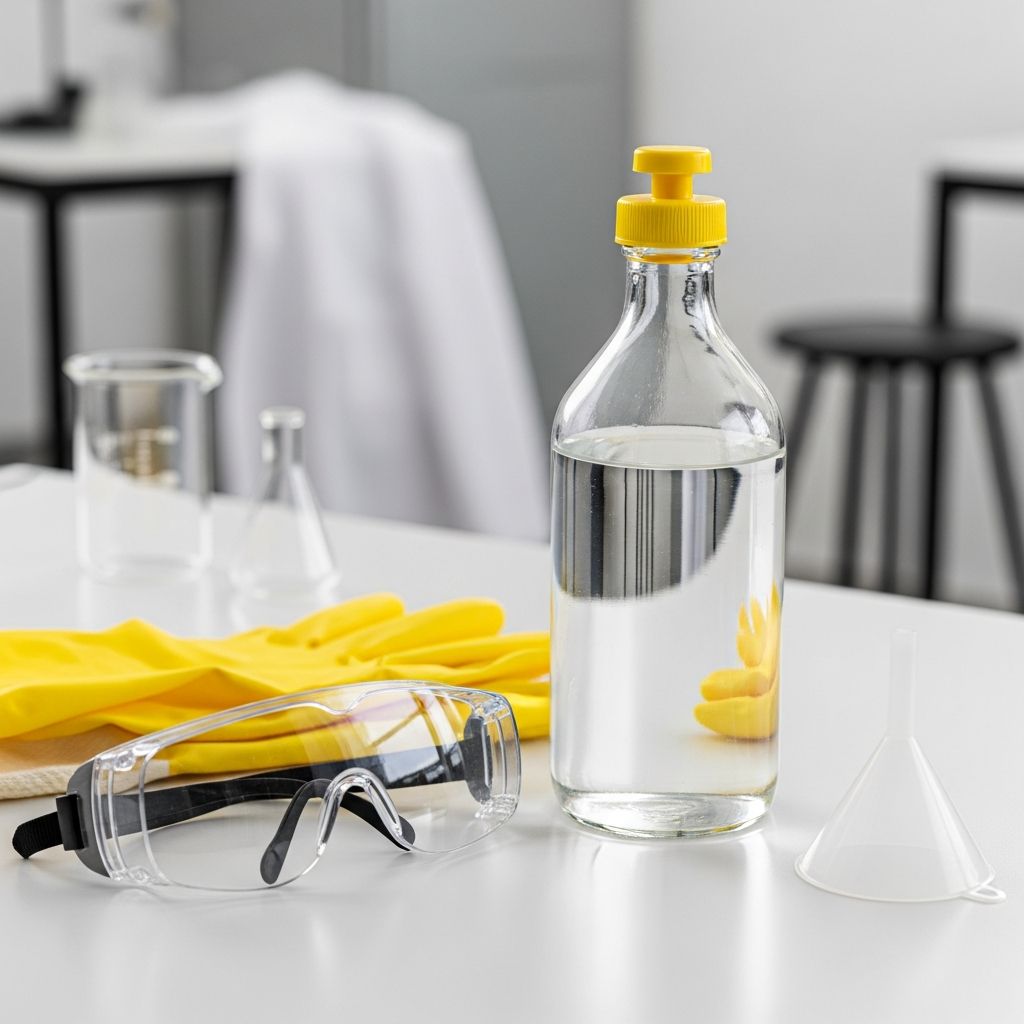
Muriatic acid serves as a diluted version of hydrochloric acid, typically containing 14.5% to 34% HCl, making it a versatile yet potent chemical for various tasks.
Understanding the Chemical Composition
Muriatic acid, often appearing as a clear to yellowish liquid with a sharp odor, consists primarily of hydrogen chloride gas dissolved in water. Its pH ranges from 1 to 2, rendering it highly acidic and corrosive, comparable to stomach acid but far more concentrated in HCl content. Unlike pure hydrochloric acid, which is colorless and odorless, muriatic acid includes impurities like iron, contributing to its distinctive hue and smell. These impurities reduce its purity but enhance its suitability for non-laboratory applications.
The term ‘muriatic’ originates from Latin, referring to its historical use in pickling metals in brine solutions. Commercially, it standardizes at around 31.45% HCl (20° Baume), balancing potency with manageability for household and industrial needs.
Key Properties and Reactivity
This acid exhibits strong corrosive properties, capable of dissolving metals like iron and reacting violently with aluminum, magnesium, and bases such as sodium hydroxide. These reactions are exothermic, releasing significant heat. It effectively breaks down mineral deposits, rust, and organic stains due to its low pH, which protonates surfaces and facilitates dissolution.
- Acidity Level: pH 1-2, over a million times more acidic than neutral water.
- Appearance: Yellowish liquid with pungent fumes.
- Reactivity: Dissolves rust, etches concrete, adjusts pH rapidly.
- Volatility: Releases HCl gas when exposed to air, creating hazardous vapors.
| Property | Muriatic Acid | Pure HCl |
|---|---|---|
| Concentration | 14.5-34% HCl | 37%+ HCl |
| Purity | Contains impurities (e.g., iron) | High purity, colorless |
| pH | 1-2 | ~0 |
| Common Use | Household, pools, cleaning | Lab, industry |
Applications in Swimming Pool Maintenance
One of the most common household uses of muriatic acid is in pool care, where it balances water chemistry. Ideal pool pH sits between 7.2 and 7.6; elevated levels reduce chlorine efficacy, cause cloudiness, and promote scaling. Muriatic acid lowers pH swiftly and adjusts total alkalinity to 80-120 ppm, stabilizing water conditions.
To use, add small amounts gradually while circulating water, testing levels frequently. It also cleans pool surfaces, removing calcium deposits from tiles and plaster. Availability at hardware and pool stores makes it accessible, but precise dosing prevents over-acidification, which corrodes equipment.
Cleaning and Surface Preparation Uses
Muriatic acid excels at tackling tough stains on masonry, concrete, brick, and stone. It removes mold, rust, mineral buildup, and efflorescence, preparing surfaces for sealing or coating. For concrete etching before painting or staining, dilute 1:10 with water, apply, let fizz, then rinse thoroughly.
In household settings, it clears clogged drains, cleans basements, toilets, and brickwork. Always neutralize residues with baking soda or ammonia post-use to avoid slippery, caustic surfaces. Its ability to dissolve rust from steel and iron makes it valuable for metal restoration projects.
Industrial and Manufacturing Roles
Beyond homes, muriatic acid drives large-scale processes. In metal processing, it removes rust and scales from steel via pickling, ensuring smooth surfaces for further treatment. The chemical industry employs it to produce vinyl chloride for PVC plastics and polyurethane foams.
It synthesizes bisphenol A for polycarbonates, ascorbic acid (vitamin C), and various pharmaceuticals as a reagent or precursor. In leather processing, it treats raw hides; in food industries, it refines sugar and gelatin by removing impurities. Its role in inorganic compound production involves reacting with bases to form salts.
- Metal pickling and descaling
- PVC and foam manufacturing
- Pharmaceutical intermediates
- Food processing aids
Safety Protocols and Precautions
Handling muriatic acid demands strict safety measures due to its corrosiveness. It causes severe burns on skin, eyes, and respiratory tissues; vapors irritate lungs and eyes.
- Wear chemical-resistant gloves, goggles, respirator, and full-body coverage.
- Work in well-ventilated areas or outdoors.
- Dilute always: 1 part acid to 10 parts water (never reverse).
- Store in cool, dry places in original containers, away from bases and metals.
- Neutralize spills with baking soda; rinse with water.
In case of contact, flush with water for 15+ minutes and seek medical help. For ingestion or inhalation, contact poison control immediately.
Storage, Disposal, and Environmental Impact
Store upright in shaded, locked areas below 95°F to prevent vapor buildup. Label clearly and keep from children/pets. Dispose via hazardous waste facilities; neutralize first to pH 6-8.
Environmentally, runoff harms aquatic life by acidifying water. Use containment and follow local regulations to minimize impact.
Frequently Asked Questions (FAQs)
What makes muriatic acid yellow?
Iron impurities tint it yellow, distinguishing it from pure HCl.
Can I use muriatic acid to clean my pool tiles?
Yes, diluted properly, it removes calcium and stains effectively.
Is muriatic acid safe for septic systems?
No, avoid drains connected to septics; it kills beneficial bacteria.
How do I neutralize muriatic acid after use?
Sprinkle baking soda or ammonia solution until fizzing stops, then rinse.
What’s the difference between muriatic and sulfuric acid for cleaning?
Muriatic is HCl-based, better for mineral stains; sulfuric is stronger for organics but more hazardous.
Alternatives to Muriatic Acid
For milder tasks, consider vinegar (5% acetic acid) for light cleaning or phosphoric acid for rust removal without strong fumes. Commercial pool pH decreasers offer safer, pre-diluted options.
References
- What Is Muriatic Acid? Is It Dangerous? — PrepScholar Blog. 2023-01-15. https://blog.prepscholar.com/muriatic-acid-uses
- Muriatic Acid for Pools: What It Is, Why It Matters, and Safety — Alpha Measure. 2024-05-20. https://alpha-measure.com/muriatic-acid-for-pools-what-it-is-why-it-matters-and-safety/
- What Is Muriatic Acid? — Chemicals.co.uk. 2023-11-10. https://www.chemicals.co.uk/blog/what-is-muriatic-acid
- What Is Muriatic Acid and Is It Safe For Home Cleaning? — HowStuffWorks. 2024-02-28. https://home.howstuffworks.com/home-improvement/household-hints-tips/cleaning-organizing/muriatic-acid.htm
- What Is Muriatic Acid and Is It Harmful? — Clearwater Pool Systems. 2023-08-05. https://clearwaterpoolsystems.com/what-is-muriatic-acid-and-is-it-harmful/
- Muriatic Acid: 8 Surprising Uses You Never Knew About — Atlas Scientific. 2024-03-12. https://atlas-scientific.com/blog/muriatic-acid-uses/
- Muriatic Acid: What It Is and Why It’s a Cleaning Product — NEDT. 2023-09-18. https://www.nedt.org/muriatic-acid-what-it-is-and-why-its-a-cleaning-product/

Medha Deb is an editor with a master's degree in Applied Linguistics from the University of Hyderabad. She believes that her qualification has helped her develop a deep understanding of language and its application in various contexts. Medha specializes in the areas of beauty, health, sports, and wellness and is committed to ensuring that the content on the website is…