
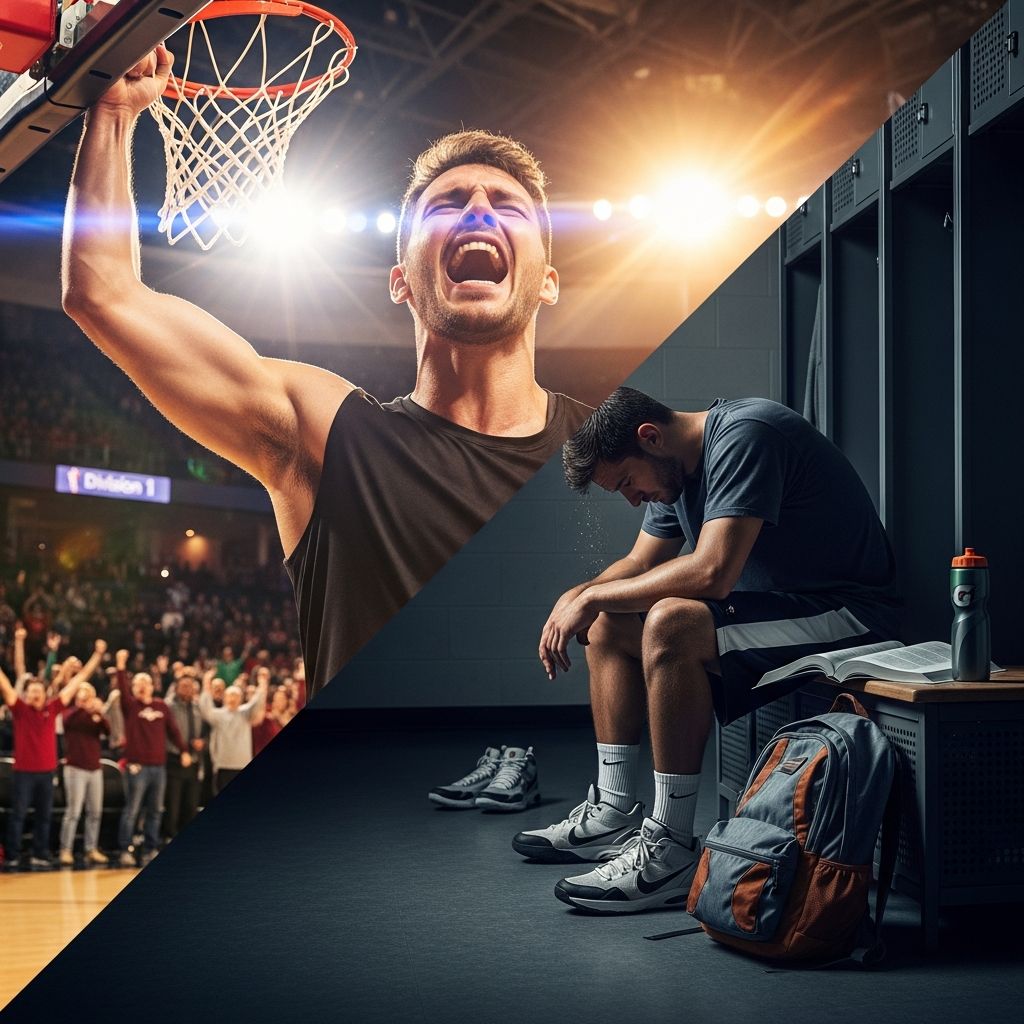
Competing as a Division I (D1) athlete represents the pinnacle of college sports, blending elite athletic performance with rigorous academic demands. These student-athletes train like professionals while pursuing degrees, facing schedules that test physical limits and mental resilience. This article delves into the multifaceted world of D1 athletics, drawing from official NCAA guidelines to outline eligibility hurdles, daily routines, balancing acts, and career implications.
Navigating NCAA Eligibility: The Gateway to D1 Competition
To step onto D1 fields or courts, prospective athletes must first conquer strict academic benchmarks set by the NCAA Eligibility Center. These rules ensure participants are genuine students, not just competitors.
Central to qualification is completing **16 core courses** in high school, spread across specific subjects and timelines. For D1 entrants from 2025-26 onward, requirements include:
- 4 years of English
- 3 years of math (Algebra 1 or higher)
- 2 years of natural/physical science (1 lab year if offered)
- 2 years of social science
- 1 additional year in English, math, or science
- 4 additional years from English, math, science, foreign language, comparative religion, or philosophy
A **core course GPA of at least 2.3** is mandatory, calculated solely from these approved classes. The **10/7 rule** adds urgency: 10 of the 16 courses must finish by the start of senior year (seventh semester), with 7 in English, math, or science.
| Status | Privileges | Requirements |
|---|---|---|
| Full Qualifier | Scholarship, practice, compete Year 1 | 16 cores, 2.3 GPA, 10/7 rule, graduation, amateur certification |
| Academic Redshirt | Scholarship, practice (limited), no Year 1 competition | 16 cores, meets sliding scale GPA/test scores |
| Partial Qualifier (D2 primarily) | Scholarship/practice limited, no competition | Lower GPA thresholds |
| Nonqualifier | No aid, practice, or competition Year 1 | Fails above standards |
High school graduation and final amateurism certification via the Eligibility Center complete the process. Test scores (SAT/ACT) align via sliding scales with GPA; international students may have adjusted rules.
Daily Grind: Training and Practice Demands
D1 athletes commit to **20-30 hours weekly** on sport-specific training, far exceeding recreational levels. Sessions start pre-dawn, featuring weightlifting, skill drills, film study, and team practices. Football players might log 4-hour sessions; swimmers endure double daily swims.
NCAA caps countable athletic activities at **20 hours/week** during season, plus 8 more optional, but off-season mandates persist. Travel for games—often weekends—disrupts routines, with cross-country flights common for national powerhouses.
- Preseason: Intensified conditioning, 25+ hours/week building endurance.
- In-Season: Game prep dominates, recovery via ice baths, physio.
- Off-Season: Skill refinement, summer camps voluntary yet expected.
Injuries loom large; top programs boast trainers, but sidelined athletes still attend team obligations. Nutrition plans emphasize high-protein, calibrated calories, often monitored by dietitians.
Academic Balancing Act: Thriving in the Classroom
Maintaining eligibility post-freshman year requires a **2.0 cumulative GPA** each term, with full-time enrollment (12+ credits). Progress-toward-degree rules demand 40% credits in first year, 60% by year three toward major graduation.
Classes cluster around practice-free windows—early mornings or late afternoons. Tutoring, study halls (mandated 2-3 hours/day in many programs), and academic advisors aid navigation. Yet, midterms clash with road trips; professors grant extensions sparingly.
Success stories abound: D1 grads outpace general students in graduation rates (e.g., 90%+ in basketball per recent NCAA data), thanks to structured support. Majors like communications or kinesiology suit flexible schedules; STEM fields demand extra grit.
Recruitment Journey: From Prospect to Commit
The path begins sophomore year: create NCAA profiles, email coaches with highlight reels. Junior year brings unofficial visits; seniors host officials (up to 5 per sport, expenses covered).
National showcases and camps spotlight talent. Verbal commitments precede National Letters of Intent (NLIs), binding scholarships. Walk-ons grind without guarantees, earning spots via open tryouts.
Frequently Asked Questions
What if I don’t meet full D1 academic standards?
Academic redshirt status allows scholarships and limited practice, competition possible after first term success.
How many years of eligibility do D1 athletes get?
Five calendar years to play four seasons of competition.
Can JUCO experience help D1 eligibility?
Yes, qualifying JUCO coursework can fulfill cores, but consult Eligibility Center.
Are test scores still required?
Sliding scales pair with GPA; some conferences test-optional, but NCAA retains them.
What support do D1 athletes receive academically?
Mandatory study halls, tutors, advisors ensure progress-toward-degree compliance.
Financial Perks and Scholarship Landscape
**Full rides** cover tuition, room, board, books—rare, under 1% of athletes. Partial awards stack with academics/merit aid. Name/Image/Likeness (NIL) deals now supplement, from local endorsements to major sponsorships, revolutionizing earnings (millions for stars).
Coston attendance grants aid non-scholarship athletes. Post-eligibility, NFL/NBA drafts or Olympics beckon elites; most leverage degrees for coaching, business, or pro leagues abroad.
Social and Mental Health Dimensions
Fame brings pressure: fan expectations, social media scrutiny. Team bonds foster lifelong friendships, but hazing risks and isolation from non-athlete peers challenge adjustment. Mental health resources—counselors, sports psychologists—have expanded, addressing burnout, anxiety.
Diversity thrives: 50%+ student-athletes people of color, international recruits enrich rosters. Women’s sports boom via Title IX, with soccer, volleyball matching football fervor.
Beyond the Field: Career and Life Preparation
D1 experience hones discipline, leadership, time management—gold for corporate ladders. Alumni networks open doors; 80%+ grads employed within months. Transfer portal eases switches, but loyalty yields deeper rewards.
Aspiring D1ers: prioritize cores early, train relentlessly, embrace dual identities. The journey forges champions, on courts and in life.
References
- NCAA Eligibility Requirements for Student-Athletes — NCSA. 2024. https://www.ncsasports.org/ncaa-eligibility-center/eligibility-requirements
- College Athletics Eligibility & Requirements — GoLHSFlyers. 2024-01-31. https://golhsflyers.net/sports/2024/1/31/college-athletics-eligibility-requirements.aspx
- What Is the NCAA GPA Requirement? — Keystone Sports. 2023. https://keystonesports.com/what-is-the-ncaa-gpa-requirement/
- Division I Academic Standards — NCAA. 2014-10-24. http://fs.ncaa.org/Docs/eligibility_center/Student_Resources/DI_ReqsFactSheet.pdf
- ACADEMIC ELIGIBILITY 101 — Honest Game. 2023. https://honestgame.com/blog/academic-eligibility-101/
- Play Division I Sports — NCAA.org. 2014-10-24. https://www.ncaa.org/sports/2014/10/24/play-division-i-sports.aspx
- How do Years of Eligibility Work in College Sports? — Sportdecals. 2023. https://www.sportdecals.com/blog/post/how-do-years-of-eligibility-work-in-college-sports

- Integrated M.A. in Applied Linguistics, University of Hyderabad
- 5+ years in editorial, instructional, SEO, and research-based writing
Sneha is a relationships and lifestyle writer with a strong foundation in applied linguistics and certified training in relationship coaching. She brings over five years of writing experience to theskillvault, crafting thoughtful, research-driven content that empowers readers to build healthier relationships, boost emotional well-being, and embrace holistic living. Her writing and insights reflect the belief that beauty, happiness, and wellness…