
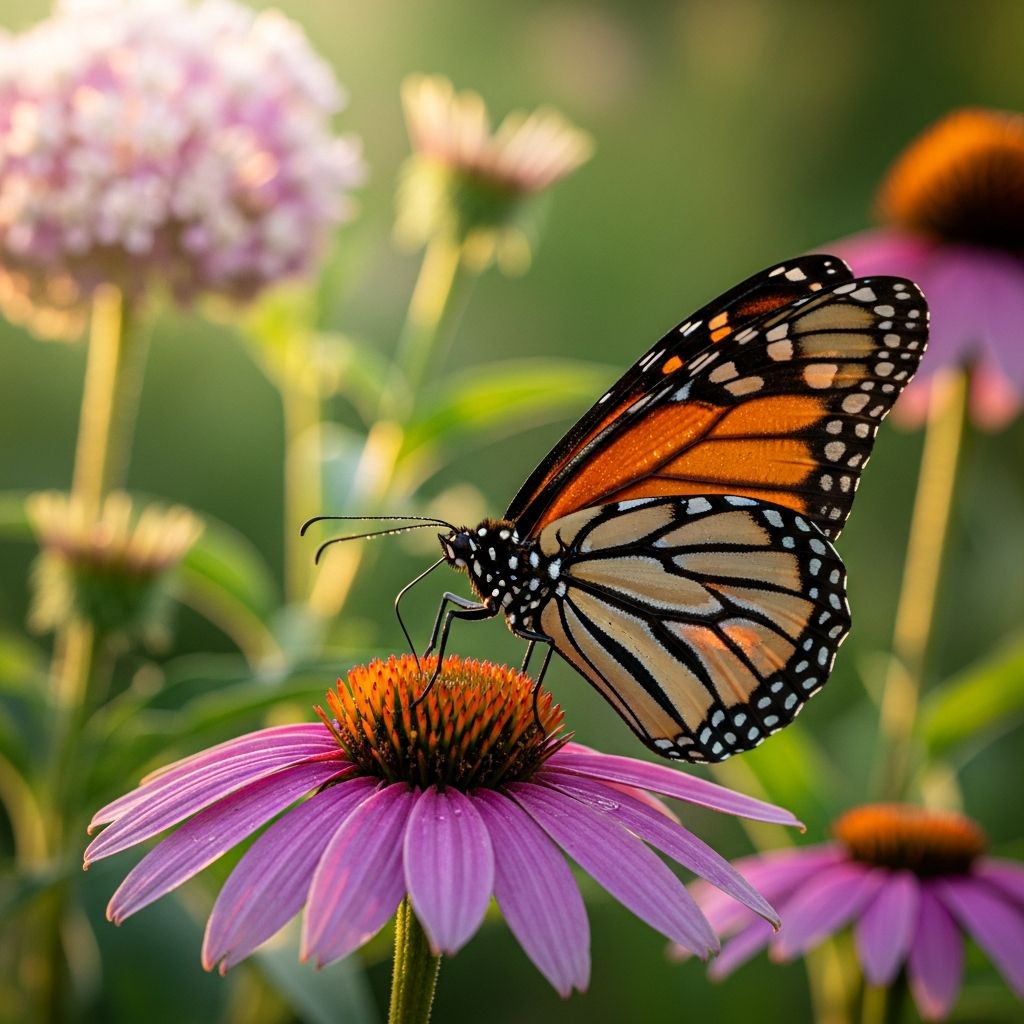
Monarch butterflies, renowned for their striking orange wings and epic migrations, rely on specific foods throughout their life cycle to thrive. From the larval stage’s dependence on milkweed to adults sipping nectar from various flowers, their dietary needs are both specialized and diverse, playing a key role in their survival amid declining populations.
The Life Cycle and Dietary Demands
Monarchs undergo complete metamorphosis, passing through egg, larva (caterpillar), pupa, and adult stages. Each phase has unique nutritional requirements that directly influence growth, reproduction, and long-distance travel. Females lay 100-300 eggs on milkweed leaves, hatching in 3-5 days into caterpillars that feed voraciously for two weeks.
Caterpillars increase their mass by nearly 2,000 times, molting five times (instars) while consuming vast quantities of foliage. Adults emerge after pupation, using a proboscis—a coiled tongue—to drink liquids, as they lack chewing mouthparts.
Why Milkweed is Indispensable for Caterpillars
Milkweed (genus Asclepias) is the sole food for monarch larvae, with over 100 species native to the U.S. Without it, caterpillars starve, as they cannot digest other plants.
- Nutritional Role: Provides essential proteins, sugars, and water for rapid growth.
- Toxic Protection: Contains cardenolides (cardiac glycosides), toxins stored in the caterpillar’s body, deterring predators like birds.
- Habitat Link: Females select milkweed for egg-laying, ensuring offspring survival.
Common species like Asclepias syriaca support over 450 insects, but monarchs depend on it most critically. Depletion from herbicides and land use has contributed to their endangered status by IUCN.
Adult Monarchs: Nectar as Primary Fuel
Unlike larvae, adults feed on nectar from myriad flowers, gaining carbohydrates, amino acids, salts, and water. This liquid diet sustains flight, especially during 3,000-mile migrations to Mexican oyamel forests.
Key nectar sources include:
| Flower Type | Benefits | Regions |
|---|---|---|
| Milkweed blooms | High sugar, familiar toxin source | Widespread North America |
| Lantana, Ixora | Abundant nectar, colorful attractants | Gardens, tropics |
| Firespike, coral vine | Rich in carbs for energy | Butterfly havens |
| Goldenrod, asters | Fall blooms for migration fuel | Northern U.S. |
Migratory monarchs build fat reserves by feeding heavily en route south, sometimes gaining weight despite the journey. Overwintering adults feed minimally.
The Science of Toxicity and Warning Colors
Monarchs employ aposematism: bold orange-black patterns warn predators of toxicity. Cardenolides disrupt sodium pumps in vertebrates, causing heart issues if ingested.
Northern monarchs absorb milder doses from common milkweed, while southern ones from toxin-rich species become highly unpalatable. Predators learn quickly after one taste, spitting them out.
Viceroy butterflies mimic monarch coloration for protection, despite lacking toxins.
Captive Care: Feeding Monarchs in Gardens or Enclosures
Rearing monarchs requires mimicking wild conditions. For caterpillars:
- Fresh milkweed cuttings, rinsed to remove pesticides.
- Stem-in-water setups to prevent wilting.
- Multiple species for variety, avoiding tropical non-natives.
For adults:
- 10% sugar-water (not honey, to avoid fermentation).
- Fresh fruits like watermelon, bananas, pears—poked for juice.
- Potted nectar plants or fresh-cut flowers, replaced daily.
Clean enclosures prevent disease; provide water sources like sponges soaked in solutions.
Conservation Through Plants: Creating Monarch Habitats
Planting native milkweed and nectar-rich flowers combats habitat loss. Ideal gardens include:
- Milkweed varieties: Common, swamp, butterfly weed—region-specific to avoid hybrids.
- Nectar companions: Joe-pye weed, coneflowers, salvia for continuous blooms.
- Site tips: Sunny spots, no pesticides; roadsides, prairies, urban lots all work.
Monarch Joint Venture and USDA emphasize diverse plantings for breeding and migration stopovers.
Migration and Dietary Challenges
Generational migrants fuel up on fall nectar to sustain 4-8 week lifespans. Fat reserves power non-feeding winter clusters. Climate change and habitat fragmentation exacerbate food scarcity.
Common Myths About Monarch Feeding
- Myth: Monarchs eat only milkweed as adults. Fact: Larvae yes, adults no—diverse nectar needed.
- Myth: Any milkweed works. Fact: Native species best; tropical ones may harbor parasites.
- Myth: They harm gardens. Fact: Caterpillars target only milkweed, harmless to crops.
Frequently Asked Questions (FAQs)
What is the only food monarch caterpillars eat?
Monarch caterpillars exclusively consume milkweed leaves, which provide nutrients and protective toxins.
Can adult monarchs survive without nectar?
No, adults require nectar or sugar sources for energy, especially migrants building fat reserves.
How do I feed a captive monarch butterfly?
Use fresh fruit slices, 10% sugar water, or nectar flowers, refreshing daily to prevent spoilage.
Why are monarchs toxic to predators?
They sequester cardenolides from milkweed, advertising danger via bright colors.
What plants should I grow for monarchs?
Native milkweed for larvae and diverse nectar flowers like goldenrod for adults.
Threats to Monarch Diets and Solutions
Milkweed loss from agriculture affects 90% of populations. Citizen science via planting reverses this. U.S. Fish & Wildlife monitors for potential listing.
Expand habitats: Schools, parks, backyards. Avoid pesticides; choose natives via regional guides.
References
- All About Monarchs — Texas A&M University Entomology. Accessed 2026. https://monarchbutterfly.entomology.tamu.edu/monarch-butterfly-project-home/about-monarchs/
- Monarch Butterfly Facts — Live Monarch. Accessed 2026. https://www.livemonarch.com/monarch-facts/
- What do Monarch Butterflies Eat? Milkweed 101 — Natural Habitat Adventures. Accessed 2026. https://www.nathab.com/blog/what-do-monarch-butterflies-eat
- Monarch Butterfly Habitat Needs — USDA Forest Service. Accessed 2026. https://www.fs.usda.gov/wildflowers/pollinators/Monarch_Butterfly/habitat/index.shtml
- What do butterflies eat? — Peggy Notebaert Nature Museum. Accessed 2026. https://naturemuseum.org/cas/blog/what-do-butterflies-eat
- Life Cycle — Monarch Joint Venture. Accessed 2026. https://monarchjointventure.org/monarch-biology/life-cycle
- Monarch (Danaus plexippus) — U.S. Fish & Wildlife Service. Accessed 2026. https://www.fws.gov/species/monarch-danaus-plexippus

Medha Deb is an editor with a master's degree in Applied Linguistics from the University of Hyderabad. She believes that her qualification has helped her develop a deep understanding of language and its application in various contexts. Medha specializes in the areas of beauty, health, sports, and wellness and is committed to ensuring that the content on the website is…