
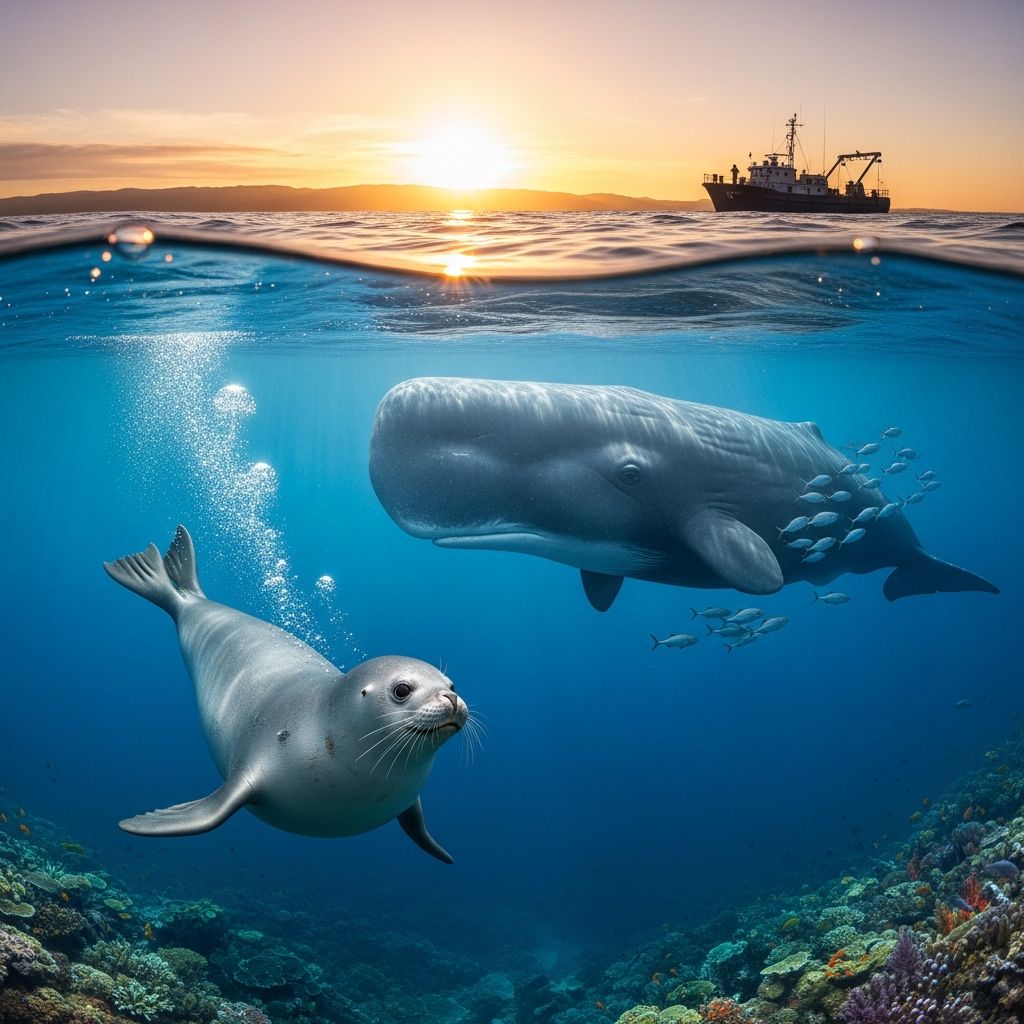
Ocean dwellers have evolved astonishing abilities to remain submerged for extraordinary durations, far surpassing human capabilities. While most people can only manage a couple of minutes underwater, certain marine species push the limits to hours, driven by the need to hunt, evade predators, or rest in hostile environments.
Record-Breaking Mammalian Divers
Among warm-blooded marine mammals, the **Cuvier’s beaked whale** stands as the undisputed champion. This elusive deep-sea hunter has been documented executing dives lasting up to 222 minutes, or nearly four hours, plunging to depths exceeding 3,000 meters in pursuit of squid and other prey. Such feats were confirmed through satellite tagging studies, highlighting their adaptation to extreme pressure and oxygen scarcity.
Close contenders include the **northern elephant seal**, with recorded submergences reaching 119 to 120 minutes, often during foraging expeditions or escapes from threats. These seals, known for their massive size, store vast oxygen reserves in their muscles and blood to fuel prolonged dives.
**Sperm whales** also impress, routinely holding their breath for 90 minutes while hunting at depths over 2,000 meters. Historical records note one surfacing after 117 minutes, underscoring their physiological prowess. Other beaked whales, like Arnoux’s, have logged 153-minute dives.
Reptilian Masters of Endurance
While mammals dominate active diving records, reptiles claim supremacy in passive, extended breath-holds. The **loggerhead sea turtle** holds the pinnacle achievement at 610 minutes—over 10 hours—typically during undisturbed rest or when experimentally submerged without stress. This exceeds even the most extreme mammalian efforts, thanks to their cold-blooded metabolism.
Freshwater species like the **Blanding’s turtle** take endurance further into brumation, a reptilian hibernation where they survive underwater for months beneath ice, drastically slowing oxygen demands. Sea turtles voluntarily forage for 40 minutes but can extend far longer when inactive. The **freshwater crocodile** managed 402 minutes under threat perception, blending reptilian efficiency with defensive strategy.
Physiological Adaptations Enabling Extreme Dives
Marine animals achieve these feats through specialized traits optimizing oxygen use. Key mechanisms include:
- Myoglobin Abundance: Muscles in diving mammals like whales and seals are packed with myoglobin, an oxygen-storing protein far more concentrated than in humans, allowing sustained energy without air.
- Bradycardia: Heart rates plummet to as low as 4 beats per minute, conserving oxygen by reducing circulation to non-essential organs.
- Blood Flow Redirection: Oxygen-rich blood prioritizes the brain, heart, and swimming muscles, bypassing the gut and skin.
- Lung Collapse Tolerance: At depth, lungs compress safely, preventing nitrogen narcosis and embolism risks.
- Ectothermy Advantage: Turtles’ low metabolic rates in cold water slash oxygen needs, enabling hours-long holds without warm-blooded costs.
Body size amplifies these traits: larger animals store more oxygen relative to metabolic demands, explaining why whales outlast dolphins. Dolphins, for instance, manage 10-15 minutes max, with Risso’s dolphins hitting 30 minutes at 1,000 feet.
Comparative Dive Durations
The table below summarizes top performers across categories, based on verified records:
| Species | Max Dive Time | Type | Context |
|---|---|---|---|
| Cuvier’s Beaked Whale | 222 minutes | Mammal | Foraging |
| Northern Elephant Seal | 120 minutes | Mammal | Foraging/Escape |
| Sperm Whale | 117 minutes | Mammal | Hunting |
| Loggerhead Sea Turtle | 610 minutes | Reptile | Resting |
| Freshwater Crocodile | 402 minutes | Reptile | Threat Response |
| Blanding’s Turtle | Months | Reptile | Brumation |
This comparison reveals mammals excel in active, deep pursuits, while reptiles dominate passive survival.
Evolutionary Pressures Shaping Diving Abilities
These adaptations stem from ecological demands. Beaked whales evade orcas by diving beyond predator reach, selecting for ultra-long breath-holds. Seals forage in oxygen-poor depths, necessitating efficient storage. Turtles, migrating vast distances, rest submerged to avoid surface predators. Over millions of years, natural selection refined these traits, with larger body sizes and oxygen-efficient proteins emerging as hallmarks of deep-sea life.
Human parallels exist in freediving records—24 minutes for Aleix Segura Vendrell—but pale against marine feats, limited by our terrestrial evolution.
Research Methods and Challenges
Records derive from tags, acoustics, and historical whaling data. Satellite tags on Cuvier’s whales captured the 222-minute dive in 2020, revolutionizing understanding. Tagging turtles yields rest data, distinguishing voluntary from stressed holds. Challenges persist: many species are deep-ocean nomads, evading observation, and records may underestimate true maxima.
Conservation Implications
Extreme divers face threats from climate change, bycatch, and noise pollution disrupting dives. Whales suffer decompression issues from shipping sonar. Protecting these champions preserves ocean biodiversity and insights into physiological limits.
Frequently Asked Questions
How does the Cuvier’s beaked whale survive 222-minute dives?
Through myoglobin-rich muscles, extreme bradycardia, and blood shunting to vital organs, minimizing oxygen use.
Can sea turtles really hold breath for 10 hours?
Yes, loggerheads achieve 610 minutes during rest, leveraging ectothermy to slash metabolism.
Why do larger animals dive longer?
Bigger bodies store more oxygen proportionally to metabolic rate, enhancing endurance.
How do dolphins compare to whales?
Dolphins max at 10-30 minutes for shallower dives, lacking whales’ extreme adaptations.
What enables turtles’ months-long underwater stays?
Brumation slows metabolism near-freeze, allowing minimal oxygen use in cold water.
References
- What Animal Can Hold Its Breath Longest? — HowStuffWorks. 2023. https://animals.howstuffworks.com/animal-facts/what-animal-can-hold-its-breath-longest.htm
- Which animals can hold their breath underwater the longest? — Live Science. 2023-10-20. https://www.livescience.com/animals/which-animals-can-hold-their-breath-underwater-the-longest
- Which mammal holds its breath the longest? — Discover Wildlife. 2023. https://www.discoverwildlife.com/animal-facts/mammals/which-mammal-hold-its-breath-for-the-longest
- How long can whales hold their breath? — Natural History Museum. 2023. https://www.nhm.ac.uk/discover/quick-questions/how-long-can-whales-hold-their-breath.html
- How Long Can Dolphins Hold Their Breath? — Wild Dolphin Project. 2023. https://www.wilddolphinproject.org/how-long-can-dolphins-hold-their-breath/
- Extreme Breath Holding: Marine Mammal Diving — University of Miami Shark Research. 2023. https://sharkresearch.earth.miami.edu/extreme-breath-holding-marine-mammal-diving/

Medha Deb is an editor with a master's degree in Applied Linguistics from the University of Hyderabad. She believes that her qualification has helped her develop a deep understanding of language and its application in various contexts. Medha specializes in the areas of beauty, health, sports, and wellness and is committed to ensuring that the content on the website is…