
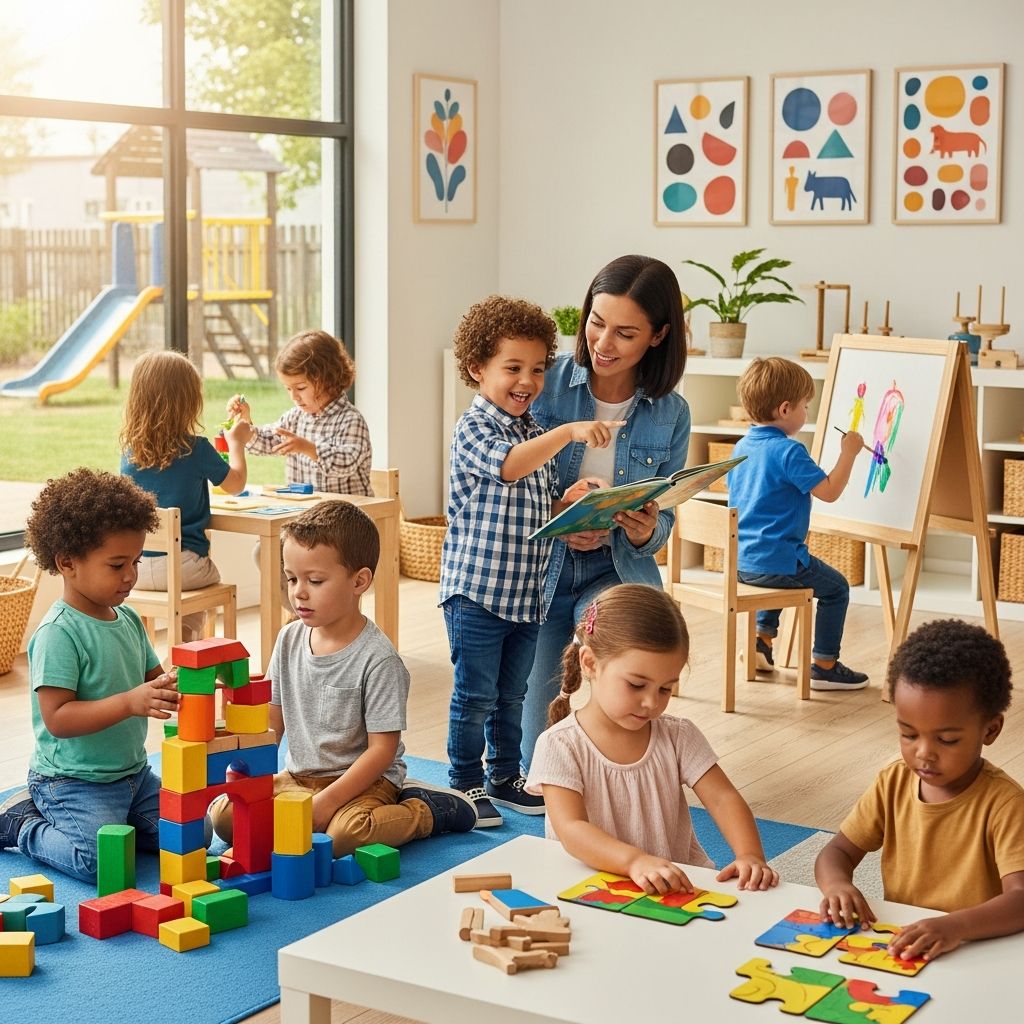
Early childhood education, spanning birth to age eight, establishes critical foundations for cognitive, social, and emotional growth that influence a child’s entire life trajectory. High-quality programs during this period equip young learners with essential skills, fostering resilience, curiosity, and adaptability essential for future challenges.
The Science Behind Brain Growth in the First Years
The human brain undergoes unprecedented development from birth to age eight, forming neural connections at a rate of millions per second. This window of neuroplasticity means experiences directly shape brain architecture, determining capacities for learning, behavior, and health.
Neuroscience reveals that nurturing environments strengthen synaptic pathways, enhancing memory, attention, and problem-solving. Conversely, neglect or stress can weaken these foundations, leading to lifelong deficits. Structured activities like storytelling, puzzles, and interactive play stimulate this growth, building a robust base for advanced academics.
For instance, programs emphasizing sensory exploration—such as manipulating blocks or engaging in music—promote executive function skills like focus and impulse control. These early gains persist, correlating with higher IQ scores and better academic outcomes by adolescence.
Building Essential Cognitive and Language Skills
Early education accelerates cognitive milestones, from basic pattern recognition to complex reasoning. Children in enriching settings master pre-literacy skills like phonemic awareness and vocabulary expansion, crucial for reading proficiency.
- Letter and Sound Recognition: Daily exposure through songs and games helps children associate symbols with sounds, easing the transition to formal reading.
- Mathematical Foundations: Counting games and shape sorting introduce numeracy concepts, predicting stronger math performance in later grades.
- Critical Thinking: Open-ended questions during play encourage hypothesis testing, vital for STEM fields.
Language development thrives in interactive groups where children hear diverse vocabulary and practice articulation. Studies show participants in quality programs enter kindergarten with 30% larger vocabularies, closing gaps for disadvantaged youth.
Fostering Social and Emotional Competence
Beyond academics, early childhood settings cultivate emotional intelligence. Group play teaches empathy, conflict resolution, and cooperation—skills that reduce behavioral issues and enhance relationships.
Teachers model self-regulation techniques, like deep breathing during frustration, helping children manage emotions. This builds resilience, with participants showing 20-30% fewer conduct problems in school.
| Skill | Early Education Benefit | Long-Term Impact |
|---|---|---|
| Sharing & Turn-Taking | Daily peer interactions | Stronger friendships, teamwork |
| Emotional Expression | Guided discussions | Lower anxiety, better mental health |
| Empathy | Role-playing scenarios | Reduced bullying, inclusive leadership |
Such competencies extend to family dynamics, as children practice kindness at home, strengthening bonds.
Preparing Children for Formal Schooling
Preschools bridge home and classroom routines, familiarizing children with schedules, instructions, and independence. Mastery of self-care—like handwashing or zipping jackets—boosts confidence for kindergarten.
Structured environments mirror elementary expectations, teaching listening, rule-following, and group participation. Graduates arrive ready, with higher attendance and fewer adjustment struggles.
- Routine adherence reduces separation anxiety.
- Instruction-following enhances teacher responsiveness.
- Collaborative projects build classroom community.
Economic and Societal Returns on Investment
Investing in early education yields substantial returns. Economists estimate $4-$12 saved per dollar spent through reduced remediation, welfare, and crime costs.
Participants show 25% higher high school graduation rates and fourfold bachelor’s completion likelihood, leading to higher earnings and taxes.
For communities, quality programs enable parental workforce participation, especially mothers, boosting GDP. They also foster networks, enhancing local resilience.
Addressing Equity Through Universal Access
Despite proven benefits, 25% of five-year-olds worldwide lack pre-primary education, disproportionately affecting low-income families. Universal ECCE promotes equity, narrowing achievement gaps at school entry.
Policies guaranteeing free access, as in half of countries, advance sustainable development by empowering marginalized children.
Qualities of Effective Early Childhood Programs
High-quality ECE features trained educators, low ratios, play-based curricula, and family involvement. Evidence-based approaches integrate health, nutrition, and safety.
- Play-Centric Learning: 70% of time unstructured for creativity.
- Qualified Staff: Degrees in child development.
- Holistic Focus: Cognitive, physical, emotional balance.
Intensity and duration matter; full-day, multi-year programs maximize gains.
Challenges and Pathways Forward
Barriers include funding shortages and uneven quality. Solutions: public-private partnerships, teacher training, and scalable models like universal pre-K.
Long-term tracking confirms benefits endure with quality elementary reinforcement.
Frequently Asked Questions
What age range does early childhood education cover?
Typically birth to age 8, with peak impact from birth to 5 when brain plasticity is highest.
Can early education close achievement gaps?
Yes, it reduces disparities by 30-50% at kindergarten entry for disadvantaged children.
What are the ROI figures for ECE investments?
Returns range from $4 to $12 per dollar, via savings in education, health, and justice systems.
How does play contribute to learning?
Play builds neural pathways for creativity, problem-solving, and social skills essential for academics.
Is home-based learning as effective?
Structured programs outperform unstructured home care in cognitive and social outcomes.
References
- Why Is Early Childhood Education Important for Children? — American Public University System. 2023. https://www.apu.apus.edu/area-of-study/education/resources/why-is-early-childhood-education-important-for-children/
- Why early childhood care and education matters — UNESCO. 2023. https://www.unesco.org/en/articles/why-early-childhood-care-and-education-matters
- The Importance of Early Childhood Education — Nord Anglia Education. 2024-02-12. https://www.nordangliaeducation.com/bisc-charlotte/news/2024/02/12/the-importance-of-early-childhood-education
- The Importance of Early Childhood Education — Graduate Programs. 2023. https://www.graduateprogram.org/blog/the-importance-of-early-childhood-education/
- Top 5 Benefits of Early Childhood Education — Brighter Futures Indiana. 2023. https://brighterfuturesindiana.org/blog/top-five-benefits-of-early-childhood-education
- Early Childhood Education: Setting a Foundation for All Children To Thrive — Center for American Progress. 2023. https://www.americanprogress.org/article/a-progressive-vision-for-education-in-the-21st-century/early-childhood-education-setting-a-foundation-for-all-children-to-thrive/
- Why It Matters — First Five Years Fund. 2023. http://www.ffyf.org/why-it-matters/
- Early Childhood Development and Education — U.S. Department of Health and Human Services. 2023. https://odphp.health.gov/healthypeople/priority-areas/social-determinants-health/literature-summaries/early-childhood-development-and-education
- The Importance of High-Quality Early Childhood Education — Federal Reserve Bank of Cleveland. 2024-05-14. https://www.clevelandfed.org/publications/notes-from-the-field/2024/nftf-20240514-early-childhood-education

Medha Deb is an editor with a master's degree in Applied Linguistics from the University of Hyderabad. She believes that her qualification has helped her develop a deep understanding of language and its application in various contexts. Medha specializes in the areas of beauty, health, sports, and wellness and is committed to ensuring that the content on the website is…