
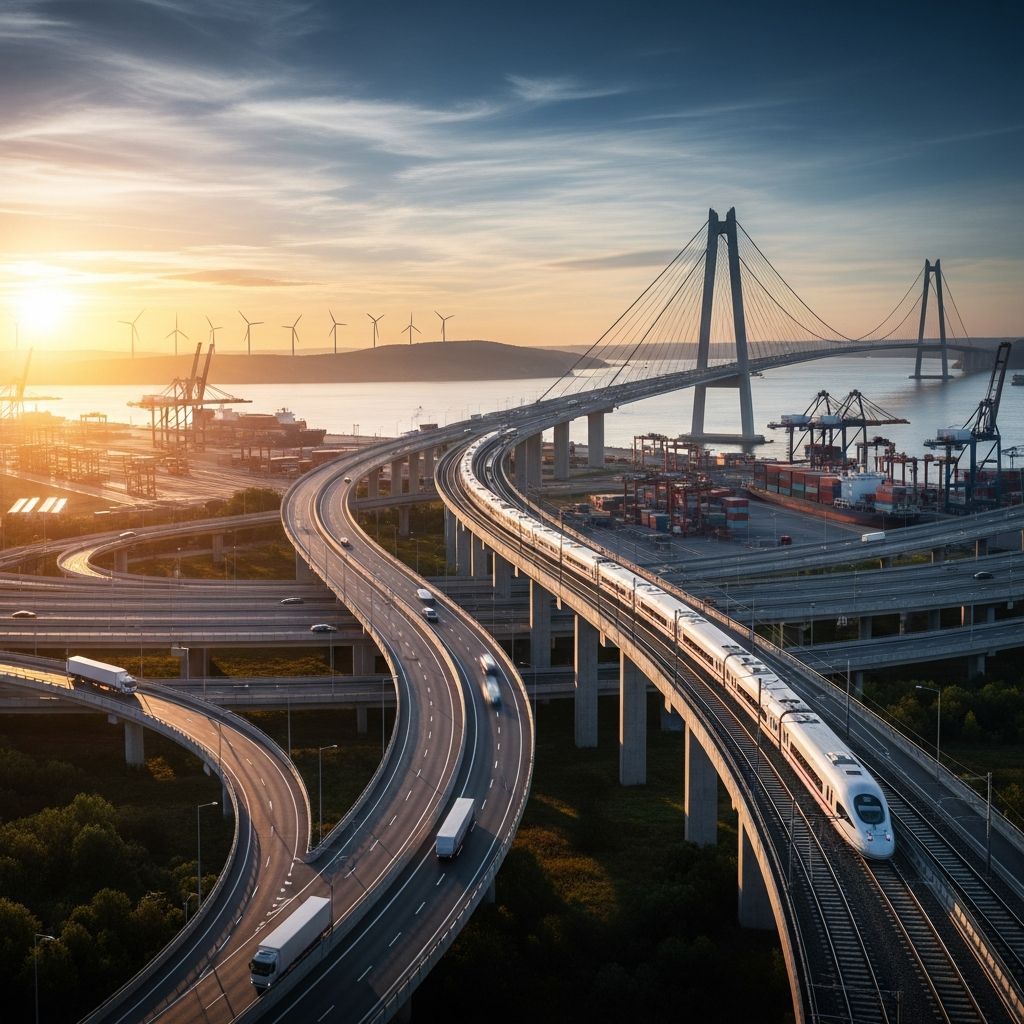
Infrastructure forms the essential foundation upon which societies build prosperity, enabling the seamless movement of people, goods, and ideas while supporting vital services that sustain daily life. From highways linking distant cities to digital networks powering global commerce, robust infrastructure systems are indispensable for economic vitality and human well-being.
Defining the Core Elements of Infrastructure
Infrastructure encompasses the physical and organizational structures required for a society’s operation, including transportation networks, energy grids, water supply systems, and communication technologies. These elements create the framework for economic activities and public services, distinguishing advanced economies from underdeveloped ones. Reliable transportation, clean water, and waste management are fundamental to civilized societies and productive economies, as their absence hinders growth and competitiveness.
Physical infrastructure includes hard assets like roads, bridges, airports, railways, ports, power plants, and pipelines, which facilitate the distribution of resources and mobility. Soft infrastructure, on the other hand, involves institutions such as healthcare facilities, educational systems, financial services, and emergency response networks that deliver essential societal functions. Together, they support every aspect of human livelihood, from individual survival to collective progress.
Key Categories of Infrastructure Systems
- Transportation: Roads, bridges, rail lines, airports, and seaports that enable trade and commuter mobility.
- Energy: Power generation plants, transmission lines, and renewable sources ensuring reliable electricity supply.
- Water and Waste: Treatment plants, distribution networks, and sanitation systems for clean water and environmental protection.
- Digital: Broadband internet, data centers, and telecommunications for information exchange in the digital age.
- Social: Hospitals, schools, and public housing that enhance quality of life and human capital.
These categories intersect to form resilient ecosystems, with transport and logistics demanding the largest investments globally.
Economic Growth Driven by Strategic Investments
Infrastructure investment acts as a powerful catalyst for economic expansion, generating multipliers that amplify initial spending. A study reveals that public infrastructure investments yield a 1.5 times economic return within two to five years, surpassing other fiscal stimuli due to their transformative outcomes. By improving connectivity, these investments lower logistics costs, boost productivity, and create jobs across construction, maintenance, and related sectors.
Historically, landmark projects like the U.S. Interstate Highway System under President Eisenhower demonstrated this potential, spurring post-war prosperity through enhanced trade and mobility. Today, infrastructure enables supply chains to function efficiently, moving $51 billion in goods daily across U.S. borders alone, underscoring its role in global competitiveness.
| Infrastructure Type | Economic Multiplier Effect | Key Benefits |
|---|---|---|
| Transportation | 1.5x – 2.0x | Trade facilitation, job creation |
| Energy | 1.4x – 1.8x | Industrial powering, reduced outages |
| Digital | 2.0x+ (high-growth) | Innovation, remote work enablement |
The table above illustrates approximate multiplier effects based on empirical analyses, highlighting transportation’s consistent impact.
Enhancing Societal Connectivity and Opportunity
Beyond economics, infrastructure bridges gaps in access to opportunities, connecting workers to jobs, families to healthcare, and communities to education. In metropolitan areas, reliable transit systems expand labor markets, allowing residents to reach higher-wage positions and specialized services. For developing regions, all-season roads reduce isolation, bringing one billion people closer to markets and services.
Clean energy infrastructure further supports environmental goals by curbing emissions through public transit and renewables, aligning economic progress with sustainability. In fragile economies, affordable broadband and electricity are premium services, yet their high costs exacerbate poverty; closing these gaps is crucial for inclusive growth.
Global Investment Imperatives and Challenges
The world faces a monumental infrastructure funding gap, with estimates projecting $106 trillion needed by 2040 across seven verticals, led by transport ($36 trillion) and energy ($23 trillion). In the U.S., mid-20th-century assets like roads and grids suffer from underinvestment, potentially costing $10 trillion in lost GDP by 2039 if not addressed.
Developing nations bear disproportionate burdens, with 675 million lacking electricity and nearly 4 billion without internet access, imposing billions in annual disruption costs. Private capital is increasingly vital, funding telecoms, renewables, and logistics to supplement public budgets strained by competing demands.
Poverty Alleviation Through Targeted Development
Infrastructure directly combats poverty by fostering market access, employment, and service delivery. World Bank analyses show that investments in roads and communications elevate GDP, create jobs, and lower service costs in low-income countries. Subregional projects, such as shared telecom networks in Africa, have delivered high-quality, low-cost connectivity across nations, exemplifying cooperative success.
By linking rural areas to urban centers, infrastructure promotes equitable development, reducing the prosperity divide. In least developed countries, it underpins broader goals like health improvements and education access, forming the bedrock for sustainable poverty reduction.
The Role of Innovation in Future-Proofing Infrastructure
Modern infrastructure must adapt to urbanization, climate change, and digital transformation. Smart cities integrate IoT sensors in traffic systems for efficiency, while green infrastructure like solar grids and flood-resilient designs mitigate environmental risks. McKinsey emphasizes intersections between verticals, such as digital-enhanced energy management, to optimize outcomes.
Governments prioritize resilient, inclusive projects that support climate goals, including renewable energy and low-carbon transport. The World Bank aids clients in green investments, ensuring infrastructure fosters long-term resilience.
Government and Private Sector Partnerships
Effective infrastructure delivery requires collaboration. Public funds initiate projects, while private investments scale innovations like broadband and pipelines. Policies incentivizing public-private partnerships (PPPs) accelerate deployment, as seen in freight rail and energy sectors. International bodies like the World Bank provide financing and expertise for global gaps.
In the U.S., federal initiatives target seaports and highways to sustain export growth amid globalization, where 83% of future economic expansion occurs outside its borders.
Frequently Asked Questions (FAQs)
What makes infrastructure essential for economic competitiveness?
Infrastructure enables efficient trade, worker mobility, and supply chain reliability, directly boosting GDP and productivity.
How much global investment is needed for infrastructure by 2040?
Approximately $106 trillion across key sectors, with transport requiring the largest share.
Can infrastructure reduce poverty in developing countries?
Yes, by improving market access, jobs, and services, leading to GDP growth and lower costs.
What are the consequences of infrastructure neglect?
It results in lost GDP, higher disruption costs, and reduced competitiveness, as projected at $10 trillion for the U.S. by 2039.
How does digital infrastructure contribute to growth?
It drives innovation, connects remote areas, and supports high-multiplier economic activities like e-commerce.
Conclusion: Building for Tomorrow
Investing in infrastructure is not merely about constructing assets; it is about forging pathways to prosperity, equity, and resilience. As economies evolve, prioritizing sustainable, innovative systems will determine which nations thrive in an interconnected world.
References
- Why Is Infrastructure Important? — Federal Reserve Bank of Boston. 2019-10-01. https://www.bostonfed.org/-/media/Documents/conference/34/conf34b.pdf
- What Is Infrastructure and Why Is It Important? (With Types) — Indeed Canada. 2023-05-15. https://ca.indeed.com/career-advice/career-development/what-is-infrastructure
- Why Infrastructure Matters: Rotten Roads, Bum Economy — Brookings Institution. 2017-02-28. https://www.brookings.edu/articles/why-infrastructure-matters-rotten-roads-bum-economy/
- The Infrastructure Moment — McKinsey & Company. 2024-09-10. https://www.mckinsey.com/industries/infrastructure/our-insights/the-infrastructure-moment
- The Vital Role of Infrastructure in Economic Growth and Development — Global Infrastructure Hub. 2021-06-15. https://www.gihub.org/articles/the-vital-role-of-infrastructure-in-economic-growth-and-development/
- Importance of Infrastructure to Development, Poverty Reduction Stressed — United Nations Office of the High Commissioner for Human Rights (OHCHR). 2009-10-21. https://www.ohchr.org/en/press-releases/2009/10/importance-infrastructure-development-poverty-reduction-stressed-thematic
- Infrastructure Overview — World Bank. 2024-11-01. https://www.worldbank.org/en/topic/infrastructure/overview

- Integrated M.A. in Applied Linguistics, University of Hyderabad
- 5+ years in editorial, instructional, SEO, and research-based writing
Sneha is a relationships and lifestyle writer with a strong foundation in applied linguistics and certified training in relationship coaching. She brings over five years of writing experience to theskillvault, crafting thoughtful, research-driven content that empowers readers to build healthier relationships, boost emotional well-being, and embrace holistic living. Her writing and insights reflect the belief that beauty, happiness, and wellness…