
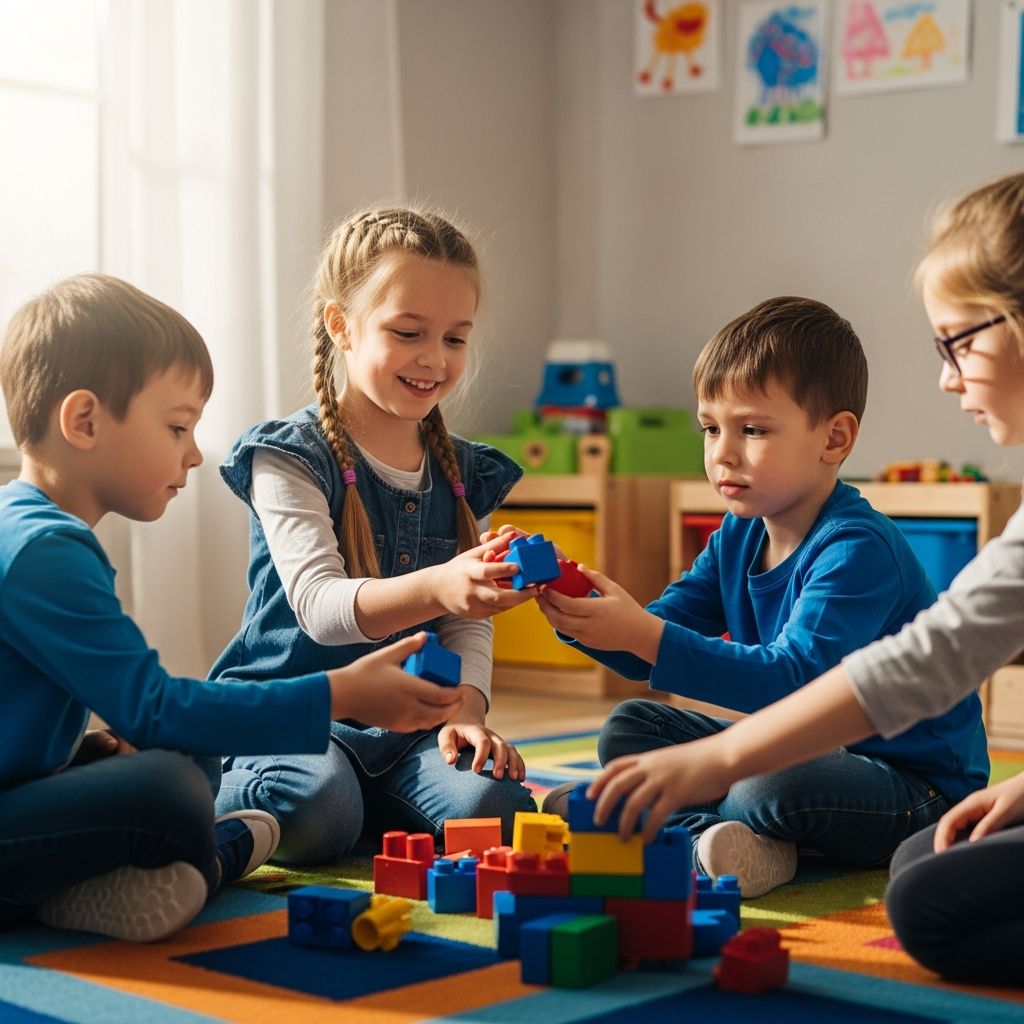
The Foundation That Matters More Than You Think
When we think about preparing children for future success, conversations often center on academic achievement, test scores, and cognitive abilities. However, emerging research reveals a striking truth: a child’s capacity to interact cooperatively with peers may be one of the most powerful predictors of their adult outcomes. This finding challenges conventional wisdom about education and development, suggesting that the playground interactions and classroom collaborations we often take for granted are actually laying the groundwork for decades of success or struggle ahead.
A landmark longitudinal study tracked approximately 750 children from four geographically diverse communities—Durham, North Carolina; Nashville, Tennessee; rural Pennsylvania; and Seattle—beginning in kindergarten and continuing until they reached age 25. The research, published in the American Journal of Public Health, examined how early “social competence” characteristics—including sharing, cooperation, helping others, and independent problem-solving—correlated with measurable life outcomes in adulthood. The results were striking and consistent across multiple domains of human functioning.
Understanding Social Competence in Early Development
Social competence refers to a child’s ability to navigate interpersonal relationships effectively, including their capacity to cooperate with peers, resolve conflicts without adult intervention, and demonstrate empathy toward others. This construct differs from mere popularity or extroversion; rather, it encompasses behavioral patterns that reflect emotional regulation, perspective-taking, and the ability to work toward shared goals.
Teachers in the kindergarten classrooms observed and rated children on a five-point scale, measuring specific behaviors such as:
- The tendency to share resources and attention with peers
- The ability to resolve disputes independently without escalation
- Willingness to cooperate on group tasks
- Capacity to help classmates in need
- Comfort and skill in making and maintaining friendships
These observable behaviors, assessed by trained educators who interacted with the children daily, became the primary data points for the longitudinal analysis. The researchers deliberately chose measures that could be reliably observed and quantified by classroom teachers, recognizing that such assessments would be practical tools for identifying children who might benefit from early intervention.
The Quantified Impact: Education and Employment
The magnitude of the statistical relationships uncovered was remarkable. For every single point increase on the five-point social competence scale, children demonstrated substantially improved adult outcomes:
- College attainment: Children were twice as likely to earn a bachelor’s degree by age 25
- High school completion: A 54 percent increased likelihood of obtaining a high school diploma
- Employment stability: A 46 percent greater probability of maintaining full-time employment
Conversely, for every point decrease in social competence scores, the negative trajectories were pronounced:
- Criminal involvement: A 67 percent higher likelihood of arrest by adulthood
- Housing instability: An 82 percent greater probability of being in or on a waiting list for public housing
Perhaps most striking, children rated at the highest end of the social competence spectrum were four times more likely to obtain a college degree compared to those at the lower end. This effect size exceeds many interventions aimed specifically at academic achievement, yet social competence measures had received comparatively little attention in educational policy and practice.
Beyond Academics: Health, Justice, and Community Involvement
The predictive power of kindergarten social competence extended far beyond traditional educational and employment metrics. The longitudinal tracking revealed associations across multiple life domains that researchers initially found surprising:
In the health and behavioral domains, children with stronger social competence demonstrated significantly lower rates of substance abuse and better mental health outcomes in young adulthood. The researchers emphasize that these linkages persisted even when controlling for background characteristics, suggesting that social competence itself—rather than family income, parental education, or demographic factors—contributed meaningfully to these outcomes.
The criminal justice system showed stark differentials. Children rated higher in social competence had substantially lower arrest rates by age 25, contradicting earlier assumptions that childhood aggression measures would be the primary predictors of delinquency. Remarkably, measures of childhood aggression alone did not significantly predict later criminal activity, whereas social competence did. This suggests that the capacity to cooperate and resolve conflicts peacefully may protect against delinquency more effectively than simply the absence of aggressive tendencies.
Financial self-sufficiency also differed markedly between groups. Those with stronger early social skills demonstrated greater likelihood of economic independence and reduced reliance on government assistance programs, indicating broader economic integration and stability.
Why These Skills Matter More Than IQ Alone
One of the most significant implications of this research is that social competence proved to be a more robust predictor than traditional measures often prioritized in educational settings. IQ and academic performance, while important, do not account for the full picture of human flourishing and success. Social competence appears to operate through multiple mechanisms:
Academic Performance Connection: Children with strong social skills tend to perform better academically, suggesting that the ability to collaborate, follow group norms, and maintain focus in social contexts translates directly into classroom success. When students struggle with peer relationships or cannot regulate emotions in group settings, their academic engagement inevitably suffers.
Network Effects in Career Development: Research demonstrates that the size and quality of a student’s social network during secondary school influences earning potential in adulthood. Being a “key player” in social networks develops relational abilities that directly impact career advancement and financial compensation. The ability to build and maintain professional relationships—a skill scaffolded during childhood peer interactions—becomes invaluable in workplace settings.
Personality Development and Stability: Traits such as conscientiousness, which correlate with emotional stability and self-esteem, develop continuously from childhood onward and can be strengthened through encouragement and practice. Unlike IQ, which remains relatively stable, social and emotional capacities are malleable and responsive to environmental influences and targeted instruction.
The Role of School and Family Environments
The research underscores that social competence develops within specific relational and institutional contexts. Family and school characteristics both contribute substantially to the development of these critical relational abilities. Schools shape social competence through:
- Structured and unstructured opportunities for peer interaction
- Teacher modeling of cooperative problem-solving and conflict resolution
- Systematic instruction in emotional regulation and perspective-taking
- Recognition and reward systems that reinforce prosocial behaviors
- Activities like field trips, collaborative projects, and break time that facilitate organic peer connection
At home, parents support social-emotional development by building positive relationships with their children, modeling expectations for respectful interaction, providing the language to communicate feelings effectively, and creating opportunities for peer interaction outside school settings.
Evidence suggests that combining social-emotional skill development with cognitive enrichment, beginning as early as the preschool level, provides the greatest long-term benefits for all children. This integrated approach appears particularly important for closing opportunity gaps affecting children from lower-income backgrounds.
Intervention and Early Identification Opportunities
A practical implication emphasized by the study’s authors is that social competence assessments provide an easy-to-administer tool for early identification of children who may need additional support. Teachers already observe children’s social behaviors daily; formalizing these observations into structured assessments could alert educators and families to emerging problems before they compound across a child’s developmental trajectory.
Critically, the researchers emphasized that social competence skills are not fixed traits but rather malleable capacities that respond to instruction and environmental support. This means that interventions designed to enhance children’s cooperative abilities, conflict resolution skills, and prosocial orientation could yield substantial returns across multiple life domains.
Evidence-based social development interventions demonstrate measurable results. Research on comprehensive school-based programs shows that by fifth grade, students in intervention classrooms initiated alcohol use and delinquency at lower rates than control groups, reported better family communication, perceived greater support from teachers, and demonstrated higher attachment to school and family. By sixth grade, intervention students achieved higher scores on standardized achievement tests.
Rethinking Educational Priorities
The broader implication of this research suggests that contemporary educational systems may be allocating resources and attention inefficiently. While academic rigor and cognitive development remain important, the evidence indicates that social-emotional competence deserves equal or potentially greater emphasis. Activities traditionally viewed as supplementary—recess, cooperative projects, extracurricular clubs, and field trips—are not luxuries but essential components of a developmentally complete educational experience.
The finding that these social measures predicted outcomes “within every domain that we looked at” suggests a general principle: the ability to cooperate, communicate, and navigate interpersonal challenges provides a foundation supporting success across diverse life contexts. Whether a child ultimately pursues higher education, achieves stable employment, maintains physical and mental health, or avoids contact with the criminal justice system, their early capacity to work effectively with others appears fundamental.
Long-Term Economic and Social Returns
From a public policy perspective, the research raises important questions about return on investment. Programs that successfully enhance social competence in children could yield substantial economic benefits by reducing costly interventions in criminal justice, substance abuse treatment, mental health services, and public assistance systems. The longitudinal tracking revealed that differences in kindergarten social competence scores produced increasingly pronounced divergence in outcomes by age 25, suggesting that early investments in social skill development have compounding benefits across the lifespan.
Furthermore, the research demonstrated that socioeconomic status does not determine social competence outcomes—rather, competence shows independent effects on adult attainment even when controlling for family characteristics. This suggests that all children, regardless of background, can develop and benefit from stronger social skills with appropriate support.
Frequently Asked Questions
Q: Can social competence skills be taught to older children and adolescents?
A: Yes, while early intervention appears most effective, research indicates that social-emotional skills remain malleable throughout childhood and adolescence. Targeted instruction and supportive environments can develop these capacities at any age, though beginning early maximizes developmental benefits.
Q: What is the difference between social competence and social skills?
A: Social competence is a broader construct encompassing the integrated ability to navigate relationships effectively, including emotional regulation and perspective-taking. Social skills are specific, teachable behaviors like active listening or assertive communication that contribute to overall competence.
Q: How can parents identify whether their child is developing appropriate social competence?
A: Indicators include the child’s ability to share and cooperate with peers, capacity to resolve disagreements without adult intervention, demonstration of empathy toward others, and comfort making and maintaining friendships across different contexts.
Q: Does high social competence guarantee academic success?
A: While strongly correlated, social competence is one factor among several influencing academic outcomes. However, the research demonstrates it is a remarkably consistent and independent predictor across multiple life domains.
Q: What role does school recess play in developing social competence?
A: Recess and unstructured peer interaction time provide essential opportunities for children to practice cooperation, conflict resolution, and relationship-building—the core elements of social competence development.
References
- Social Competence in Kindergartners Linked to Adult Success — Education Week. 2015-07-15. https://www.edweek.org/teaching-learning/social-competence-in-kindergartners-linked-to-adult-success/2015/07
- How Children’s Social Skills Impact Success in Adulthood — Education Resources Information Center (ERIC). 2018. https://files.eric.ed.gov/fulltext/ED592871.pdf
- Understanding the Real-World Impact of Social Skills Practice — Step Ahead ABA. 2024. https://www.stepaheadaba.com/blog/the-benefits-of-social-skills-practice-in-real-world-settings
- Effects of Social Development Intervention in Childhood on Adult Outcomes — National Center for Biotechnology Information (NCBI). 2019. https://pmc.ncbi.nlm.nih.gov/articles/PMC6722016/
- Social Skills Linked To Career Success — PE Scholar. 2024. https://www.pescholar.com/insight/social-skills-linked-to-career-success/
- The Correlation Between Social/Emotional Skills and Academic Achievement — Rainbows United Mental Health Services. 2024. https://rainbowsunited.org/from-a-rainbows-mental-health-services-expert/
- Social Inequalities in Early Childhood Competences and Relative Educational Attainment — British Educational Research Journal. 2021. https://bera-journals.onlinelibrary.wiley.com/doi/10.1002/berj.3724

Medha Deb is an editor with a master's degree in Applied Linguistics from the University of Hyderabad. She believes that her qualification has helped her develop a deep understanding of language and its application in various contexts. Medha specializes in the areas of beauty, health, sports, and wellness and is committed to ensuring that the content on the website is…