
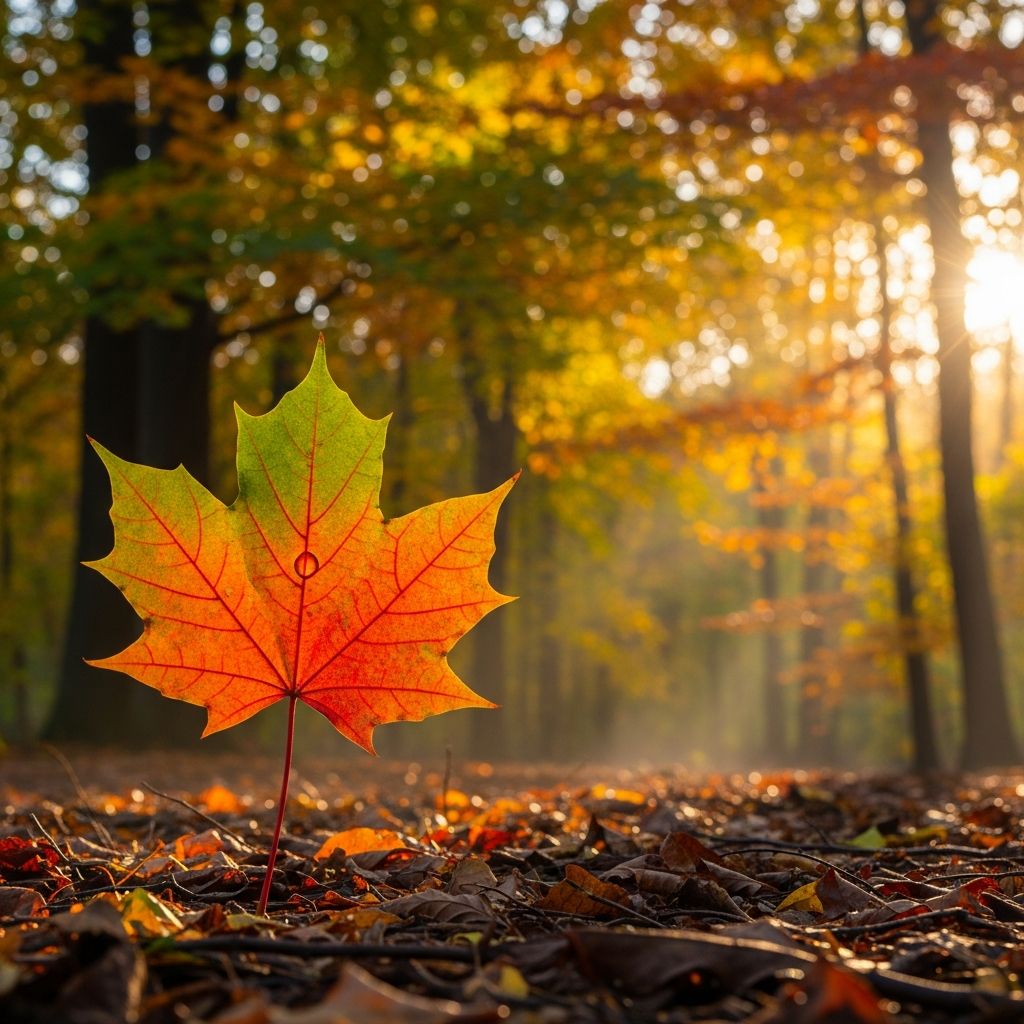
Understanding the Seasonal Transformation of Tree Leaves
As temperatures drop and daylight hours diminish with the arrival of autumn, one of nature’s most spectacular phenomena unfolds across forests and gardens worldwide. Trees that have sustained themselves throughout spring and summer through vigorous growth enter a period of dramatic transformation, displaying vibrant hues of red, orange, yellow, and bronze before shedding their leaves entirely. This breathtaking seasonal display is not merely aesthetic; it represents a complex series of biochemical and physiological changes that prepare trees for the dormant winter months ahead. Understanding the mechanisms behind this transformation reveals how plants have evolved sophisticated strategies to maximize survival in temperate climates.
The Foundation of Leaf Green: Chlorophyll’s Essential Role
Throughout the growing season, leaves maintain their characteristic green appearance due to the presence of chlorophyll, a vital pigment that serves as the engine of photosynthesis. Chlorophyll molecules absorb light energy from the sun and facilitate the conversion of carbon dioxide and water into carbohydrates—sugars and starches that nourish the tree and fuel its growth. During spring and summer, when daylight is abundant and temperatures remain warm, trees continuously produce chlorophyll to maximize their food-manufacturing capacity. This pigment is so dominant and abundant that it masks the presence of other pigments naturally occurring within the leaf structure, creating the uniform green color we associate with healthy, actively growing vegetation.
The chlorophyll production process represents a significant energy investment for trees. As long as growing conditions remain favorable, trees prioritize the manufacturing of this green pigment because the benefits of sustained photosynthesis outweigh the metabolic costs. This efficiency-driven approach ensures that trees capture as much solar energy as possible during the limited warm season available in temperate regions.
Environmental Triggers: The Signals That Initiate Change
The transition from summer abundance to autumn transformation is initiated by two primary environmental signals that trees have evolved to detect with remarkable precision. The first and most significant trigger is the progressive shortening of daylight hours as Earth’s axial tilt carries temperate regions away from direct solar exposure. This reduction in daylight duration is a reliable indicator of approaching winter, far more dependable than temperature fluctuations, which can vary unpredictably from year to year. Trees have developed internal biological mechanisms that sense photoperiod changes, effectively reading the calendar written in sunlight.
The second trigger involves declining temperatures. As autumn settles in, nighttime temperatures drop progressively, and even daytime warmth becomes less intense. This thermal shift signals to the tree’s physiology that the growing season is winding down. Temperature fluctuations can also accelerate the pace of color change; extended periods of unseasonable warmth may delay the transformation, while early cold snaps can expedite it. Together, these environmental cues work in concert to prepare trees for winter dormancy.
The Biochemical Cascade: Chlorophyll Breakdown and Pigment Revelation
In response to shortening days and cooling temperatures, trees initiate a programmed reduction in chlorophyll production. Rather than continuously manufacturing replacement chlorophyll molecules to maintain the green hue, the tree’s biochemistry shifts toward a different priority: nutrient conservation and translocation. The existing chlorophyll molecules begin to break down and are not replaced at their previous rates. As the green pigment gradually diminishes, a hidden palette of colors becomes visible—colors that were present in the leaf all along but remained invisible beneath the dominant green canopy.
The yellows and oranges that emerge represent carotenoid pigments, which exist permanently within leaf cells as part of the photosynthetic machinery. Carotenoids assist chlorophyll in capturing light energy and protecting the leaf from excessive radiation. Unlike chlorophyll, carotenoids are relatively stable compounds that persist even as chlorophyll degrades. Once the green pigment thins sufficiently, these yellow and orange hues become visually apparent, creating the golden tones characteristic of many fall landscapes.
The Chemistry of Red and Purple Foliage
While yellows and oranges simply represent the unveiling of pre-existing pigments, the reds and purples that many trees display in autumn involve a different process entirely. These vivid hues result from the production of anthocyanin pigments, which trees actively manufacture during autumn. Anthocyanins develop through a metabolically expensive process—the tree must invest significant energy to produce these new compounds. This investment raises an intriguing evolutionary question: why would trees expend valuable resources to create red pigments when they are about to shed their leaves and enter dormancy?
Research suggests that anthocyanins serve multiple protective functions. These pigments act as natural sunscreens, shielding leaves from intense autumn sunlight that can damage leaf tissues as photosynthetic activity winds down. Anthocyanins also function as osmoprotectants, helping leaves maintain cellular integrity as water availability changes. Additionally, some evidence suggests these pigments may deter herbivores from consuming leaves, though this benefit becomes less relevant as trees prepare to discard their foliage anyway.
Factors Influencing the Intensity and Timing of Color
The specific colors and intensity of fall foliage vary considerably based on weather patterns and environmental conditions during the transformation period. The most spectacular autumn displays occur during years when several conditions align favorably. Sunny days with abundant clear skies allow leaves to trap sugars and synthesize anthocyanins effectively, producing deeper reds and more vibrant hues. Conversely, cloudy, overcast autumns result in muted colors and less dramatic displays.
Temperature patterns significantly influence color development as well. Moderate temperatures that drop cool at night but remain mild during the day create ideal conditions for anthocyanin production. Warm autumn weather delays the color change and may produce less intense hues, while an abrupt early frost can trigger rapid color change before sugars fully concentrate in the leaves. Moisture availability also plays a role; an appropriate balance of moisture supports both the pigment synthesis process and the tree’s ability to translocate nutrients from the leaves back into the trunk and roots before leaf fall.
Different tree species exhibit characteristic color patterns based on their genetics and physiology. Some species consistently produce brilliant reds—such as red maples and dogwoods—because they readily synthesize anthocyanins. Others display reliable yellows and golds, like sugar maples and birches, because their carotenoid content is particularly abundant or their leaf structure emphasizes these pigments. Still others show browns and dull oranges, reflecting a combination of tannins and remaining pigment residue. With experience and observation, naturalists can often identify tree species by their characteristic fall colors and leaf shapes.
The Nutrient Reclamation Process
As leaves prepare to fall, trees engage in a sophisticated nutrient-salvaging operation. Before severing the connection between leaf and branch, trees systematically extract valuable nitrogen, phosphorus, potassium, and other essential minerals from the leaves and transport them back into the trunk, branches, and roots for storage. This process represents a significant evolutionary advantage; rather than abandoning these nutrients to the ground with fallen leaves, trees recycle them for use in next spring’s new growth. The tree forms a corky abscission layer—a specialized seal—between the leaf stem and branch, which allows controlled nutrient extraction while gradually cutting off the leaf’s water and nutrient supply.
From Color to Fall: The Leaf Shedding Process
The progression from vibrant color to complete leaf drop involves several overlapping physiological processes. As the abscission layer develops and strengthens, the leaf’s connection to the branch becomes increasingly tenuous. The leaf gradually loses access to water and nutrients transported through the vascular system, accelerating its decline. This separation is not instantaneous but occurs over days or weeks, during which the leaf transitions from a colorful but still living organ to a desiccated structure clinging to the branch by a fragile attachment. Eventually, wind, rain, or the weight of the leaf itself causes it to separate completely from the branch and fall to the ground.
Why Trees Shed Leaves at All
The annual leaf drop represents a fundamental survival strategy adapted by deciduous trees to cope with winter’s harsh conditions. Leaves are the primary sites of water loss through transpiration; maintaining them throughout winter would require the tree to continuously replace water that would be frozen and inaccessible in frozen soil. Additionally, snow and ice accumulation on leaves can cause branch damage due to the additional weight. By shedding leaves, deciduous trees reduce their metabolic demands during the winter months when photosynthesis is impossible due to low light availability and frozen conditions. This strategy allows trees to survive the winter in a state of dormancy, conserving energy and resources until spring warming triggers new growth.
Regional Variations in Fall Color Displays
Fall foliage patterns vary dramatically across geographical regions due to differences in tree species composition, local climate patterns, and altitude. Temperate regions at higher latitudes and elevations experience more dramatic and earlier color changes than areas closer to the equator or at lower elevations. Mountainous regions often display the most striking fall displays because the cooler temperatures at higher elevations are optimal for anthocyanin production. Coastal regions may experience delayed or muted fall colors because maritime influences moderate temperature swings. Understanding these regional patterns helps explain why autumn visitors travel to specific locations known for particularly spectacular displays.
Comparing Deciduous and Evergreen Strategies
| Characteristic | Deciduous Trees | Evergreen Trees |
|---|---|---|
| Leaf Type | Broad, flat leaves | Needle or scale-like leaves |
| Winter Strategy | Complete leaf shedding | Year-round retention |
| Photosynthesis | Ceases in winter | Continues at reduced rates |
| Water Loss | Minimized through leaf drop | Reduced through leaf structure |
| Examples | Oaks, maples, birches | Spruces, firs, pines |
The Ecological Importance of Leaf Drop
The annual cycle of leaf color change and fall is not merely visually stunning; it plays crucial ecological roles within forest ecosystems. Fallen leaves create a protective layer of organic matter on the forest floor, insulating soil from extreme temperature fluctuations and protecting seeds and small organisms. As leaves decompose, they gradually release their nutrients back into the soil, enriching it for the following season’s growth. This natural cycling of nutrients represents a closed-loop system that has sustained temperate forests for millions of years. The leaf litter also provides habitat for countless organisms, from decomposer microbes to arthropods and small vertebrates that depend on this resource-rich layer.
Frequently Asked Questions
Q: Why do some trees turn red while others turn yellow?
A: The color depends on the tree species and its genetic predisposition to produce certain pigments. Trees that readily synthesize anthocyanins display reds and purples, while species with high carotenoid content or that don’t produce significant anthocyanins show yellows and oranges. Additionally, weather conditions during fall can influence which pigments dominate in the final display.
Q: Do all leaves change color before falling?
A: No. While deciduous trees display color changes before dropping leaves, the intensity and duration of this color phase varies. Some trees may change color rapidly, while others show a more gradual transition. Environmental stress, disease, or pest damage can cause leaves to brown and fall without displaying typical autumn colors.
Q: What causes brown leaves in fall?
A: Brown coloration typically results from tannins and the accumulated residue of chlorophyll and other pigments as the leaf deteriorates. Some tree species naturally display brown tones rather than reds or yellows. Brown can also indicate that a leaf is approaching the end of its functional life or that the tree experienced stress during the season.
Q: Can I predict when leaves will change color in my area?
A: While general timing depends on latitude, elevation, and historical patterns, specific predictions are difficult because weather significantly influences the pace of change. Cool nights, sunny days, and moderate moisture conditions typically produce earlier and more intense color changes than warm, cloudy, or dry conditions. Local agricultural extension offices often track and forecast peak fall foliage timing based on current year conditions.
Q: Why don’t tropical trees change color?
A: Tropical regions lack the dramatic seasonal temperature and daylight changes that temperate regions experience. Without clear triggers signaling winter’s approach, tropical trees don’t develop the physiological responses that lead to color change and leaf drop. Many tropical trees shed leaves during dry seasons rather than cold seasons, and this process typically doesn’t produce the vibrant colors associated with temperate fall foliage.
Q: Is anthocyanin production wasteful if trees will lose the leaves anyway?
A: Although it seems counterintuitive, anthocyanin production provides real benefits during the color-change phase. These pigments protect leaves from sun damage, help maintain cellular function as the leaf ages, and may provide antimicrobial protection. Additionally, the energy investment represents only a small fraction of the total energy the tree has already accumulated during the growing season.
Q: Do leaves continue to photosynthesize after changing color?
A: Photosynthetic activity declines significantly after color change but typically doesn’t cease immediately. Leaves continue to function at reduced capacity during the color-change phase, still producing some sugars and nutrients. However, the primary focus shifts from energy production to nutrient reclamation and preparation for leaf abscission rather than maximal photosynthetic output.
References
- Why Leaves Change Color — SUNY College of Environmental Science and Forestry. 2024. https://www.esf.edu/eis/eis-leaves-color-change.php
- The Science Behind Fall Foliage — University of North Carolina at Chapel Hill. 2024. https://www.unc.edu/discover/the-science-behind-fall-foliage/
- Why Do Leaves Change Color in the Fall? — Smithsonian Institution. 2024. https://www.si.edu/stories/why-do-leaves-change-color-fall
- Why Do Leaves Change Color? — Rutgers University. 2024. https://www.rutgers.edu/news/why-do-leaves-change-color
- Why Do Leaves Change Color? — NOAA NESDIS. 2024. https://www.nesdis.noaa.gov/about/k-12-education/understanding-our-planet/why-do-leaves-change-color

Medha Deb is an editor with a master's degree in Applied Linguistics from the University of Hyderabad. She believes that her qualification has helped her develop a deep understanding of language and its application in various contexts. Medha specializes in the areas of beauty, health, sports, and wellness and is committed to ensuring that the content on the website is…