
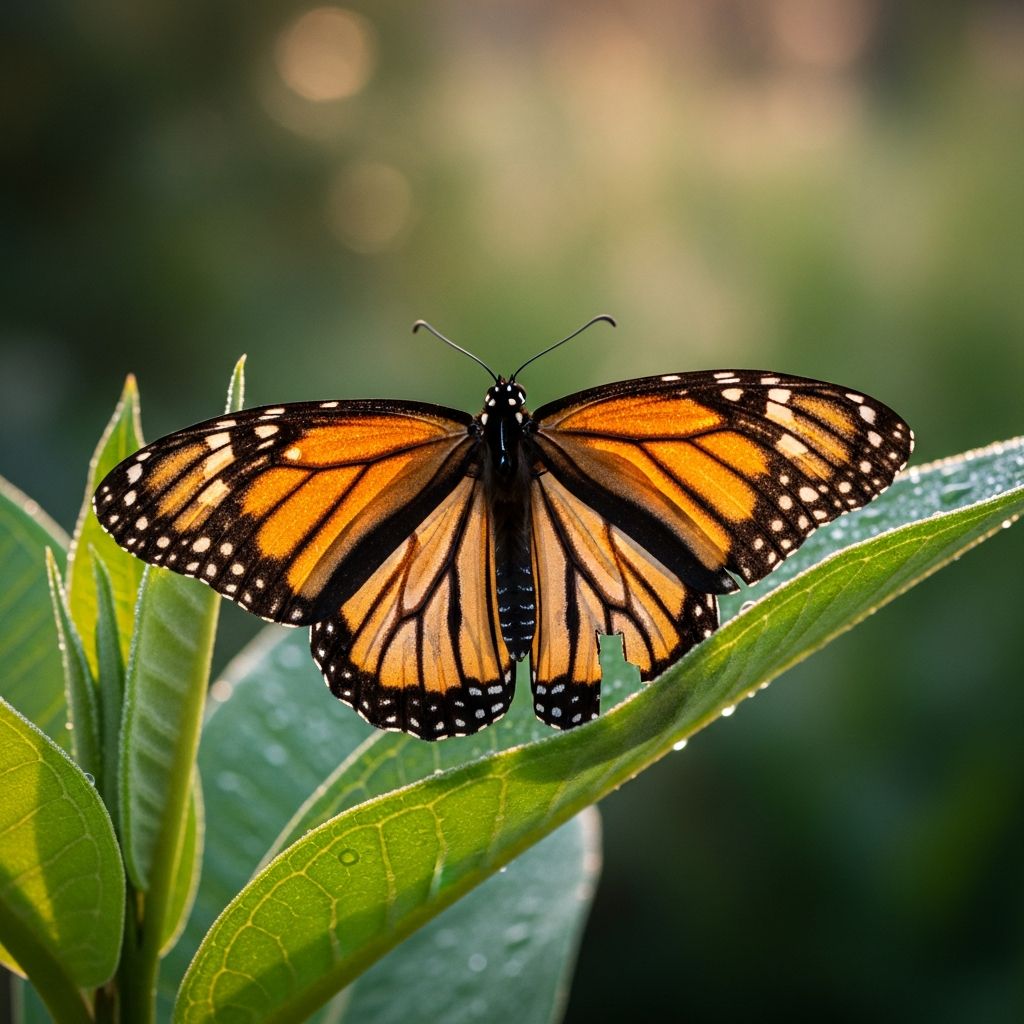
Monarch butterflies, renowned for their striking orange-and-black wings and epic migrations, occasionally emerge from their chrysalises with deformed, crumpled wings that prevent flight. This condition, while heartbreaking to witness, stems from a combination of biological, environmental, and pathological factors. Understanding these causes is crucial for conservationists, gardeners, and citizen scientists aiming to bolster declining monarch populations.
The Marvel of Monarch Metamorphosis
The transformation from caterpillar to butterfly, known as metamorphosis, is one of nature’s most astonishing processes. Monarch caterpillars exclusively feed on milkweed plants, storing toxins that deter predators. After molting several times, they form a chrysalis where profound changes occur over about 10-14 days. Inside, the caterpillar’s body essentially dissolves into a nutrient-rich soup, from which imaginal discs—tiny clusters of cells—rebuild the adult butterfly structure.
Emergence, or eclosion, is the final, delicate stage. The butterfly splits the chrysalis, dangles upside down, and pumps hemolymph (insect blood) from its abdomen into delicate wing veins. This expands the wings, which then harden over hours. Any disruption here can result in permanent wing deformities, leaving the butterfly grounded and vulnerable.
Primary Culprits Behind Wing Deformities
Several factors contribute to crumpled wings, with the most prevalent being parasitic infection, improper eclosion mechanics, and suboptimal rearing conditions. Let’s break them down.
Ophryocystis elektroscirrha: The OE Parasite Threat
The protozoan parasite Ophryocystis elektroscirrha (OE) is a major adversary for monarchs. Spores infect caterpillars via contaminated milkweed leaves, multiplying inside the host. Heavily infected individuals exhibit telltale signs: bloated abdomens, failure to fully exit the chrysalis, and wings that remain crumpled or tiny due to impaired hemolymph pumping.
OE spores are shed on milkweed during egg-laying, creating a cycle of reinfection, especially on perennial tropical milkweed varieties that persist year-round in warmer climates like Florida. Native milkweeds die back in winter, naturally reducing spore loads. Research shows infection rates can exceed 90% in some wild populations, severely impacting flight capability and survival.
- Transmission: Adult females scatter spores while ovipositing.
- Symptoms: Reduced lifespan, sterility, and wing malformations.
- Prevalence: Higher in non-migratory populations.
Eclosion Mishaps and Physical Interference
Even without parasites, eclosion can fail. Freshly emerged butterflies require 1-2 hours hanging vertically to allow wings to unfurl under gravity. If they fall prematurely—due to wind, predators, or weak grip—the wings dry in a crumpled state.
Other mechanical issues include insufficient space in enclosures, damaged wing veins from struggles, or dehydration during emergence. In captivity, plastic surfaces offer poor footing, exacerbating falls.
| Cause | Description | Impact on Wings |
|---|---|---|
| Premature Fall | Butterfly drops before wings expand | Crumpled, hardened edges |
| Insufficient Hang Time | Wings still soft and folded | Partial expansion failure |
| Poor Gripping Surface | Slippery enclosure materials | Inability to maintain position |
Nutritional and Environmental Stressors
Caterpillars deprived of quality milkweed may enter pupation weakened, leading to defective wings. Dry conditions, overcrowding, or excessive handling by raisers compound risks. Young enthusiasts often disturb pupae unintentionally, triggering falls.
Climate plays a role too: extreme temperatures or humidity fluctuations hinder proper wing hardening.
Conservation Challenges for Monarchs
Monarch populations have plummeted, with eastern migrants declining by over 80% since the 1990s. Wing deformities exacerbate this, as flightless butterflies can’t migrate 3,000 miles to Mexican overwintering sites or breed effectively.
Debate rages over causes: habitat loss, pesticides, climate change, and OE-fueled by tropical milkweed planting. Experts like University of Georgia’s Andy Davis urge removing all backyard milkweed in Florida to break infection cycles, prioritizing wild propagation.
Best Practices for Rearing Healthy Monarchs
Backyard raisers can make a difference by minimizing deformities. Focus on prevention over intervention.
- Select Native Milkweed: Plant species that die back seasonally to curb OE. Avoid tropical varieties in non-native ranges.
- Hygiene Protocols: Disinfect cages with bleach solution between broods. Rinse milkweed thoroughly.
- Optimal Enclosures: Use mesh cages with natural twigs for hanging. Ensure 12-18 inches of vertical space.
- Monitor Emergence: Provide sheltered branches. If a butterfly falls, gently return it upright if wings are soft.
- Release Strategically: Only release strong fliers. Euthanize heavily infected individuals humanely to prevent spore spread.
Avoid “surgical” fixes like wing clipping seen in some misguided efforts—these spread disease and hinder migration.
Broader Implications for Butterfly Conservation
Supporting monarchs aids ecosystem health, as they pollinate and indicate environmental quality. Citizen science via apps like iNaturalist helps track deformities and infections.
Plant milkweed corridors, reduce pesticide use, and advocate for habitat protection. Recent data shows localized recoveries where these practices are adopted.
Frequently Asked Questions (FAQs)
What should I do if I find a butterfly with soft, crumpled wings?
Place it in a sheltered, vertical position under a leaf or in a bush to allow further expansion. If hardened, it likely can’t fly but may still feed.
Is tropical milkweed harmful to monarchs?
In warm climates, it promotes OE buildup by not dying back. Opt for natives instead.
How can I tell if a monarch has OE?
Look for bloated bodies, tiny wings, or spore dust on the abdomen. Test kits are available from conservation groups.
Can deformed-winged monarchs survive in the wild?
Rarely; they become easy prey and can’t migrate or mate effectively.
What’s the best way to start raising monarchs safely?
Follow protocols from reputable sources like Monarch Watch: clean setups, native plants, and no overcrowding.
References
- This Parasite is Cramping The Monarch Butterfly’s Style — KQED. 2023-05-15. https://www.kqed.org/science/1980427/this-nasty-parasite-is-ruining-monarch-butterfly-wings
- A Special Monarch Butterfly — Gardening Soul Blog. 2014-01-20. http://gardeningsoul.blogspot.com/2014/01/a-special-monarch-butterfly.html
- Why does this butterfly have crumpled wings like this? — iNaturalist Forum. 2022-07-10. https://forum.inaturalist.org/t/why-does-this-butterfly-have-crumpled-wings-like-this/34958
- Butterfly Effect: Monarchs in North Florida — Flamingo Magazine. 2025-06-11. https://flamingomag.com/2025/06/11/butterfly-effect-monarchs-north-florida/

Medha Deb is an editor with a master's degree in Applied Linguistics from the University of Hyderabad. She believes that her qualification has helped her develop a deep understanding of language and its application in various contexts. Medha specializes in the areas of beauty, health, sports, and wellness and is committed to ensuring that the content on the website is…