
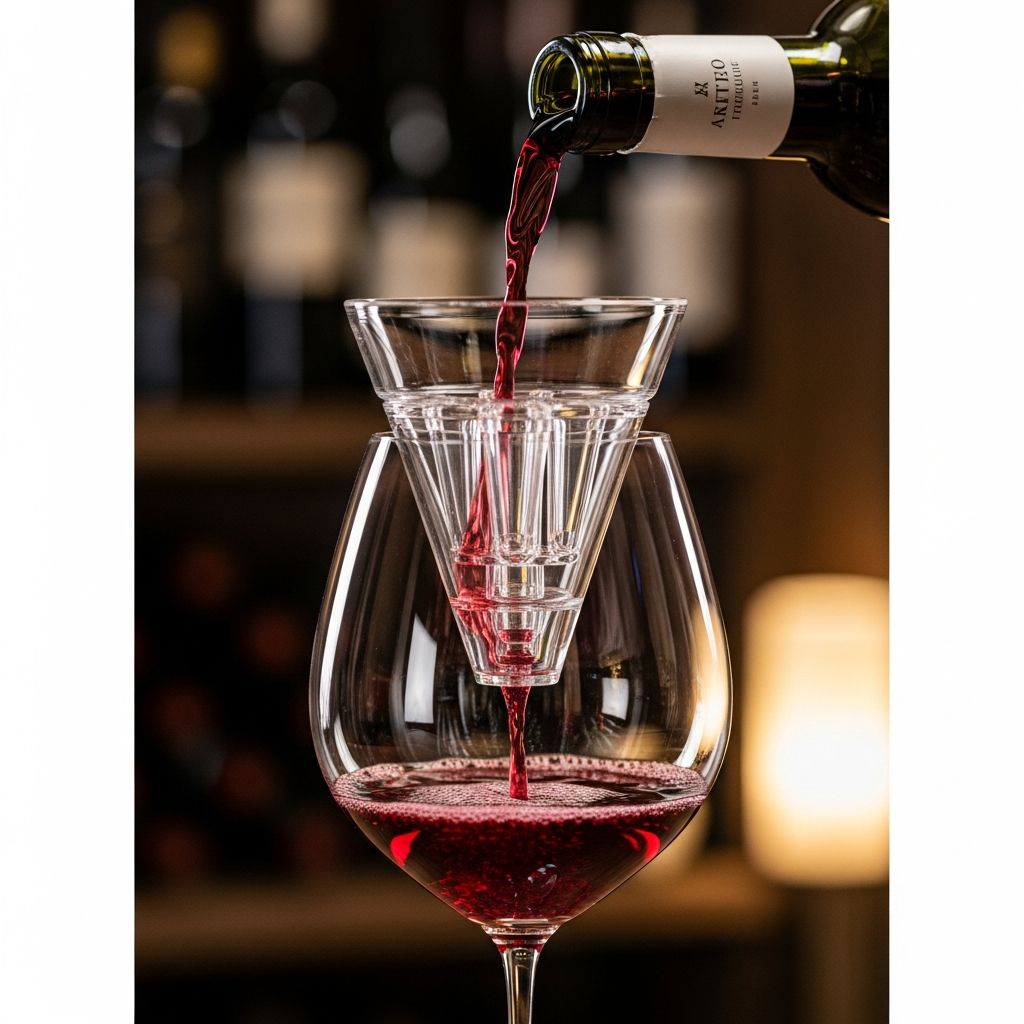
Understanding Wine Aeration: The Fundamentals
Wine aeration is a straightforward yet transformative practice that introduces oxygen to wine, unlocking dimensions of flavor and aroma that remain hidden in a freshly opened bottle. When wine comes into contact with air, a series of chemical reactions begin to unfold, fundamentally altering the tasting experience. The process is sometimes called “letting wine breathe,” a phrase that captures the essence of what happens when oxygen interacts with the wine’s complex chemistry. This interaction doesn’t merely improve wine quality—it can completely redefine how a bottle expresses itself on the palate.
The magic of aeration lies in its ability to awaken dormant characteristics within the wine. A bottle that initially tastes tight, closed, or one-dimensional can blossom into a multi-layered experience with just minutes of air exposure. For wine enthusiasts seeking to maximize their investment in quality bottles, understanding and practicing proper aeration techniques represents one of the most accessible and impactful skills to develop.
The Chemical Science Behind Wine Breathing
Two primary mechanisms drive the aeration process: oxidation and evaporation. These complementary processes work simultaneously to refine the wine’s structure and presentation.
Oxidation occurs when oxygen molecules interact with compounds in the wine, gradually transforming its chemical composition. This process softens rigid tannin structures, converting them into smoother, more integrated flavors that feel less astringent on the tongue. The oxidation process doesn’t damage the wine in this context—rather, it mellows harsh edges and promotes better balance between the various flavor components.
Evaporation serves as the complementary mechanism, where exposure to air causes less desirable volatile compounds to dissipate. Specifically, excess sulfites and certain alcohol molecules evaporate from the wine’s surface during aeration. Sulfites, which are naturally present in wine as preservatives, can create harsh or pungent notes that mask the wine’s more elegant characteristics. As these compounds evaporate, they no longer interfere with the wine’s true flavor profile, allowing the drinker to experience a cleaner, more refined expression.
Sensory Transformations: What Aeration Accomplishes
Aeration produces noticeable changes across multiple dimensions of the wine-tasting experience. Understanding these transformations helps drinkers recognize when a wine has adequately aerated and when they’ve reached the optimal window for consumption.
Tannin Modification and Mouthfeel Enhancement
Tannins are naturally occurring compounds found primarily in red wine, particularly from grape skins and wooden barrel aging. Young wines with prominent tannin structures often feel harsh, dry, or puckering in the mouth. These wines taste closed-off because the tannin molecules haven’t yet softened through natural aging. Aeration accelerates this softening process by introducing oxygen, which chemically modifies the tannin structure. Within minutes to hours, depending on the wine’s age and style, drinkers notice a dramatic shift from rough, gripping sensations to smooth, velvety textures. This transformation makes the wine substantially more pleasant to drink and allows other flavor components to shine through.
Aromatic Expansion and Complexity
A wine’s bouquet—its complete aromatic profile—often remains partially locked away in an unopened bottle or immediately after pouring. Aeration releases these aromatic compounds into the air, allowing them to become detectable to the nose. Fruit aromas become brighter and more pronounced, herbal and mineral notes emerge, and subtle secondary aromas develop. This aromatic expansion typically happens quickly; many drinkers notice improved aromatics within five to fifteen minutes of aeration. The expanded bouquet provides crucial sensory information that enhances the overall drinking experience and helps drinkers appreciate the wine’s complexity.
Flavor Development and Palate Balance
As tannins soften and harsh compounds evaporate, the wine’s true flavor profile emerges. Fruit flavors become more distinct and vibrant, acidic notes integrate more harmoniously, and the overall palate achieves better balance. A wine that initially tastes one-dimensional or acidic-forward can develop into a multi-layered, well-rounded experience. This flavor evolution happens gradually during aeration, which is why tasting the wine at intervals allows drinkers to identify the moment when it reaches peak expression.
Which Wines Benefit Most from Aeration?
Not all wines respond equally to aeration. Understanding which wines benefit most—and which should be approached cautiously—ensures that aeration enhances rather than diminishes your wine experience.
| Wine Category | Aeration Recommendation | Reasoning |
|---|---|---|
| Young Red Wines | Highly Beneficial | Strong tannins soften dramatically; aromas open; structure integrates beautifully |
| Bold, Full-Bodied Reds | Highly Beneficial | High tannin and alcohol content benefits significantly from extended air exposure |
| Oaked White Wines | Sometimes Helpful | Modest improvement in depth and complexity; benefits from 15-30 minutes |
| Crisp, Dry White Wines | Not Necessary | These wines typically feature bright, fresh characteristics best preserved without aeration |
| Sparkling Wines & Champagne | Never Recommended | Aeration flattens carbonation, eliminating the essential effervescence that defines these wines |
| Aged Wines (15+ years) | Approach Cautiously | More fragile; excessive air exposure can cause delicate characteristics to deteriorate rapidly |
Optimal Aeration Duration Guidelines
The length of time wine should aerate depends on multiple factors, including the wine’s age, varietal, tannin structure, and alcohol content. These general guidelines provide a starting point, though individual wines may vary:
| Wine Type | Recommended Aeration Time |
|---|---|
| Young Red Wines | 30 minutes to 1 hour |
| Bold, Tannic Reds | Up to 2 hours |
| Oaked White Wines | 15 to 30 minutes |
| Aged Red Wines | 5 to 15 minutes maximum |
Rather than adhering strictly to these timeframes, wine enthusiasts should treat them as benchmarks and adjust based on sensory feedback. Tasting small pours at regular intervals—perhaps every ten or fifteen minutes—allows drinkers to identify when the wine reaches its optimal state. This approach acknowledges that individual bottles, even from the same producer and vintage, may aerate at slightly different rates depending on storage conditions and other variables.
Methods and Tools for Aeration
Multiple approaches exist for aerating wine, ranging from simple techniques requiring no special equipment to specialized devices designed for rapid, efficient aeration.
Decanting
Traditional decanting involves pouring wine into a separate vessel, typically a decanter designed for this purpose. This method exposes a large surface area of the wine to air and allows for visual separation of sediment in older wines. Decanters work effectively because they combine aeration with an aesthetically pleasing presentation. The broader base and neck design of most decanters maximize surface area, accelerating the oxidation and evaporation processes.
Swirling in the Glass
A simple yet effective technique, swirling involves rotating the wine glass gently to create a thin film on the glass walls. This movement increases oxygen exposure and can be performed continuously throughout the drinking session. Swirling requires no additional equipment and works well for casual aeration needs, though it provides less dramatic results than decanting.
Mechanical Wine Aerators
Modern aerators—hand-held devices or pour-through systems—introduce oxygen rapidly as wine passes through them. These tools accelerate the aeration process significantly, often achieving in seconds what traditional decanting accomplishes in minutes. Mechanical aerators prove particularly useful when time is limited or when immediate gratification is desired, as they allow wine to reach peak expression almost instantaneously.
Recognizing Proper Aeration Status
Identifying when wine has aerated sufficiently involves monitoring several sensory indicators. A properly aerated wine typically exhibits:
- A fuller, more expressive bouquet that fills the glass and nostrils
- Softened tannins that feel smooth rather than harsh or drying on the tongue
- A more integrated palate where individual flavor components work harmoniously rather than competing
- Brighter fruit aromas and flavors compared to the initial pour
- Better balance between acidity, tannins, alcohol, and fruit characteristics
Conversely, over-aeration can occur, particularly with delicate or aged wines. Warning signs of excessive aeration include flat or vinegary aromas, loss of fruit intensity, or a general decline in complexity. Older wines prove especially vulnerable to this deterioration, as their more delicate structures break down rapidly with extended oxygen exposure. For these wines, frequent tasting at short intervals helps prevent over-aeration.
Special Considerations for Aged Wines
Wines that have spent significant time in the bottle—typically fifteen years or more—require different aeration approaches than young wines. Aging itself represents a form of oxidation, gradually mellowing the wine’s tannins and developing complexity over decades. An aged wine that has already undergone this extended transformation has a different chemical composition than a young wine, making it more fragile and sensitive to rapid oxygen exposure.
For aged wines, aeration, if pursued at all, should be minimal and closely monitored. A five to fifteen-minute aeration period with frequent tasting allows drinkers to assess whether additional air exposure benefits the wine or causes deterioration. Many wine professionals recommend a brief decant or gentle swirl for aged wines, rather than extended aeration through mechanical devices or prolonged decanting.
Practical Scenarios and Recommendations
Different drinking situations call for different aeration approaches. Understanding these scenarios helps drinkers make informed choices about whether and how to aerate.
Casual Evening with Friends: For relaxed gatherings where wine consumption spans several hours, decanting at the beginning of the evening allows the wine to aerate naturally while serving guests. This approach maximizes convenience while ensuring the wine reaches optimal expression.
Special Dinner with Limited Time: When time is constrained, mechanical aerators or vigorous swirling provides rapid aeration without requiring guests to wait extended periods. These methods deliver noticeable improvement within minutes, making them practical for structured dining situations.
Wine Appreciation Session: For dedicated wine tastings, decanting into multiple glasses or a decanter allows precise monitoring of how the wine evolves over time. Tasting at regular intervals provides fascinating insights into the wine’s transformation and helps build understanding of aeration’s effects.
Frequently Asked Questions
Q: Does aeration change the wine’s alcohol content?
A: Aeration causes minimal evaporation of alcohol molecules. While some alcohol does evaporate, the change is negligible—typically less than 0.5% of total alcohol content—making aeration’s effect on actual alcohol levels imperceptible to the drinker.
Q: Can white wine be aerated?
A: Yes, though the benefits vary. Full-bodied, oaked white wines can benefit from 15-30 minutes of aeration. Crisp, dry whites generally don’t improve with aeration, as their brightness and freshness are their defining characteristics.
Q: Is there a difference between aeration and decanting?
A: While often used interchangeably, decanting is technically a method of aeration. Decanting specifically refers to pouring wine into a separate vessel and can serve the dual purposes of aeration and sediment separation. Aeration is the broader concept of introducing oxygen, which can be accomplished through decanting, swirling, or mechanical devices.
Q: How do I know if my wine is over-aerated?
A: Signs of over-aeration include loss of fruit aromas, flat or vinegary smells, and diminished complexity. Aged wines are most vulnerable to this. Tasting at intervals and noting sensory changes helps prevent over-aeration.
Q: Do budget wines benefit from aeration?
A: Yes, aeration can benefit wines at all price points. Young, tannic wines—regardless of cost—often show dramatic improvement. Budget red wines sometimes display harsh tannins or rough characteristics that aeration can substantially improve.
References
- What Does Aerating Wine Do? All About Letting Wine Breathe — The Wine Cellar Group. 2024. https://www.thewinecellargroup.com/blogs/news/what-does-aerating-wine-do
- Why Aerate Wine? The Ultimate Guide to Wine Aeration — Coravin. 2024. https://www.coravin.com/blogs/community/why-aerate-wine-benefits
- What Does Aerating Wine Do? Unlocking Flavor & Aroma — Bonterra Organic Vineyards. 2024. https://www.bonterra.com/blog/what-does-aerating-wine-do-unlocking-flavor-aroma/
- Why Aerate Wine? A Complete Guide to Better Flavor — Wine-N-Gear. 2024. https://www.wine-n-gear.com/blog/why-aerate-wine-the-ultimate-guide-to-wine-aeration/
- Decanting Wine vs. Aerating Wine: Learn What Works Best — Palate Club. 2024. https://www.palateclub.com/decanting-wine-vs-aerating-wine/
- Should You Aerate Red Wine? — Laithwaites Wine. 2024. https://www.laithwaites.com/wine-blog/wine-knowledge/red-wine-aeration

- Integrated M.A. in Applied Linguistics, University of Hyderabad
- 5+ years in editorial, instructional, SEO, and research-based writing
Sneha is a relationships and lifestyle writer with a strong foundation in applied linguistics and certified training in relationship coaching. She brings over five years of writing experience to theskillvault, crafting thoughtful, research-driven content that empowers readers to build healthier relationships, boost emotional well-being, and embrace holistic living. Her writing and insights reflect the belief that beauty, happiness, and wellness…