
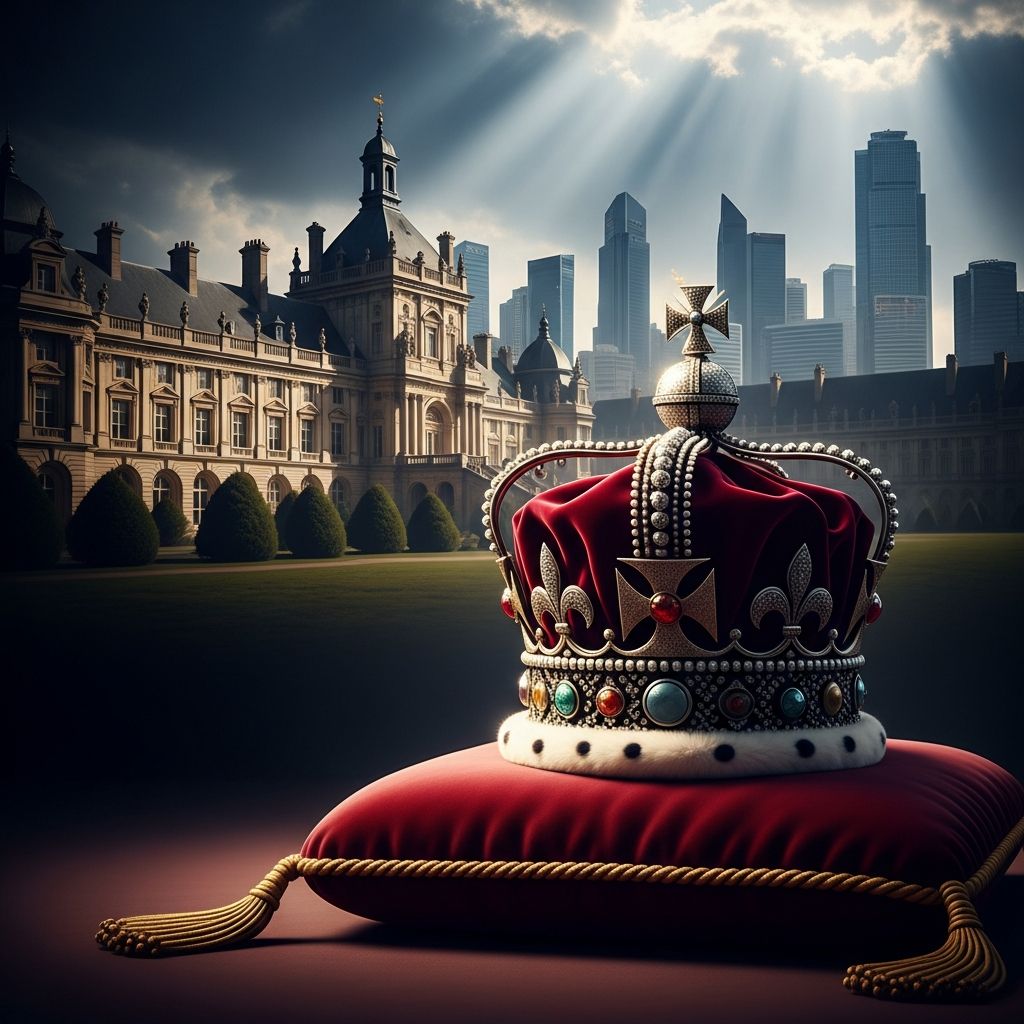
A **monarchy** is a foundational form of government where a single individual, the monarch, holds the position of head of state, typically for life, with authority often passed down through hereditary lines. This system contrasts sharply with democracies by centralizing supreme power in one person, who may wield absolute control or serve in a largely symbolic capacity depending on the nation’s constitution.
Core Principles Defining Monarchies
At its heart, monarchy revolves around the concept of undivided sovereignty vested in the monarch, who embodies the state’s continuity and cultural identity. Unlike elected leaders, monarchs usually inherit their role, fostering a sense of permanence amid political flux. This hereditary nature creates a ‘court society’—an elite network bound by tradition, ceremonies, and personal ties that reinforces the ruler’s prestige.
Monarchs symbolize national unity, projecting historical achievements and collective aspirations both domestically and internationally. Their role extends beyond politics to cultural representation, where rituals and symbols strengthen societal bonds. While power levels vary, the monarch’s lifelong tenure distinguishes this system, providing stability as governments rise and fall.
Primary Categories of Monarchical Systems
Monarchies fall into distinct categories based on the ruler’s authority. Understanding these helps clarify their operation in diverse contexts.
- Absolute Monarchy: Here, the monarch exercises unchecked power over legislation, policy, and administration, with no constitutional limits. Examples include Saudi Arabia, where the king dictates governance without parliamentary oversight.
- Constitutional Monarchy: The monarch’s powers are curtailed by a constitution, often reducing them to ceremonial duties while elected bodies handle real authority. In places like the United Kingdom, the sovereign acts as a figurehead.
- Semi-Constitutional or Hybrid Forms: These blend elements, granting monarchs some veto powers or influence alongside parliamentary systems.
- Elective Monarchy: Rare today, selection occurs via election among eligible nobles or families, as historically in the Holy Roman Empire.
| Type | Power Level | Key Features | Modern Examples |
|---|---|---|---|
| Absolute | Full control | No legal checks; direct rule on laws/policies | Saudi Arabia, Brunei |
| Constitutional | Limited/symbolic | Parliament governs; monarch ceremonial | UK, Japan, Sweden |
| Semi-Constitutional | Moderate influence | Some executive powers retained | Jordan, Morocco |
Evolution Through History: From Origins to Today
Monarchies trace back to ancient civilizations, where rulers were often seen as divine or semi-divine figures legitimizing their rule through gods or ancestry. In medieval Europe, kings consolidated power amid feudal fragmentation, evolving into centralized states. The Enlightenment challenged absolute rule, birthing constitutional models where monarchs ceded power to parliaments.
By the 20th century, absolute monarchies dwindled, surviving mainly in the Middle East and Asia amid modernization pressures. Decolonization spread constitutional variants to realms like Canada and Australia, sharing monarchs with the UK. Today, about 43 countries retain monarchs, mostly constitutional, adapting to democratic norms while preserving tradition.
How Monarchs Ascend: Succession Mechanisms
Hereditary succession dominates, passing the crown through family lines, often primogeniture—eldest child inherits, increasingly gender-neutral in modern states. Males historically prioritized, but reforms like the UK’s 2013 Perth Agreement ensure absolute primogeniture.
Rules vary: some allow only direct descendants; others include siblings or cousins. Abdication, as with Spain’s Juan Carlos I in 2014, occurs rarely. Elective systems persist in Vatican City (papal) or Malaysia (rotating sultans). Training from birth prepares heirs, blending education in governance, diplomacy, and protocol.
Roles and Responsibilities of Contemporary Monarchs
In constitutional setups, monarchs perform ceremonial functions: opening parliaments, bestowing honors, and hosting state visits. They hold reserve powers like appointing prime ministers or dissolving legislatures, exercised on advice. Absolute rulers manage executive, legislative, and judicial branches directly.
Monarchs foster unity, remaining above partisan politics—a neutral arbiter in crises. Their international role enhances diplomacy, as seen in state banquets solidifying alliances.
Global Examples: Monarchies in Action
- United Kingdom: King Charles III reigns as ceremonial head; Parliament governs via elected MPs.
- Saudi Arabia: King Salman wields absolute authority, controlling oil wealth and Sharia-based laws.
- Japan: Emperor Naruhito symbolizes continuity in the world’s oldest hereditary monarchy.
- Sweden: King Carl XVI Gustaf focuses on charity and representation.
- Commonwealth Realms: Nations like Australia share the British monarch.
Strengths That Sustain Monarchies
Proponents highlight stability: monarchs outlast transient governments, ensuring smooth transitions. They unify diverse populations, transcending politics. Cost analyses vary, but ceremonial roles arguably boost tourism and soft power. Hereditary rule avoids divisive elections for head of state.
Challenges and Criticisms Facing Royal Rule
Critics decry undemocratic heredity, questioning competence by birthright. Absolute forms risk tyranny; even constitutional ones face republican pushes, as in Australia. Expenses for palaces and security spark debates on value. Modern equality clashes with traditions like male preference.
Monarchy’s Enduring Place in Democratic Eras
Despite democratization waves, monarchies persist by evolving—embracing transparency, philanthropy, and public engagement. They offer non-partisan stability in polarized times, with constitutional models aligning with parliaments. Future viability hinges on relevance: adapting to public opinion while honoring heritage.
Frequently Asked Questions (FAQs)
What distinguishes a monarchy from a republic?
A monarchy features a hereditary or lifelong head of state, while republics elect theirs, often for fixed terms.
Are all monarchies absolute today?
No, most modern ones are constitutional, limiting monarchs to symbolic roles.
How does succession work in monarchies?
Typically hereditary via primogeniture, though rules differ by country.
Can monarchs be removed from power?
In constitutional systems, indirectly via parliamentary reform; absolute ones rarely face such mechanisms.
Why do some democracies retain monarchs?
They provide continuity, unity, and ceremonial functions without political interference.
References
- Monarchy | Definition, Examples, & Facts — Britannica. 2023-10-12. https://www.britannica.com/topic/monarchy
- Monarchy — Wikipedia. 2026-04-01. https://en.wikipedia.org/wiki/Monarchy
- Monarchy – Definition, Examples, Pros & Cons (In 4 Minutes) — Helpful Professor (YouTube). 2025-01-22. https://www.youtube.com/watch?v=ZO6-APatiKE
- The Monarchy — The Constitution Society. 2023-05-15. https://consoc.org.uk/the-constitution-explained/the-monarchy/
- Monarchy Lesson for Kids: Definition & Facts — Study.com. 2024-02-10. https://study.com/academy/lesson/video/monarchy-lesson-for-kids-definition-facts.html
- MONARCHY Definition & Meaning — Merriam-Webster. 2026-03-20. https://www.merriam-webster.com/dictionary/monarchy

- Integrated M.A. in Applied Linguistics, University of Hyderabad
- 5+ years in editorial, instructional, SEO, and research-based writing
Sneha is a relationships and lifestyle writer with a strong foundation in applied linguistics and certified training in relationship coaching. She brings over five years of writing experience to theskillvault, crafting thoughtful, research-driven content that empowers readers to build healthier relationships, boost emotional well-being, and embrace holistic living. Her writing and insights reflect the belief that beauty, happiness, and wellness…