
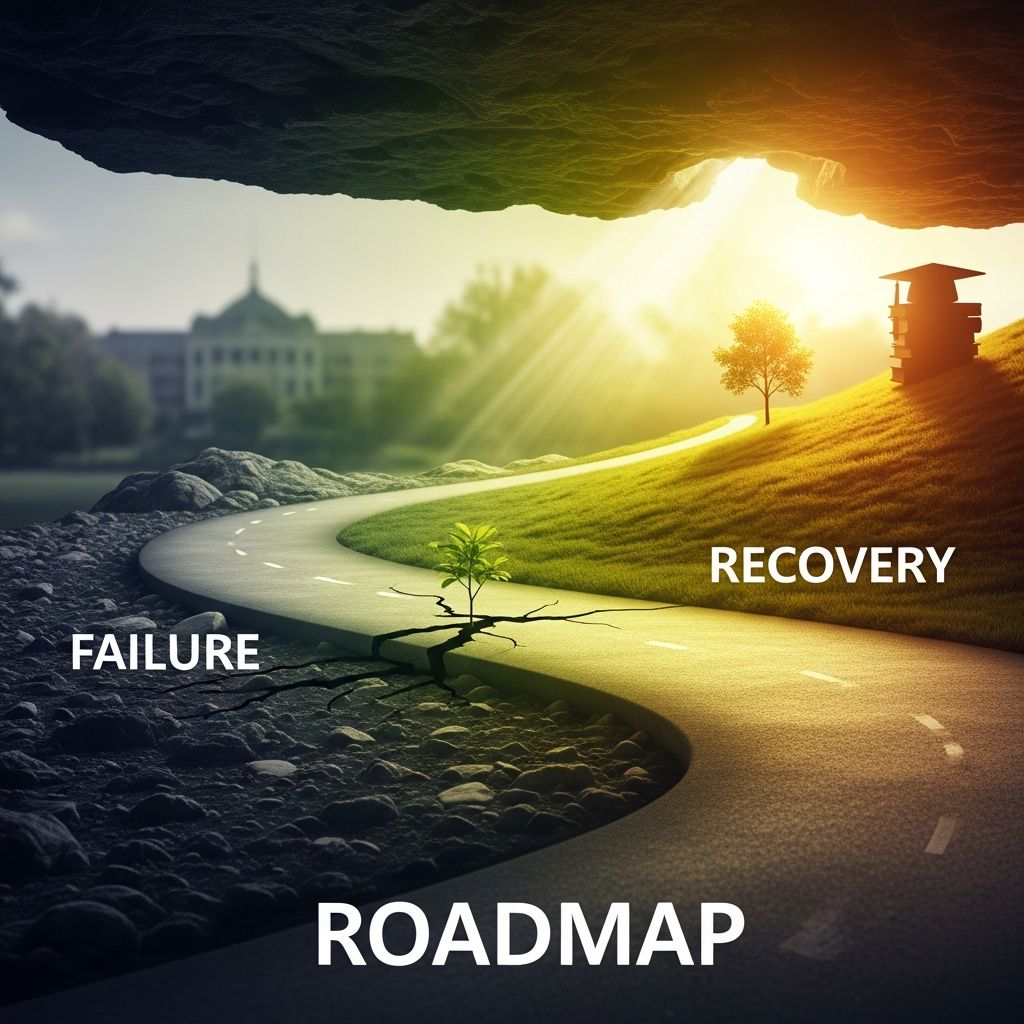
Receiving a failing grade in college can feel devastating, but it’s a common hurdle that thousands overcome each year. With the right approach, you can turn this setback into a catalyst for improved performance and academic growth. This guide provides a step-by-step plan to assess the situation, implement fixes, and move forward confidently.
Understanding the Immediate Impact of a Failed Course
A failing grade typically means earning below a D or the institution’s passing threshold, often resulting in zero credits toward your degree and a significant GPA drop. For instance, an F in a 3-credit course can pull your overall average down by 0.3 to 0.5 points, depending on your current standing. Beyond academics, it may trigger probation if your cumulative GPA falls below 2.0, limiting course enrollment or financial aid eligibility.
However, policies vary: many schools allow grade replacement upon retake, where the new passing grade supersedes the F in GPA calculations while both appear on transcripts. First-year students often get leniency, but repeated failures (e.g., twice in the same course) may require major changes or appeals. Check your student handbook immediately to grasp your specific rules.
Step 1: Conduct a Thorough Self-Assessment
Before acting, pinpoint root causes to avoid repetition. Common pitfalls include:
- Time management issues: Procrastination or overloading with 18+ credits leads to burnout.
- Skill gaps: Weak foundations in prerequisites, like algebra for calculus, hinder progress.
- External factors: Jobs, family obligations, or mental health struggles divert focus.
- Learning mismatches: Lecture-heavy formats don’t suit visual or hands-on learners.
Journal your semester: Track study hours, assignment completion rates, and test prep. Be brutally honest—did you attend office hours or skip them? This reflection builds self-awareness essential for lasting change.
Step 2: Engage Key Campus Allies Right Away
Don’t isolate—proactive outreach accelerates recovery. Start with these contacts:
- Course Professor: Schedule a meeting to review feedback. They may reveal overlooked patterns or offer retake advice.
- Academic Advisor: Essential for degree audits, which map progress and flag alternatives to the failed requirement.
- Department Chair: For appeals or substitutions if the course isn’t core to your major.
Advisors can reveal options like summer sessions or community college transfers, often cheaper and flexible. Document all conversations for your records.
Step 3: Map Your Academic Path Forward
| Scenario | Action Plan | Pros | Cons |
|---|---|---|---|
| Required for Major | Retake next available slot | Replaces F in GPA | Delays graduation |
| General Education Elective | Substitute with alternative | Avoids retake stress | May need approval |
| Repeated Struggle | Switch majors | Aligns with strengths | Extra credits needed |
Use your degree audit tool to visualize impacts. If the course is non-essential, opt for a better-fitting gen-ed, like swapping economics for history. For majors, align retake with lighter semesters—aim for 12-15 credits total.
Step 4: Master the Retake with Smarter Strategies
Retaking demands evolution. Build a success blueprint:
- Adjust Schedule: Pair with easier courses; consider summer solo for focus.
- Enhance Study Habits: Dedicate 2-3 hours weekly per credit. Use active recall, spaced repetition via apps like Anki.
- Form Study Groups: Collaborate with peers to divide readings and quiz each other.
- Reduce Extracurriculars: Cut clubs or hours at work temporarily to prioritize.
Track weekly via planners; even a C on retake boosts GPA substantially.
Step 5: Leverage Free Campus and Online Resources
Most colleges offer underutilized aids:
- Tutoring Centers: Subject-specific help, like math labs or writing workshops.
- Learning Specialists: Develop personalized study skills.
- Online Platforms: Self-paced courses from providers like StraighterLine for transfers, cheaper than full tuition.
Seek disability services if ADHD or anxiety contributed. Professors often recommend these—ask early.
Alternative Paths: Online, Community College, or Major Pivot
Stuck in traditional formats? Innovate:
- Online Retakes: Asynchronous classes allow pacing at your rhythm, ideal for working students.
- Community Colleges: Retake affordably, transfer credits back—verify articulation agreements.
- Major Switch: If multiple failures signal mismatch, explore via career counseling. Better now than post-grad regret.
For first-gen students, counseling centers guide transfers or alignments.
Cultivating a Resilient Mindset for Long-Term Wins
Failing tests grit. Reframe: 20-30% of students fail a class yearly, yet graduate. Focus on progress—celebrate small wins like consistent attendance. Build routines: Sleep 7-8 hours, exercise, eat well to sustain focus.
Long-term, this builds adaptability prized by employers. Track GPA recovery quarterly; aim for 3.0+ trajectory.
Financial and Aid Considerations Post-Failure
SAP (Satisfactory Academic Progress) rules for aid require 67% completion and 2.0 GPA. One F risks warnings; appeals exist with improvement plans. Budget retakes: Online options save 50%+ vs. on-campus. Seek scholarships for returning students.
Frequently Asked Questions (FAQs)
Can I graduate if I fail one class?
Yes, absolutely. Retake or substitute, and most schools allow recovery without derailing timelines.
Does retaking replace the F on my transcript?
Often yes for GPA, but both grades show. Policies cap repeats; check yours.
Should I drop future risky classes?
Prefer dropping over failing for refunds and no GPA hit, within deadlines.
What if I fail twice?
Consider major change or probation appeal. Resources abound for turnaround.
Are online retakes legit?
Yes, if ACE-accredited and advisor-approved for transfer.
Armed with this roadmap, reclaim your trajectory. One F is a footnote, not your story—act now for brighter semesters ahead.
References
- 7 Ways to Move Forward After Failing a College Class — Sophia.org. 2023-05-15. https://www.sophia.org/blog/student-success/failing-a-college-class/
- What to Do If You Fail a College Class — StraighterLine. 2024-02-20. https://straighterline.com/blog/fail-a-college-class
- Fail a Class in College? Here’s What to Do Next — College Info Geek. 2023-11-10. https://collegeinfogeek.com/what-happens-if-you-fail-a-class-in-college/
- What to do when you fail a class…. for first-generation college students — YouTube (Estrellita). 2022-08-05. https://www.youtube.com/watch?v=TshdxyIpjN0
- I failed a class…now what? (Real Advice from a Professor) — YouTube. 2023-03-12. https://www.youtube.com/watch?v=Z1oadKqoKKM
- What to Do if You’re Failing a Class in College — BestColleges. 2024-01-08. https://www.bestcolleges.com/blog/what-to-do-failing-class/

Medha Deb is an editor with a master's degree in Applied Linguistics from the University of Hyderabad. She believes that her qualification has helped her develop a deep understanding of language and its application in various contexts. Medha specializes in the areas of beauty, health, sports, and wellness and is committed to ensuring that the content on the website is…